
My refrigerator doesn't have a defrost control feature, what should I do?
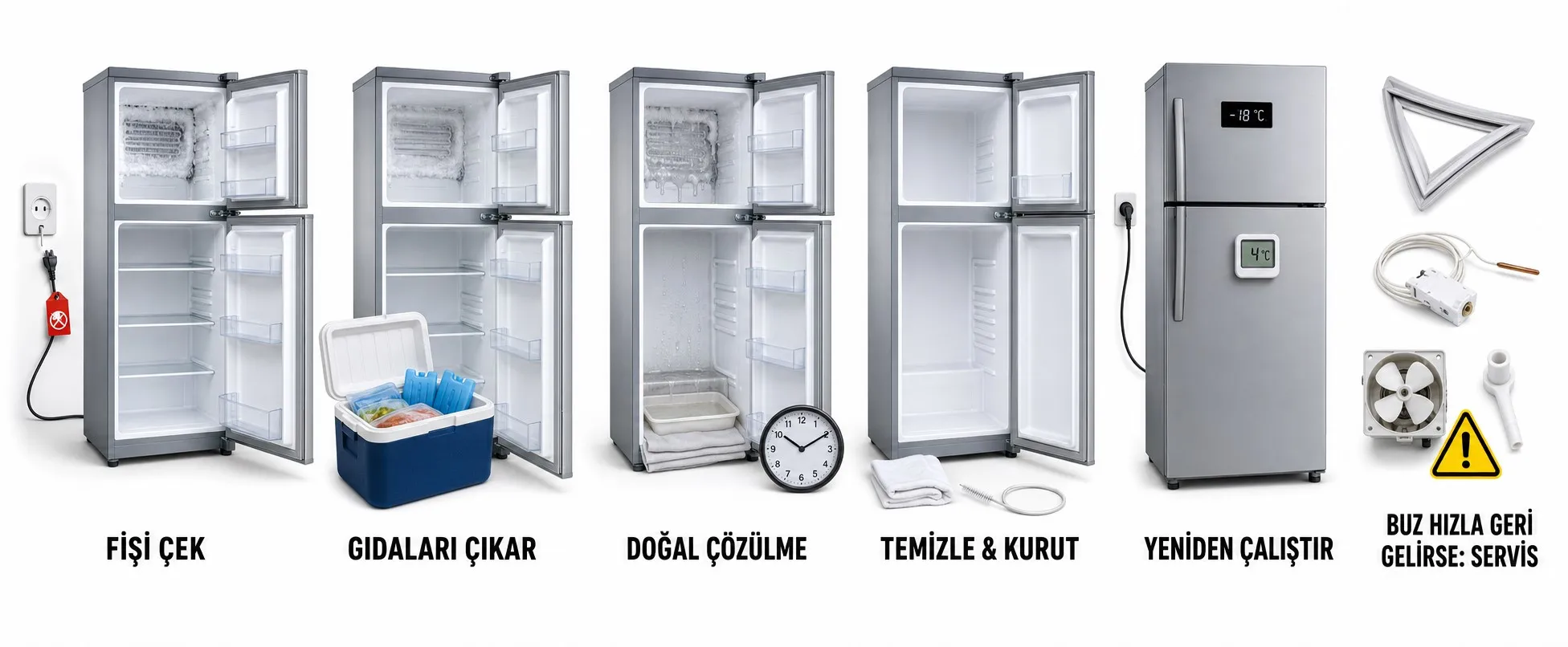
My refrigerator has no defrost control feature. What should I do?
The absence of a visible button does not establish that defrost control is missing. Refrigeration appliances may use manual defrost, automatic defrost or different arrangements in each compartment. The purpose of defrost is to remove ice, which matters for system performance. Check the manual to identify whether your appliance uses manual or automatic defrost.
Check the refrigerator and freezer compartments separately: Some appliances defrost the refrigerator compartment automatically while the freezer requires manual attention. The refrigerator’s operating arrangement depends on its model. Instead of simply looking for a defrost button, check the model label and the manual’s defrost section. Do not remove enclosed panels.
Prepare cold storage for the food: Before manual defrosting, move perishables to another working refrigerator and frozen products to another freezer. A suitable insulated cooler with cold packs may provide temporary storage; monitor its temperature. Consider food safety during defrost alongside storage life. Do not leave food on the kitchen counter for hours.
Disconnect the appliance safely: Follow the manual’s shutdown procedure and disconnect electrical power for manual defrosting. Setting a control to “off” does not electrically isolate every model. Electronic control arrangements differ. Keep the plug and socket dry; do not handle a wet or damaged connection.
Allow the ice to melt naturally: Leave the door open as directed by the manual. Do not force drawers trapped by ice. Do not use knives, screwdrivers, hair dryers, electric heaters or steam cleaners. Breaking into the ice can damage the liner or refrigerant tubing. Follow the manufacturer’s method rather than applying heat to speed up melting.
Collect meltwater: Use the drain outlet if instructed, with suitable containers and towels to prevent overflow. Keep water away from electrical connections. Do not clear drains with metal objects. Have a service technician investigate inaccessible blockages or water leaks.
Clean and dry the interior: Use the cleaning method permitted by the manufacturer. Do not spray water onto electronic parts or use abrasive or solvent-based cleaners. Dry the interior and removed components before restarting.
Verify temperature before reloading: Restart in the sequence specified by the manual. FDA’s general domestic guidance is 4 °C or below for refrigerators and −18 °C for freezers; also follow product labels. Cabinet storage temperature and defrost termination temperature are different. Do not reload simply because the appliance is running; check storage conditions with a suitable thermometer.
Follow the manual for defrost frequency: There is no universal monthly or yearly schedule. Frost thickness, use and ambient humidity matter. Leaving doors open and loading warm products can increase frost. Monitoring ice buildup helps maintain cooling performance and control energy consumption.
Do not treat heavy frost in a frost-free appliance as normal: Recurring ice, poor cooling or fan problems may be fault symptoms. Temporary thawing can conceal the effects of defrost failure without correcting the cause. Arrange a service assessment for any necessary repair or replacement.
An external controller is not a simple conversion: Review the technical specifications, appliance circuitry and control technology together. Adding a defrost controller does not automatically turn a manual-defrost cabinet into a frost-free appliance. Heater, fan, drainage and protective arrangements also need assessment.
Probes and settings require technical knowledge: NTC, PTC and other temperature probes cannot be substituted arbitrarily. Defrost settings require compatible hardware and manufacturer information. For a home user, the appropriate approach is maintenance or servicing that respects the appliance’s existing design.