
How can I tell if the defrost control is malfunctioning?
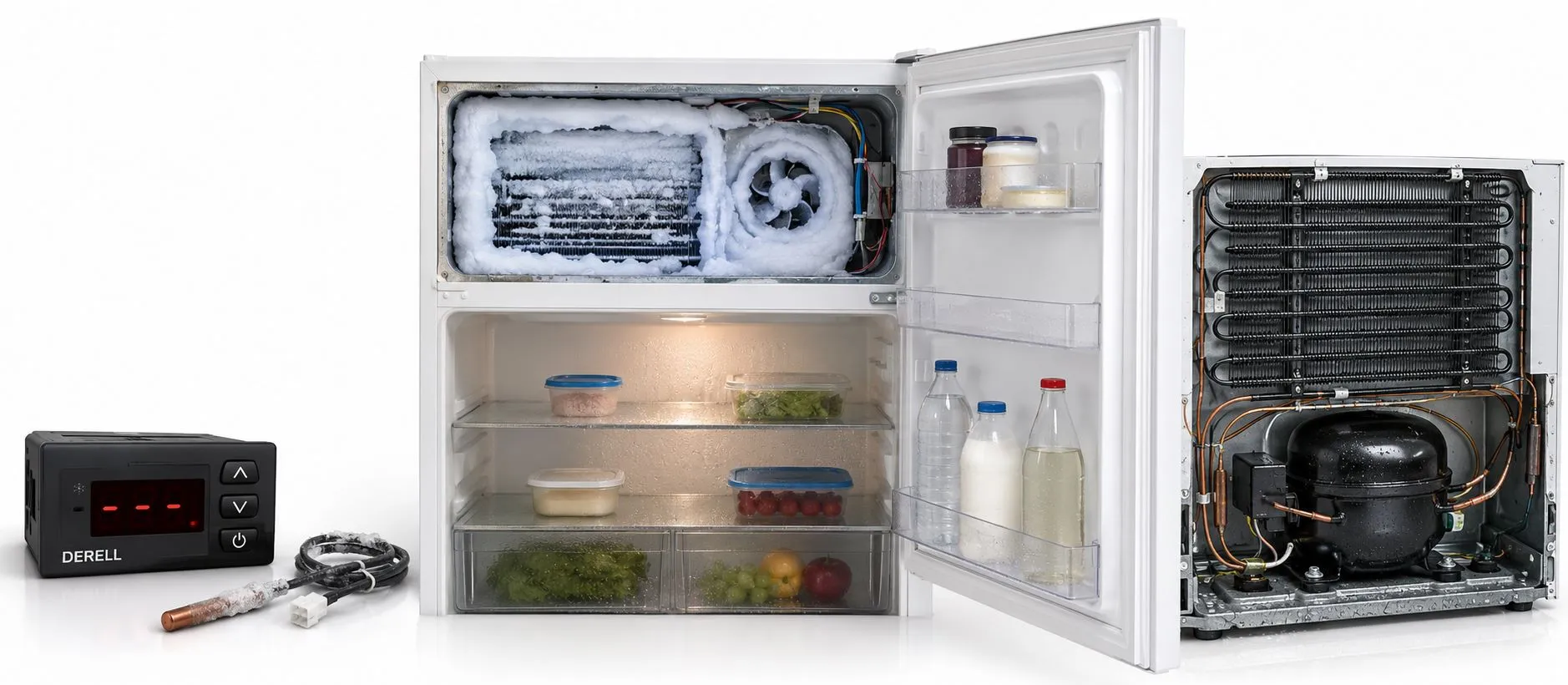
What happens to a refrigerator when defrost control fails?
Hello, dear colleagues,
Defrost control helps maintain cooling by removing ice from the evaporator under defined conditions. A fault can cause ice buildup, reduced airflow, rising temperatures and changes in electricity use. The symptoms depend on the refrigerator's design and the component that has failed.
1. Ice buildup and restricted airflow
In frost-free models, the evaporator is often behind an internal panel. If the refrigerator's defrost cycle fails to operate, thick ice can build up there, restricting passages that carry cold air to the compartments. In some designs, the freezer may seem cold while the refrigerator compartment is not cooling adequately. Clear shelves do not prove that the evaporator is free of ice. In manual-defrost models, some frost buildup is an expected part of operation.
2. Rising temperatures and poorer food storage conditions
Restricted airflow can create temperature differences between compartments. The temperature controller's display or selected setting does not always indicate the actual temperature of the food. Check temperatures with a suitable refrigerator thermometer; a data logger can help track changes if needed. The general target for the refrigerator compartment is 4 °C or below. Also follow the storage instructions on each product's label.
When assessing how defrost settings affect food storage, both temperature and time matter. Food safety during defrost cannot be determined from appearance or smell alone. If temperatures have risen, move perishable foods to suitable cold storage. Do not taste food to check whether it is safe.
3. Longer running times and changes in electricity use
If the cooling target is not reached, the compressor may run longer and the refrigerator's electricity use may increase. However, a fault that prevents the compressor from starting can reduce consumption while the cabinet warms up. When considering how defrost affects energy use, low consumption should not be treated as proof of effective cooling.
Instantaneous power (kW) differs from energy consumed over time (kWh). Electrical measuring instruments provide information about operation; total consumption requires an energy measurement. If using a smart plug to measure consumption, it must comply with its manufacturer's instructions and be suitable for the refrigerator's motor load. Compare readings under similar ambient temperatures, product loads and door-opening patterns.
4. Fan noise and additional strain on components
Ice around the fan can rub against its blades, creating rattling or scraping sounds and further reducing airflow. Extended running or high temperatures can put additional strain on some components, but a defrost fault does not mean the compressor will inevitably burn out. Long compressor running times are normal in some models. Assessing damage requires temperatures, operating current and the manufacturer's limits to be considered together. Regular maintenance and service help identify problems early.
5. The control board is not always the cause
Depending on the model, the fault may involve sensors, such as an NTC temperature sensor, a defrost thermostat, timer, heater, wiring or a relay on the board. The operating principle of a timer-based system relates to that of a timer relay. Temperature sensors and thermostats have different functions and should not be treated as interchangeable components.
Moist air entering through a poor door seal or food blocking air vents can also cause frost and cooling problems. If the defrost cycle does not end, or cooling does not resume, temperatures may rise even without ice buildup. Therefore, signs of a defrost fault do not identify the component to replace on their own. A temporary stop in compressor and fan operation during a normal defrost cycle is not automatically a fault either.
6. What should you do when you notice a problem?
Protect the food's storage conditions first. Check that the door closes properly, inspect the seal and keep air outlets clear. Record any displayed error code. If heavy ice requires a manual thaw, follow the manufacturer's instructions and disconnect the appliance from power. Do not use a knife or hair dryer. A temporary improvement after the ice melts does not mean the fault has been repaired.
During a service inspection, a suitable multimeter may be used for resistance measurements and continuity tests. These tests are performed on circuits disconnected from power and made safe, with results checked against the component specifications. Continuity alone does not prove that the entire system is functioning correctly. Defrost system repairs should follow the model's wiring diagram and use compatible parts.
You may share this content with attribution to the source.