
What is the purpose of defrost control?
What is the purpose of defrost control?
Hello, dear colleagues,
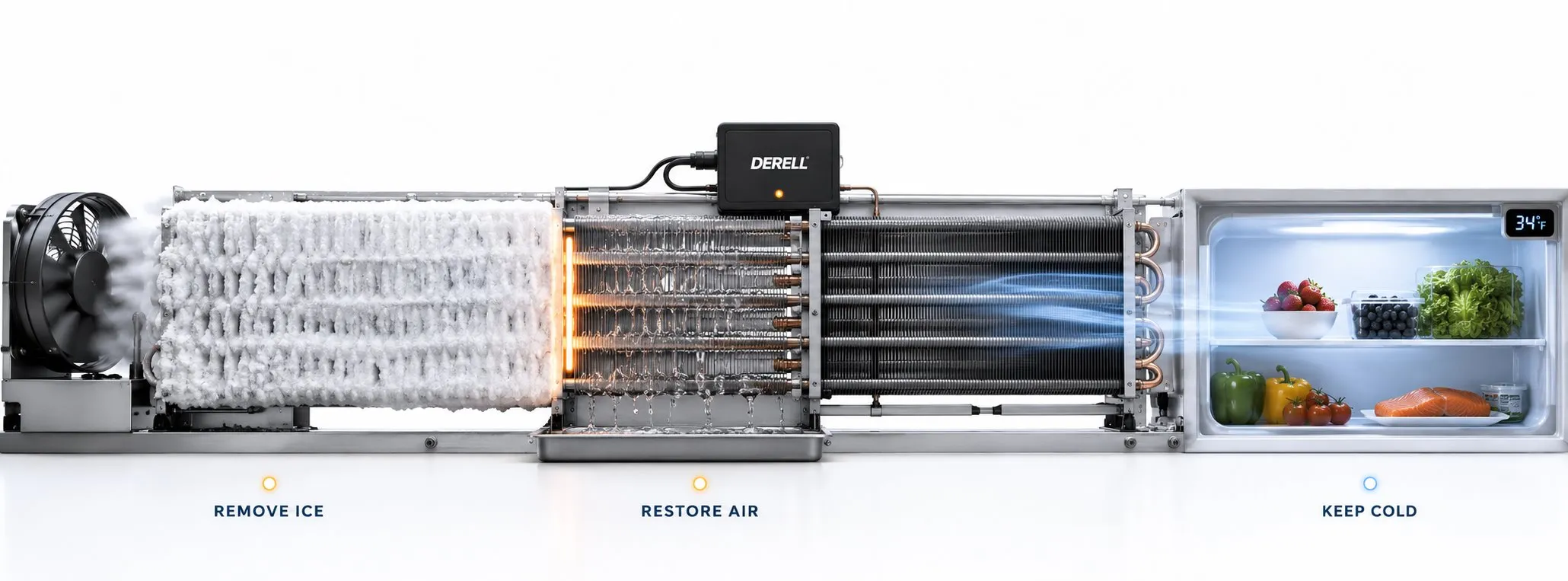
The main purpose of defrost control is to remove accumulated ice from the evaporator in a controlled way, maintaining heat transfer, airflow and the system's ability to hold its target temperature. It manages when defrost starts, how it proceeds and when it ends. A successful cycle also includes an orderly return to normal operation.
1. Limit the effect of ice on airflow and heat transfer
Moisture from the air can form frost or ice on a cold surface. Thick buildup narrows the air passages through the evaporator and makes heat transfer more difficult. For example, a refrigerator's defrost system removes this buildup so cold air can continue reaching the compartments. Monitoring ambient moisture with a humidity sensor can help explain operating conditions. Liquid condensation or dew is different from ice; defrost directly targets frozen buildup.
2. Manage the appropriate defrost method
Defrost technologies vary with the system's temperature range and design. Electric defrost uses a heater. Off-cycle defrost pauses refrigeration and uses heat from the air around the evaporator. It suits applications where that air is warm enough to melt the ice.
Hot-gas defrost routes hot gas from the refrigeration circuit through the evaporator. Reverse-cycle defrost in heat pumps operating in heating mode changes refrigerant circulation to heat the outdoor coil. Defrost does not therefore involve reversing the cycle in every system; the control sequence must suit the selected method.
3. Start and end the cycle under appropriate conditions
Defrost may start at fixed intervals, after accumulated operating time or through an algorithm that assesses demand. Interval timing can also be implemented with a timer relay. Electronic temperature controllers can use sensor readings. An NTC or PTC temperature sensor must have the characteristic required by the controller. Temperature sensors and thermostats perform different functions; a reading from a cold surface does not, by itself, measure the amount of ice.
Defrost settings should stop heat input once enough ice has melted. Suitable systems use an evaporator termination temperature, with a maximum duration limit providing an additional safeguard. The termination condition relates to the evaporator; the product's storage target is specified separately. Meltwater drainage and an appropriate fan restart then form part of the sequence. Compressor and fan operation depend on the defrost method.
A relay at the control output may switch the relevant load. Larger loads may require a suitable contactor. Assess the controller's output capacity together with the load's electrical characteristics. A defrost indication on the display does not, on its own, prove that the load is operating.
4. Balance energy use with storage conditions
The energy objective is adequate ice removal without unnecessary added heat. A heater's power in kW differs from the system's energy consumption in kWh. When assessing how defrost affects energy use, include the heater, compressor and fans together. Refrigerator electricity use also depends on usage and ambient conditions. Cycle counts alone do not establish a fixed percentage saving.
The effect of defrost settings on food storage relates to how far temperatures rise and how long they take to recover. Appropriate control helps maintain storage conditions. The effect of a change in electricity use on the carbon footprint depends on how that electricity is generated.
5. Verify the outcome through records and monitoring
In an industrial refrigeration installation, an appropriately programmed PLC can implement the operating sequence, while an HMI operator panel can display status and settings. SCADA can monitor alarms and operating data, and a data logger can record temperatures and durations. These records support maintenance and service by helping assess sensor, drainage and control problems.
You may share this content with attribution to the source.