
How can the defrost control settings be optimized?
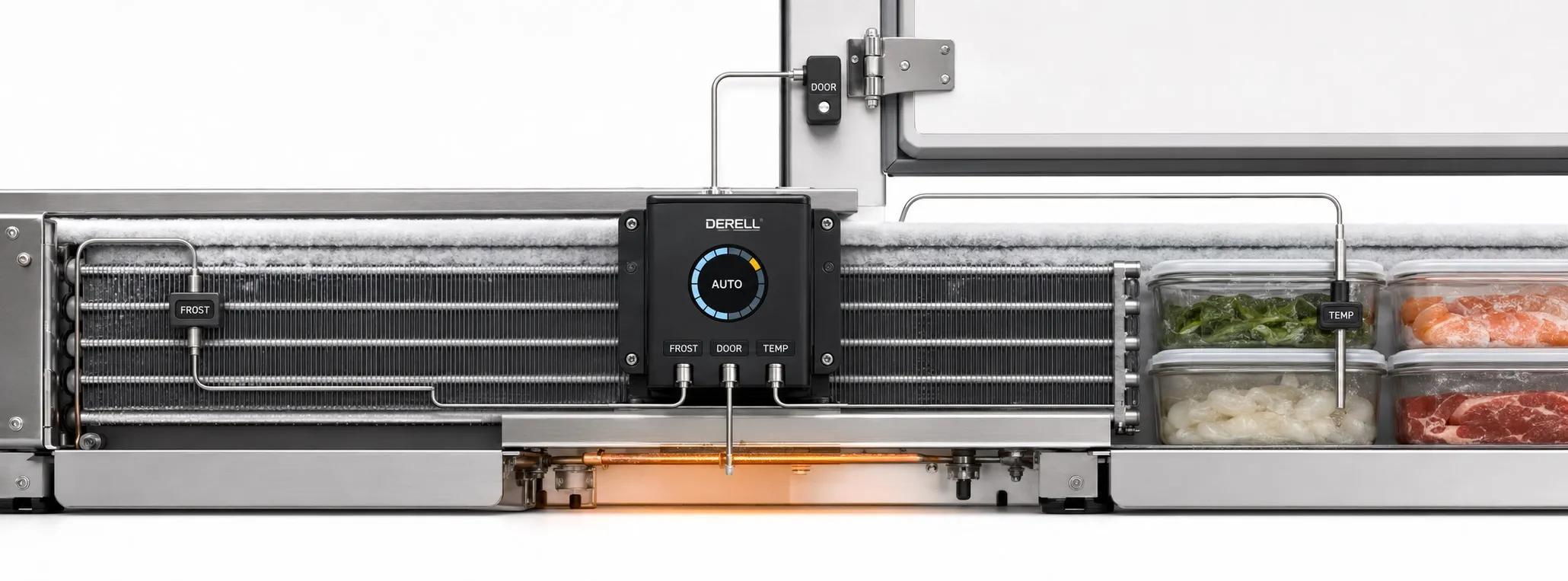
How can defrost settings be optimized?
Effective defrost control removes enough ice from the refrigeration system while maintaining required storage conditions. Consider both the purpose of defrost and its importance to system performance. No single duration or temperature setting suits every unit.
Identify the application first: A refrigerator’s operating cycle, cold-room loading, door traffic and ambient humidity can differ. Humidity influences frost loading on the evaporator. This guide concerns refrigeration applications; do not transfer the same settings to outdoor-coil defrost on a heat pump.
Record the existing configuration: Start with the model, firmware version, probe assignments and technical specifications. Verify the control technology and defrost method. Factory settings may provide a starting reference, but measurements must establish suitability for the installation.
Do not hide faults with settings: If there are fault symptoms, inspect the fan, door seal, drainage and heating arrangement. The effects of defrost failure can resemble incorrect settings. Extending the cycle is not a remedy for a failed heater; complete any necessary repair or replacement first.
Check the probes: NTC and PTC probes are not interchangeable without checking the input specification. Verify the temperature probe’s curve, placement and connection. Remember the difference between a sensor and a thermostat: cabinet and evaporator measurements may serve different functions.
Assess the start interval against frost loading: Observe ice and airflow before each cycle. If frost accumulates progressively, investigate its cause before changing only the interval. Automatic and manual defrost serve different purposes; a manual start does not automatically replace the scheduled control strategy.
Consider termination temperature and maximum duration together: Among the defrost temperature settings, distinguish the evaporator termination value from the cabinet target. A time limit also matters when a probe terminates defrost. Repeatedly reaching that limit calls for investigation before increasing it.
Observe drainage and fan restart: Meltwater drainage, renewed cooling and fan operation form one sequence. Restarting airflow too early can carry warm, moist air into the cabinet; unnecessary delay can prolong temperature recovery. Verify the required sequence and limits in the unit’s manual.
Use demand defrost where its requirements are met: Technology selection should go beyond a “smart” label. For the chosen brand and model, check the algorithm’s measurements and application limits. Not every controller directly measures ice thickness; some infer demand from temperature behaviour.
Compare recorded results: Supported equipment can provide data over RS485 using Modbus RTU. Record cycle start and finish, cabinet temperature and recovery time. Compare several cycles under similar loading and door conditions, noting any changes in operating conditions.
Track energy and product conditions together: Lower energy consumption does not establish success if frost or warm spots increase. Neither food storage life nor food safety during defrost can be established from one display reading. Check display hold functions and alarm delays in the manual.
Make one change at a time: Record the previous value, reason for the adjustment and observed result. If the required conditions are not maintained, return to the previous verified configuration. Optimization means validating frost removal, drainage and temperature recovery, rather than blindly reducing cycle count.