
What's the difference between mass and weight and how are they measured?
Hi everyone,
Mass and weight are fundamental concepts in physics, often used interchangeably in everyday conversation, but they represent different physical quantities. Understanding their distinctions and how each is measured is crucial in scientific contexts, as well as in practical applications ranging from engineering to daily commerce. Here’s an in-depth exploration of both terms and their measurement:
Mass
Definition:
Mass is a measure of the amount of matter in an object. It is an intrinsic property of the object, which means it does not change regardless of location or the environment.
Properties of Mass:
Invariance: Mass remains constant regardless of its position in the universe.
Inertia: Mass is a measure of an object's resistance to changes in its state of motion. The greater the mass, the greater the force required to change its velocity.
Measurement of Mass:
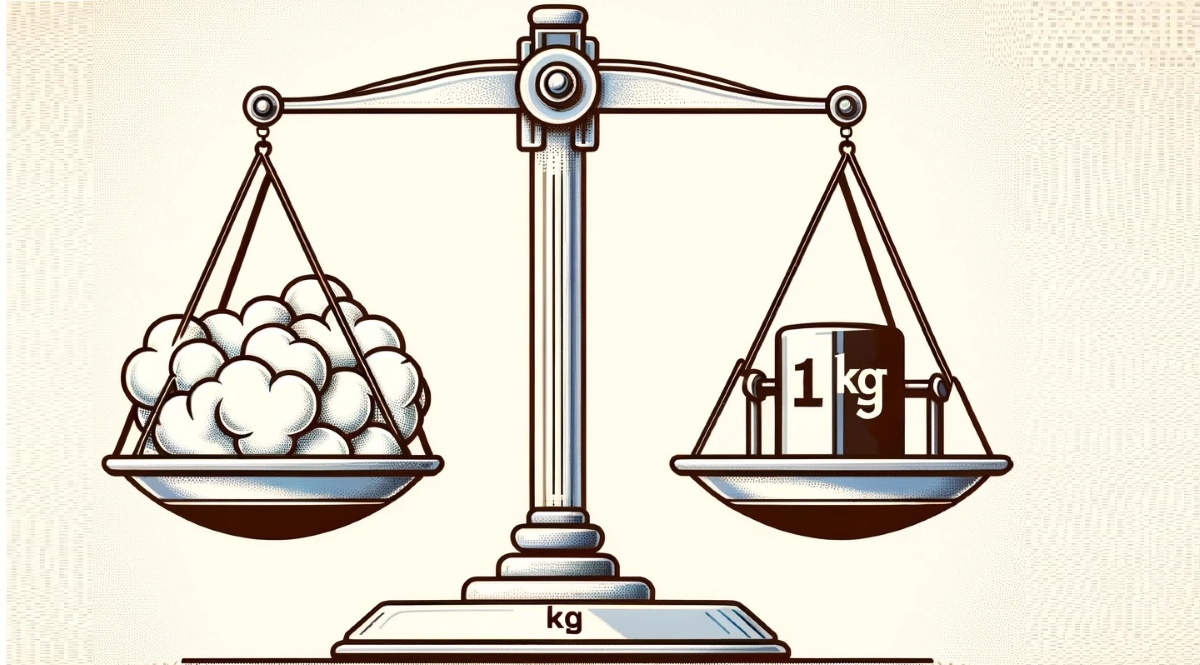
Mass is measured using a balance, which compares an unknown quantity of matter to a known quantity. Here are the steps typically involved:
Calibration: Ensure the balance is calibrated using standard weights to guarantee accuracy.
Placement: Place the object whose mass is to be measured on one side of the balance.
Equilibrium: Add or remove standard weights on the other side until the balance reaches equilibrium. The mass of the object is equal to the total mass of the standard weights used.
Weight
Definition:
Weight is the force exerted by gravity on an object. Unlike mass, weight is a vector quantity and depends not only on the mass of the object but also on the acceleration due to gravity, which varies with location (e.g., different on Earth, Moon, Mars).
Properties of Weight:
Directional: Weight has direction—toward the center of the gravitational body affecting it.
Variable: Weight varies depending on the gravitational pull at a location.
Measurement of Weight:
Weight is measured using a scale, which measures the force exerted by an object under gravity. The process typically involves:
Placement: Place the object on the scale.
Reading: The scale measures the force exerted downward by the object, often converting it directly to weight using the local gravity (e.g., 9.81 m/s² on Earth).
Display: The weight is displayed, usually in units like newtons (N) or in mass-equivalent units (such as kilograms or pounds) assuming a standard gravitational force.
Differences Summarized:
Conceptual Difference: Mass is a measure of how much matter an object contains; weight is a measure of the gravitational force exerted on that matter.
Constancy vs. Variability: Mass is constant; weight varies with the strength of the gravitational field.
Units: Mass is measured in units like kilograms or grams; weight is measured in units like newtons or pounds-force.
Practical Applications and Considerations:
Engineering and Construction: Understanding both concepts is crucial for designing structures and machinery that must perform under different gravitational conditions.
Space Exploration: Mass is used to calculate the fuel requirements for spacecraft, whereas weight is more relevant when considering the spacecraft's operation on celestial bodies other than Earth.
Daily Use: In everyday commerce, scales that measure weight (e.g., for groceries) are often calibrated to display a mass equivalent, based on standard gravity, making it easier for everyday transactions.
In summary, while mass and weight might seem similar at first glance, they are fundamentally different in their essence and the way they are measured. This distinction is particularly important in scientific and technical fields, where precision in measurement and understanding of these concepts can lead to better decision-making and innovations.
Based on the questions you have asked us, we have attempted to discuss the topic of weight measurement and scales both socially and technically. Weight measurement has undoubtedly been one of the most important topics in known history. Throughout our lives, we are all involved in weight measurement in production, consumption, trade, art, sports, etc.
General Questions:
++ Weight standards
- What's the difference between mass and weight, and their measurement methods?
- How does gravity's acceleration affect an object's weight on different planets?
- What are the uses and accuracy factors of precision scales and balances in weight measurement?
- How does weight measurement help determine an object's density?
- How is an object's apparent weight underwater calculated and related to its actual weight?
Industrial Automation and Production:
- How is weight measurement and control integrated into industrial production, and its impact on efficiency?
- What role do automatic weight control systems play in quality control, and how do they improve product quality?
- How are weight sensors selected and configured in industrial automation, and their accuracy evaluated?
- What are the latest developments in weight measurement technologies for industrial automation?
- What software and tools are used for weight data analysis in industrial automation, and their impact on workflow?
For the General Public:
- How can I test the accuracy of home kitchen scales?
- Which bathroom scale is best for tracking body weight, and what are the differences between models?
- How can I accurately measure luggage weight for travel and comply with airline limits?
- What type of kitchen scale should I use for measuring food portion sizes for healthy eating?
- How can I determine if my children are at a healthy weight, and what methods should I use?
Historical
- Archimedes and "Eureka!
- What instruments were used for weight measurement in ancient times?
- What were the units of weight in ancient civilizations?
- How important was weight measurement in trade in ancient societies?
- How did the first scales for measuring weight work in ancient times?
- How were standards for weight measurement established in ancient times?
- What were some significant discoveries related to weight measurement in ancient history?
- What methods were used to prevent fraud in weight measurement in ancient times?
- What events can be considered turning points in the history of weight measurement?
- How were weight measurement units compared between different cultures in ancient times?
- What are some written sources about weight measurement in ancient history?
++ Weight measuring devices homepage
"These
questions often include those that may come to mind for many people
regarding 'Weight measurement.' Each user or student will
have their own specific questions depending on a particular situation or
application. The answers are not binding or entirely definitive. There is no objection to sharing our above article, citing it as a source. - Automation Mall Community, 02/2021"
 -
-
Your shopping cart is empty!