
Weight measurement in ancient times
Hi everyone,
Weight measurement in ancient times was a critical aspect of daily life, commerce, and governance, shaping everything from small-scale bartering to the expansive trade networks that connected diverse civilizations. This process evolved as societies grew more complex, reflecting their technological, economic, and cultural development. Here’s an extensive review of how weight measurement was conducted in ancient times, presented in a clear and accessible style.
Early Methods and Tools
Balance Scales
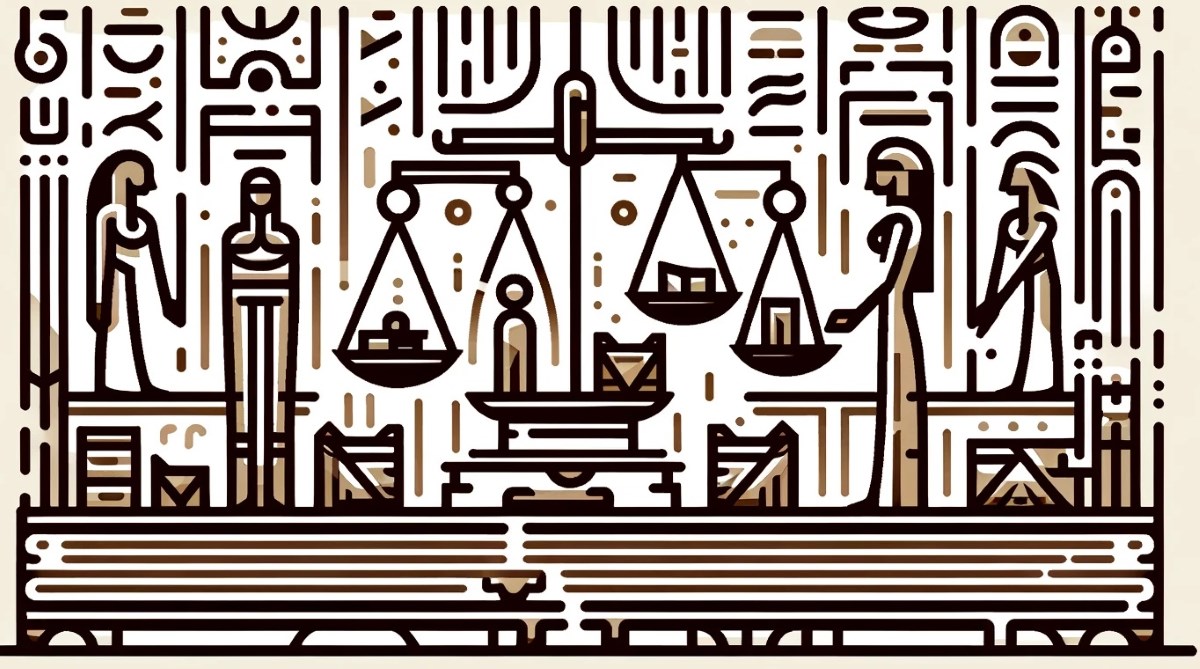
The most primitive and widespread method for measuring weight was the balance scale. It consisted of a beam with two pans at each end, suspended by a fulcrum. Objects to be weighed were placed in one pan, with standardized weights in the other. This device relied on the principle of equilibrium to determine weight accurately.
Standard Weights
Civilizations developed sets of standard weights, often made from stone, metal, or wood, calibrated and regulated by authorities to ensure uniformity in trade and commerce. These weights could be simple stones selected for their uniformity or elaborate metal objects crafted with precision.
Cultural Variations in Weight Units
Mesopotamia and the Shekel
In Mesopotamia, the shekel, which began as a quantity of barley (about 180 grains), evolved into a standard unit for more general commercial use. This demonstrates how agricultural products influenced early weight standards.
Egypt and the Deben
Ancient Egypt used the deben, a unit of weight approximately equivalent to 90 grams. The deben was crucial for trading valuable commodities like gold and copper, as well as for everyday goods in local markets.
Importance in Trade and Economy
Facilitating Trade
Accurate weight measurement was essential for trade, particularly in transactions that spanned different cultures and regions. It allowed for the exchange of goods such as spices, metals, and grains to be conducted fairly, which was vital for maintaining economic stability and building trust among trade partners.
Taxation and Legal Issues
Governments used weight measurement to levy taxes effectively and fairly. This was particularly important for goods that were easily divisible and commonly traded by weight, such as grains and metals. Moreover, accurate weights were necessary to enforce laws regarding fair trade practices.
Technological Advances
Improvements in Scale Design
Over time, scales became more refined and sensitive. Innovations included the introduction of the steelyard balance, which used a counterweight system allowing for the measurement of heavier objects without requiring equally heavy counterweights.
Calibration and Standardization
As trade networks expanded, the need for standardization across regions became more apparent. This led to the establishment of more rigorous standards and calibration procedures, often overseen by governmental or religious authorities to ensure compliance and fairness.
Symbolic and Cultural Significance
Symbols of Justice
In many cultures, scales became symbols of justice and balance. This is evident in legal and religious texts, where just weights and measures are often highlighted as moral imperatives, reflecting the deep ethical significance of honesty in trade.
Integration into Religious Practices
Weight measurement also played a role in religious ceremonies and practices, such as in the offering of goods of certain weights to deities, which underscored its importance beyond the marketplace and into spiritual realms.
Legacy of Ancient Weight Measurement
Archaeological Discoveries
Discoveries of ancient scales and weights in archaeological sites provide insight into the economic and social structures of past civilizations. These artifacts not only tell us about the technologies used but also about the economic priorities and administrative capabilities of ancient societies.
Influence on Modern Systems
The legacy of ancient weight measurement systems can be seen today in the continuity of some units and methods. Modern metric and imperial systems have roots that trace back to these ancient practices, adapted and refined through centuries of commerce and scientific advancements.
In conclusion, weight measurement in ancient times was not just a practical necessity for trade and taxation; it was a complex interplay of technology, culture, ethics, and governance. It shaped civilizations in profound ways, influencing economic systems, legal structures, and even religious beliefs.
Based on the questions you have asked us, we have attempted to discuss the topic of weight measurement and scales both socially and technically. Weight measurement has undoubtedly been one of the most important topics in known history. Throughout our lives, we are all involved in weight measurement in production, consumption, trade, art, sports, etc.
General Questions:
++ Weight standards
- What's the difference between mass and weight, and their measurement methods?
- How does gravity's acceleration affect an object's weight on different planets?
- What are the uses and accuracy factors of precision scales and balances in weight measurement?
- How does weight measurement help determine an object's density?
- How is an object's apparent weight underwater calculated and related to its actual weight?
Industrial Automation and Production:
- How is weight measurement and control integrated into industrial production, and its impact on efficiency?
- What role do automatic weight control systems play in quality control, and how do they improve product quality?
- How are weight sensors selected and configured in industrial automation, and their accuracy evaluated?
- What are the latest developments in weight measurement technologies for industrial automation?
- What software and tools are used for weight data analysis in industrial automation, and their impact on workflow?
For the General Public:
- How can I test the accuracy of home kitchen scales?
- Which bathroom scale is best for tracking body weight, and what are the differences between models?
- How can I accurately measure luggage weight for travel and comply with airline limits?
- What type of kitchen scale should I use for measuring food portion sizes for healthy eating?
- How can I determine if my children are at a healthy weight, and what methods should I use?
Historical
- Archimedes and "Eureka!
- What instruments were used for weight measurement in ancient times?
- What were the units of weight in ancient civilizations?
- How important was weight measurement in trade in ancient societies?
- How did the first scales for measuring weight work in ancient times?
- How were standards for weight measurement established in ancient times?
- What were some significant discoveries related to weight measurement in ancient history?
- What methods were used to prevent fraud in weight measurement in ancient times?
- What events can be considered turning points in the history of weight measurement?
- How were weight measurement units compared between different cultures in ancient times?
- What are some written sources about weight measurement in ancient history?
++ Weight measuring devices homepage
"These
questions often include those that may come to mind for many people
regarding 'Weight measurement.' Each user or student will
have their own specific questions depending on a particular situation or
application. The answers are not binding or entirely definitive. There is no objection to sharing our above article, citing it as a source. - Automation Mall Community, 02/2021"
 -
-
Your shopping cart is empty!