
What is open loop sensor?
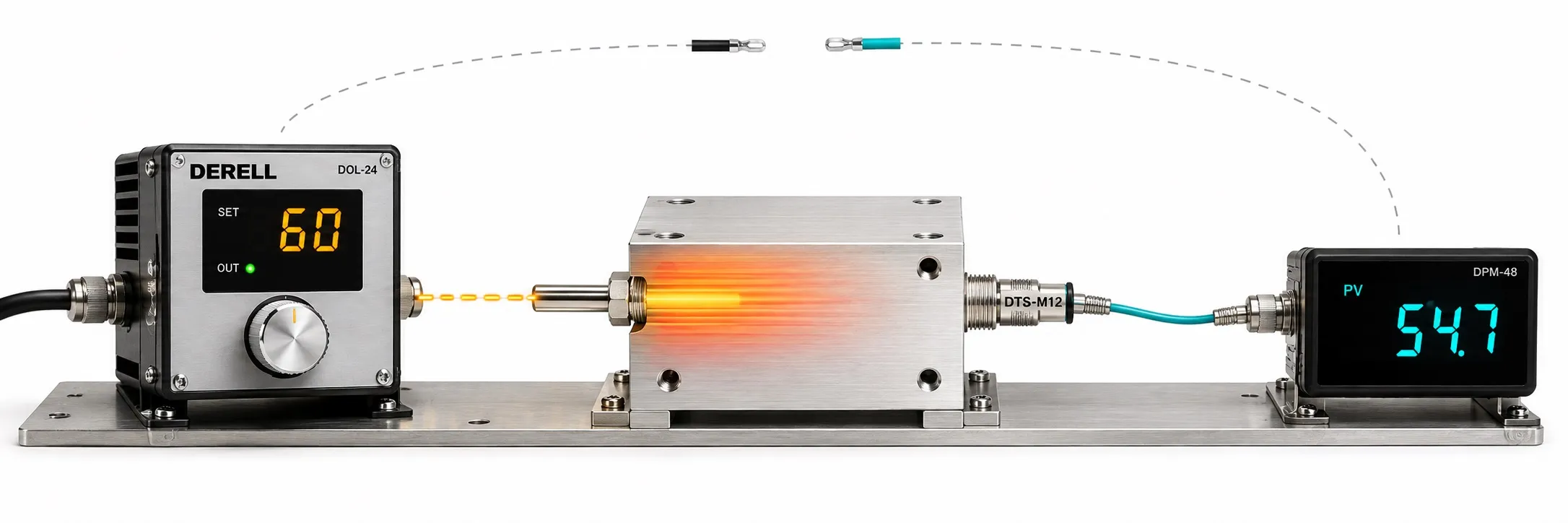
Open-loop sensors: what the term means in practice
The phrase open-loop sensor needs context. On a current transducer datasheet, it can describe the device's measurement architecture. In a discussion about machine control, “open loop” usually describes whether the controlled result is fed back to adjust the command. These are separate questions, and both matter when specifying equipment.
Start by identifying which loop is being discussed. A sensor responds to the quantity it measures; an open-loop label does not mean that it ignores changes in temperature, pressure or current. The important distinction is how the measurement is used.
The specific meaning in Hall current sensing
An open-loop Hall current sensor detects the magnetic field produced by the measured current and converts the Hall element's signal into an output. A closed-loop Hall transducer uses a compensation winding to counterbalance the detected field. Here, open and closed refer to the internal sensing arrangement.
Either architecture may supply feedback to a machine controller. An internally open-loop sensor can be part of an externally closed-loop control system. Compare actual specifications for current range, accuracy, bandwidth, response time and temperature drift. The architecture name alone is insufficient to select a replacement or predict its performance.
A reading on a screen does not close the control loop
In open-loop control, the command is not corrected using feedback of the controlled output. A machine may follow a timed sequence or apply a preset power level. Sensors can still be fitted for display, logging or other functions; their presence does not automatically create feedback regulation for the variable being considered.
For example, a SCADA system might record oven temperature while the heater follows a fixed programme. If those readings do not adjust heating, the temperature control loop remains open. The useful question is: Does a change in the measured result cause the controller to change its command? Trace the signal through the control logic to find the answer.
Follow one temperature measurement through an oven
Suppose an oven runs its heater at a fixed power for five minutes. A temperature sensor reports the chamber temperature to a display. Loading a larger batch or colder material may change the final temperature, but the heater still follows the same schedule. The reading is useful information; it is not being used to correct the heating command.
Now connect a Pt100 or thermocouple to a controller that compares the reading with a temperature setpoint. The controller adjusts heating to reduce the difference. That creates feedback temperature control. Temperature PID control is one implementation, and a PLC running a PID controller is another way to implement it. Sensor placement, heater capacity and tuning still determine the practical result.
What changes when feedback is added?
| Design question | Open-loop control | Feedback control |
|---|---|---|
| What sets the command? | A preset sequence, setting or model. | The measured result influences the command. |
| Can sensors be present? | Yes, including sensors used only for monitoring. | A measurement or suitable estimate supplies feedback. |
| What happens when the load changes? | The result may move away from the intended value without output-error correction. | The controller can respond, within its operating limits. |
| What needs checking? | Whether the assumed operating conditions remain valid. | Measurement quality, stability, tuning and available control authority. |
Feedback does not guarantee accurate or stable operation. A badly scaled input can make a controller regulate the wrong value. Excessive delay or unsuitable gains can also cause poor behaviour. The guides to how PID controllers work and time delays and system dynamics explain the issues behind this distinction.
Sensor technology and control strategy are different choices
A pressure sensor is not inherently an open-loop control device. Its reading might appear on a local indicator, or it might be used to adjust pump speed and hold a pressure target. A pressure transmitter provides a usable measurement signal; the surrounding control logic determines whether that signal closes the process loop.
The same applies to a flow meter: recording total consumption and regulating flow are different jobs. An encoder can report speed to a display or provide motion feedback. Encoder and resolver feedback in servo systems shows how a measured position or speed becomes part of a control decision.
Always name the controlled variable. A machine may have several loops, with different arrangements for temperature, speed, current and position. Describing the entire machine as simply “open loop” can hide the distinction that matters for the application.
Do not confuse loop terminology with output wiring
Normally open and normally closed describe switching behaviour. The NO/NC designation does not tell you whether a process is feedback-controlled. Likewise, PNP and NPN outputs describe electrical output arrangements, not control strategies.
A 4–20 mA current loop is a signal transmission circuit. A closed control loop is a feedback relationship. Using 4–20 mA or 0–10 V does not, by itself, create feedback regulation. Adding a temperature signal converter changes the measurement interface; it does not decide how the controller uses that measurement.
Specify the measurement before choosing the hardware
Define the required measurement range, allowable error and expected changes in operating conditions. Then decide whether the system needs observation, automatic regulation or both. For a PLC-based system, check input compatibility, engineering-unit scaling, sampling and the capability of the controlled output device.
For temperature work, the Pt100 versus thermocouple guide helps narrow the probe choice. Also consider installation position and calibration. When comparing sensor prices, include the required input module, converter, installation and maintenance. A low purchase price is useful only if the complete measurement arrangement meets the job.
Questions that come up during selection
Does open loop mean the sensor is inaccurate? No. Accuracy is a specified measurement property. The label is not a substitute for an error specification under the required operating conditions.
Must feedback control use PID? No. A thermostat that switches heating according to measured temperature can provide feedback control. PID is one available control method.
Will installing a better sensor close the loop? Only if the measurement is incorporated into the control logic and affects the command. Replacing the sensor alone does not establish that relationship.