
Movies and TV shows with robots?
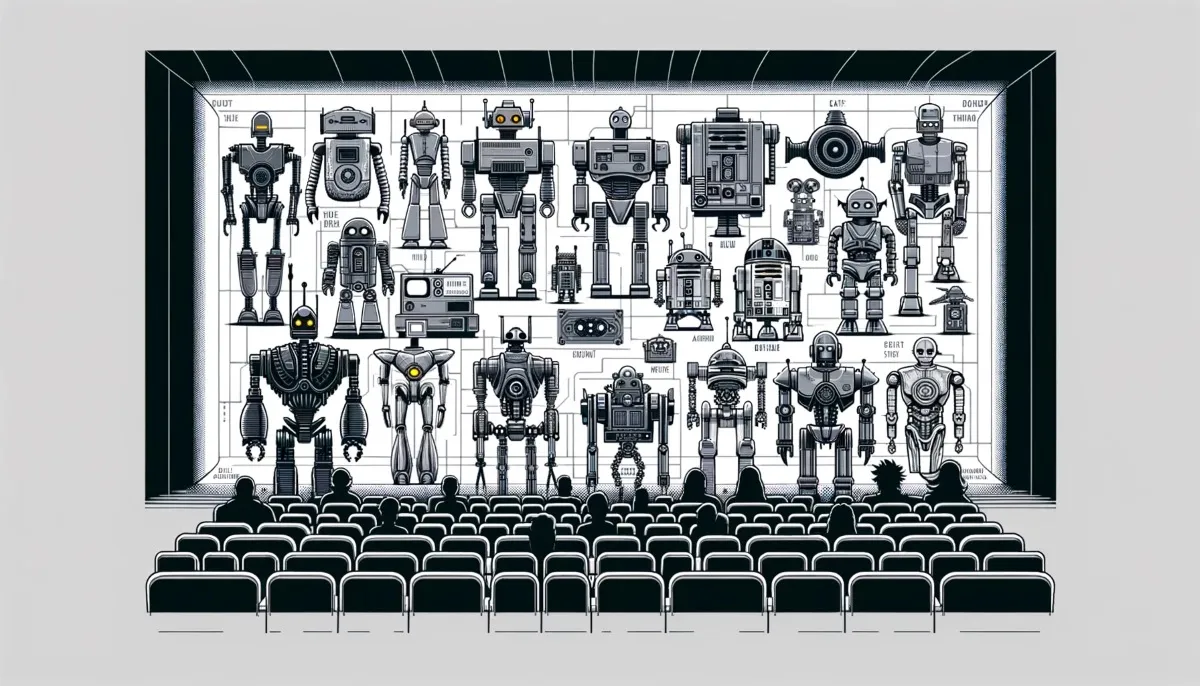
Movies and TV shows with robots: What do machines tell us?
Hello, dear colleagues,
Films and series about robots do more than imagine future machines: they examine our relationship with technology. Some explore obedience, others memory or what it means to be human. As you watch this selection, consider why a character acts as well as what it does. Our robotics introduction offers a starting point for exploring the engineering behind these ideas.
First, distinguish three concepts
A robot is a programmable system that interacts physically with its surroundings; it does not have to look human. Robot types vary with their tasks and construction. Artificial intelligence can operate without a physical body. A cyborg combines biological structures with technological components. This distinction helps us understand how similar metallic appearances can represent different concepts.
Films featuring robots
The Terminator series — first film: 1984
The first film follows a Terminator sent into the past to change the outcome of a future war. Across the series, Skynet is the AI system making decisions, while Terminators are the machines carrying out physical actions. This offers a striking fictional example of the relationship between AI and robotics. Unquestioning pursuit of an assigned objective opens a discussion about programming and the limits placed on decisions.
I, Robot — 2004
Drawing inspiration from Isaac Asimov's ideas about robotics, the film follows a detective investigating a case in a society where robots are part of everyday life. The Three Laws of Robotics sit at the center of the tension between obedience and protecting people. They are literary principles from science fiction, rather than technical rules that establish machine safety by themselves. After watching, consider exploring robotics ethics alongside robot safety.
Ex Machina — 2015
A programmer is invited to a secluded research setting to evaluate an AI-powered robot named Ava. Drawing on the idea of the Turing test, the film asks questions about trust, manipulation and consciousness. Ava's humanoid appearance also shapes how viewers interpret her character. Does speaking and behaving like a person amount to being human? The film opens that question for discussion without providing a definitive engineering answer.
WALL-E — 2008
The story of a small robot collecting waste on Earth explores environmental damage and consumption through a warm narrative. It is also interesting from the perspective of design for a specific task: the character's body, movements and tools relate to its work. When considering everyday robotics applications, notice the connection between perception and movement. The film's ability to give a robot personality without requiring a human face is a distinctive storytelling choice.
RoboCop — 1987
After being critically wounded, police officer Alex Murphy undergoes technological reconstruction that enables him to return to duty. RoboCop is a human-derived cyborg, rather than an entirely artificial robot. The film explores the body, memory, corporate power and control over one's own existence. It invites connections with robotics in healthcare and technologies that support people, although its transformation is not a realistic representation of current medical capabilities.
Television series featuring robots and AI
Westworld — 2016–2022
Artificial characters called “hosts”, created for a theme park visited by humans, provide the starting point. Memory and free will become central themes alongside repeated patterns of behavior. The series was canceled after four seasons. Its fictional human-like capabilities should not be confused with what real robots have demonstrated today. Our overview of the limitations of robotics technology helps examine that distinction.
Humans — 2015–2018
Human-looking service robots called Synths, used at home and at work, change family relationships and the wider social order. The series places technology within everyday relationships, extending the discussion beyond a laboratory setting. Changes to work and the time people spend with one another are important questions. It provides a useful starting point for comparing the relationship between robotics and employment with real applications.
Black Mirror — first broadcast: 2011
Not every episode of this anthology concerns robots. For a robot-focused story, Metalhead features robotic pursuit; for imitation of a person, Be Right Back explores a representation created from digital traces. Does reproducing someone's behavior bring that person back? The question offers a useful way to think about behavior generated through machine learning, while the show's fictional assumptions do not establish what real systems can do.
Doctor Who — first broadcast: 1963
This long-running science fiction universe features robots and technological transformations across different eras. In particular, the Cybermen are cyborg characters created through the technological conversion of biological beings; describing them simply as robots misses that distinction. Loss of identity and emotion are central questions in their stories. To clarify the broader concepts, you can also explore the difference between a robot and a machine.
Battlestar Galactica — 2004–2009
This entry refers to the reimagined television series following the 2003 miniseries. Humanity's conflict with the Cylons explores identity and belonging, trust and survival. Human-looking and mechanical Cylons bring different expectations of artificial beings into conflict. Learning about real robots in space exploration helps distinguish the show's space opera storytelling from engineering realities.
What about The Matrix?
The Matrix deserves a place in this selection. Its universe combines physical machines, software characters and simulated reality. The story questions the relationship between the world people perceive and the system behind it. Its simulation is a different concept from a real engineering digital twin, which is used to model and examine a particular physical system.
The Matrix (1999) begins the central story as Neo questions the reality he inhabits. The Matrix Reloaded (2003) expands the world's rules and the struggle between humans and machines. The Matrix Revolutions (2003) brings the original trilogy's conflict to a conclusion. Watching these three films in sequence is a useful way to follow the narrative's development.
The Animatrix (2003) consists of nine animated shorts that expand the Matrix universe through different perspectives. The Matrix Resurrections (2021) is the fourth feature film.
Moving from fiction to real robotics
While watching a scene, consider how a robot senses its surroundings, where its energy comes from and how it produces movement. The main components of a robot and how a robot works provide technical foundations for these questions. In real robotics, success is evaluated against a task, an environment and measured performance. When considering the future of robotics, assess cinematic imagination and demonstrated progress separately.
Production information and further reading: A24: Ex Machina · Pixar: WALL-E · 20th Century Studios: I, Robot · Doctor Who: Cybermen · Netflix: Black Mirror episode selection · The Matrix official website.
Dates indicate film release years, or the stated broadcast period or first broadcast year for a series. Viewing preferences are editorial. You may share this article with attribution.