
What is crane vfd devices?
The device that enables lifting and lowering movements for heavy-duty cargo machinery and general transportation movements for the x and y axes is called a "crane driver." It is supported by specific macros for continuous operation and oscillating loads and is durable enough to withstand overloading and fluctuating electrical energy while also equipped with top-level safety measures.
Crane drivers (hook motors) must be equipped with mechanical brake pads and braking resistors for added support. Regenerative power units and the lowest possible harmonic pollution are essential for cranes.
Cranes require economic, efficient, and precise control. Due to safety concerns, many speed control device (VFD) manufacturers do not develop drivers for cranes. The challenges are minimizing cycle times, reducing mechanical wear and tear, and ensuring smooth operation. Simplicity and reliability, collective workability with other third-party mechanical components, and the risks of dropping the load down are also important factors to consider.
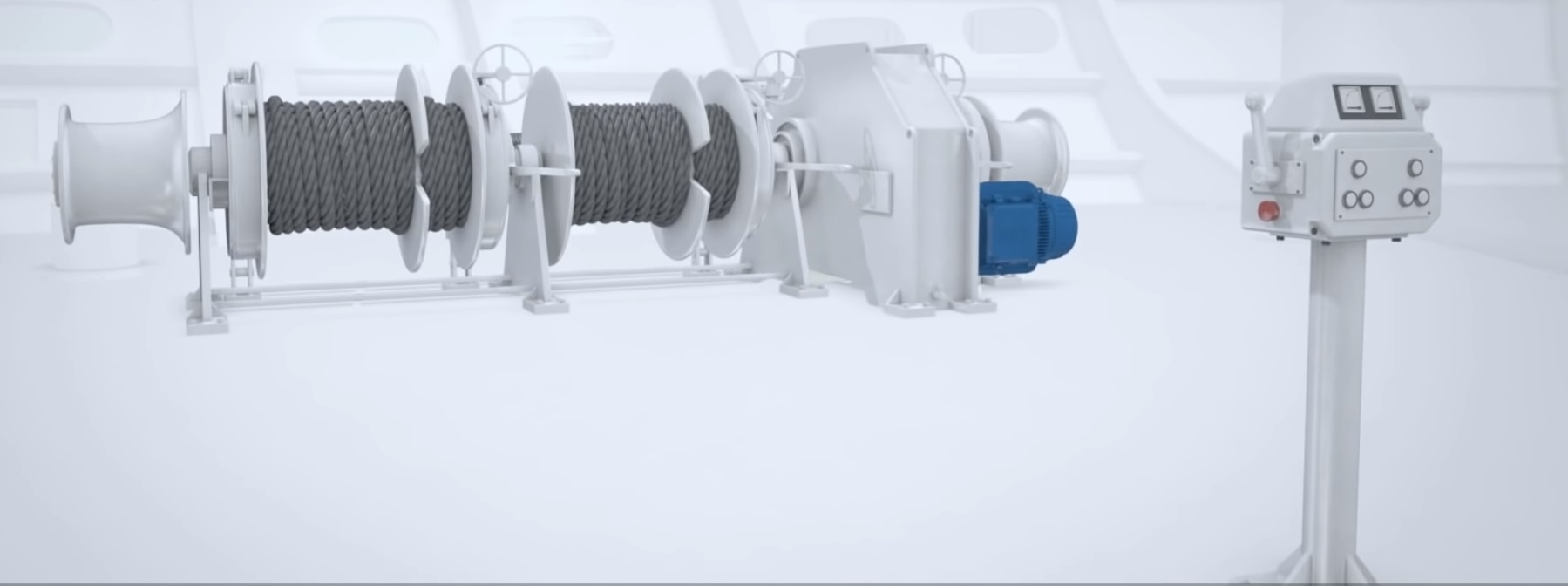
Safety and Performance
Today, crane manufacturers and end-users have the ability to implement various new control strategies based on powerful internal crane control applications that rely on speed control devices. Making the best choice in control strategies can provide significant advantages for both safety and control operations.
Undoubtedly, whether related to an electric overhead crane in a closed area or a construction tower crane in an open area, safety and performance are the two most important requirements of any industrial crane. The equipment must operate safely and accurately without any risk of load falling or swinging in any condition.
New driver-based crane control solutions are not only powerful but also cost-effective and simplified, as the specific functions of the basic crane are performed directly in the driver. Smart control features embedded in the driver can include master/follower functionality, electric shaft and swing prevention, and advanced mechanical brake control.
A modern alternative to this approach may be to use ready-made crane applications that provide the necessary crane control through a speed control device. Recently, a unique platform has been developed that allows crane control to be performed in various ways that utilize the power of drivers.
Driver-Based Technology developed for cranes provides the necessary function blocks for each crane. Using pre-configured standard applications for lifting, handcart, or portal, function blocks can be easily integrated into driver control, which provides shorter engineering time and less commissioning cost.
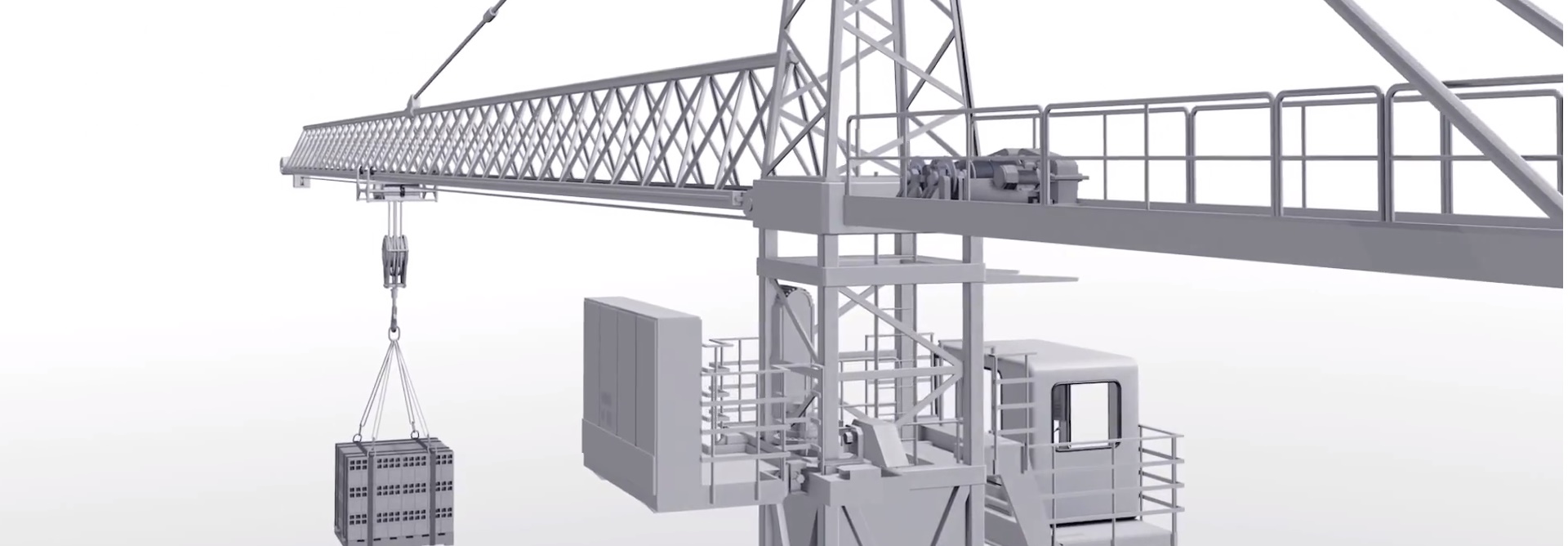
The Essential Features of Crane Drivers:
- Must have an internal lifting macro that can be activated with a few parameters.
- Provide controlled starting at the first start to absorb possible oscillations.
- Load balancing with speed-torque sharing or load reduction control for multiple motors attached to the same body.
- Reference features that synchronize walking speed between two cranes in halls with multiple cranes.
- Ability to work in open or closed loop.
- A high-level component structure for instant shock and voltage conditions.
- Adjustable control output for mechanical brake pads.
- Controlled emergency stop for any accidents that may occur on the load, such as rope breakage.
- Smart algorithmic options to prevent oscillation.
- Automatic load/speed adaptation (automatic high-speed operation when the crane is empty).
- Ability to provide information to the central SCADA system in necessary cases.
- Limit switch or sensor inputs for only the direction of operation, such as forward/backward or up/down.
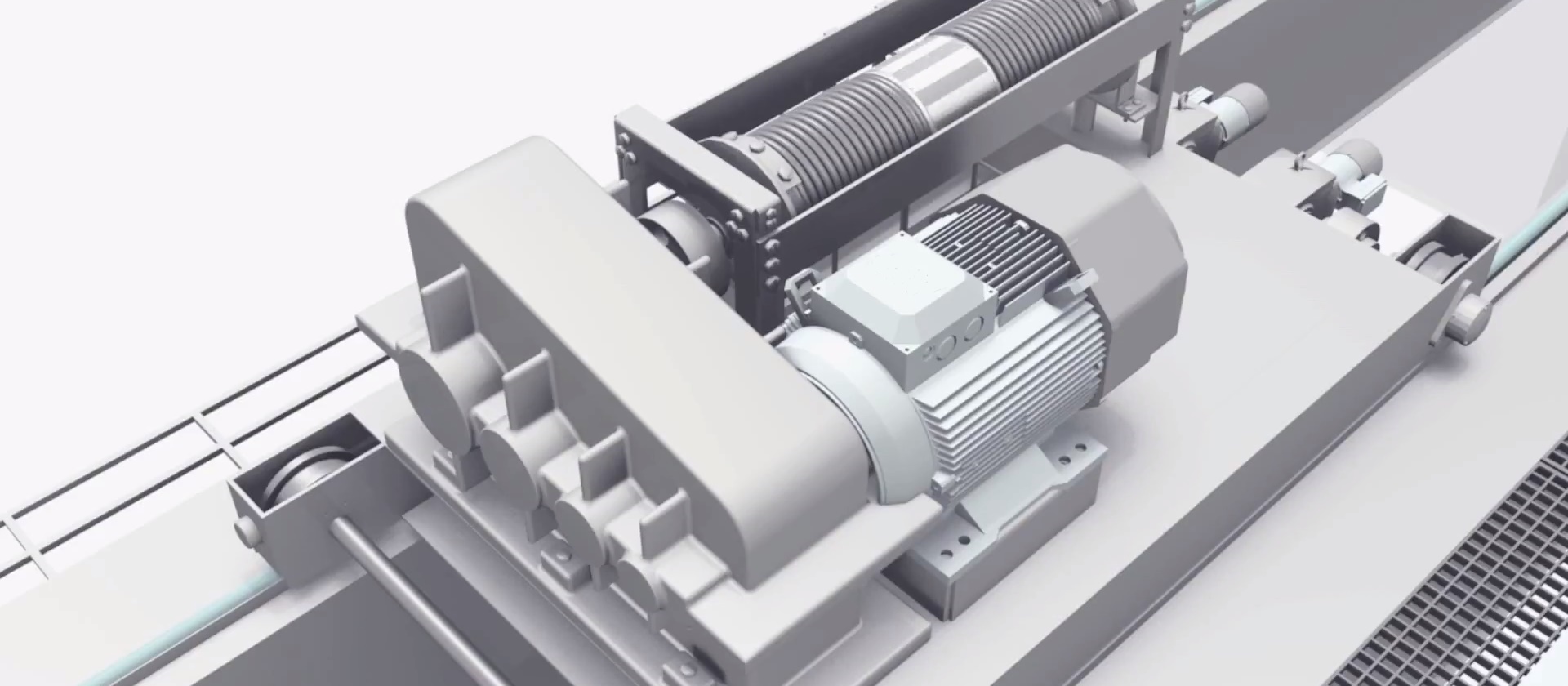
Benefits of Using an Inverter to Control Your Crane:
Higher Speed Setting: Using an inverter allows you to choose from multiple speeds that can be customized to your lifting controls. Therefore, you can move faster during long travel distances and more precisely during heavier work.
Improved Load Control: Moving a load with a contactor or fixed lifting device can cause shock movements or load oscillations. The speed control device allows for smooth operation by gradually moving a load. Motor drivers also provide soft acceleration to prevent load oscillations during lateral movements.
Regenerative Benefits: Frequency inverters with this capability are briefly matched with a braking resistor depending on the duty cycle of the movement. An AC regenerative drive will redistribute the energy that would otherwise be converted to heat with a braking resistor.
Efficiency: An inverter only consumes the necessary power, thus saving energy compared to contactors and soft starters.
Increased Lifting Life: Frequency-adjustable drivers designed for cranes extend the life of lifting motors by providing thermal overload and overcurrent protection. Inverters also use the ramp-stop-stop braking method instead of using brake pads to slow down. Brake pads are used not to stop the load but for mechanical locking purposes. This advantage has been observed to extend the life of brake pads by up to 30-40 times.
Note: Mechanical brake pads must be used for motors used in cranes even if an inverter is used.
Remote Control: Helps with on-machine or remote maintenance and troubleshooting.
Safe Moment Shutdown: Provides backup hardware safety circuitry that ensures the removal of motor and brake power when an emergency stop switch or safety controller opens the driver input, eliminating the need for external connection interruption.
Torque Control: The motor is given initial movement before the brake is released so that the load can be lifted before the brake is released. (about torque control >)
Load Control: Continuously monitors the overload and prevents the hook from lifting when an overload condition is detected.
Brake Controls: Monitors the opening and closing of the brake to ensure its safety and health.
Mini-Speed Formation: Enables the operator to make slow, precise movements (especially in heavy and mm-level assembly/dismantling applications).
Electronic Programmable Limit Switches: Allows for slowdown and stopping limits without physical gear limit switches.
Anti-Sway Features: Anti-sway technology is an optional add-on that eliminates load oscillation, which is the primary cause of accidents. This is done by installing sophisticated software on your existing control gears or a crane structure. The software detects the crane's long and cross-movement motions and makes the necessary calculations to stabilize the hook.
In summary, dear visitor, we have tried to explain the advantages of using a driver for cranes in detail, even though it may be boring. The instant start provided by the driver makes the lifespan of the gearbox and gear system that the motor is connected to much longer. As the driver stops the motor, the lifespan of the brake pads is also extended. The load oscillation decreases and the likelihood of motor combustion is reduced. It provides precise control by allowing movements or lifting/lowering operations in millimeter-based increments in places where precise operations are required. You can connect an encoder and limit its movement if necessary. There is no need to discuss energy efficiency, etc.
Thank you for reading..