
What is the history of Ethernet/IP?
Hi everybody,
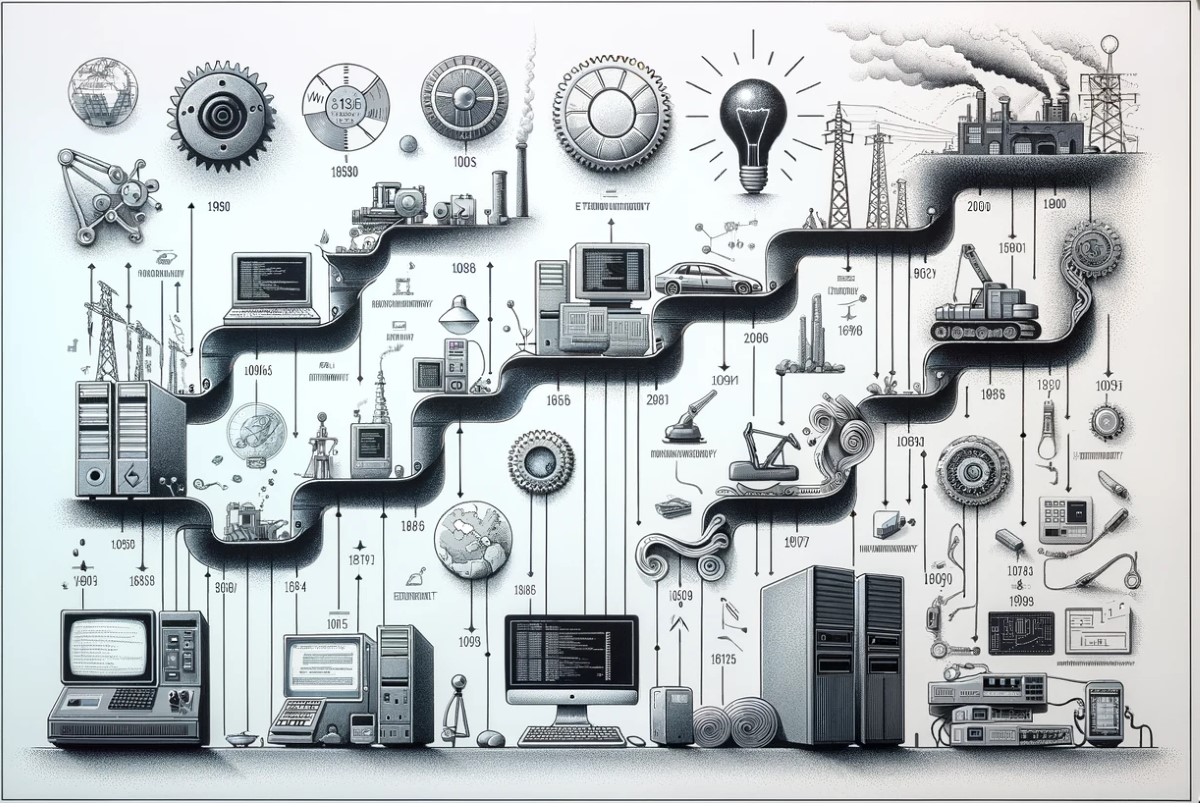
Ethernet/IP (which stands for "Ethernet Industrial Protocol") has an interesting history rooted in the evolution of industrial automation and the convergence of traditional industrial communication protocols with modern Ethernet technology. Let's delve into its history:
1. Industrial Automation's Early Days:
In the early stages of industrial automation, different manufacturers developed their proprietary communication protocols for their devices. This led to a plethora of fieldbus protocols, each suitable for specific applications but lacking interoperability.
2. The Advent of CIP:
The Common Industrial Protocol (CIP) was developed by Rockwell Automation in the 1990s. CIP became the underlying protocol for Rockwell's DeviceNet and ControlNet networks. It was designed to be media independent, which meant that the core application protocol could run on different physical networks.
3. ODVA's Role:
The Open DeviceNet Vendor Association (ODVA) was founded to support the adoption and further development of CIP-based networks. The organization played a pivotal role in promoting CIP and ensuring its standardization.
4. Ethernet Enters the Scene:
As Ethernet technology became dominant in office and enterprise environments, there was a push to adopt it in industrial settings as well. However, standard Ethernet wasn't initially suitable for real-time industrial applications due to its non-deterministic nature.
5. Birth of Ethernet/IP:
In the late 1990s, to bridge this gap, the Ethernet/IP protocol was introduced. It combined the widespread acceptance and robustness of Ethernet with the flexibility and real-time capabilities of CIP. This allowed Ethernet/IP to leverage standard Ethernet hardware and TCP/IP stacks while ensuring real-time, reliable communication in industrial environments.
6. Growing Adoption:
With the backing of major companies and the advantages it offered in terms of interoperability and integration with IT systems, Ethernet/IP quickly gained traction. Its support for various topologies (like star, line, and ring) and its ability to handle both real-time I/O messaging and explicit messaging made it a preferred choice for many industries.
7. Modern Day:
Today, Ethernet/IP is one of the most widely adopted industrial Ethernet protocols worldwide. Its continuous development, driven by organizations like ODVA and its member companies, ensures it remains relevant and aligned with the evolving needs of Industry 4.0 and the Industrial Internet of Things (IIoT).
In summary, the history of Ethernet/IP is a testament to the industrial sector's need for standardized, flexible, and interoperable communication solutions. By merging the strengths of traditional industrial protocols with the ubiquity of Ethernet, Ethernet/IP has carved a significant niche for itself in the landscape of industrial automation.
"Platforms established on an Ethernet and Ethernet/IP (TCP) foundation have become increasingly popular in many sectors of industry. This technology, which is both practical and offers time/place savings, has evolved and branched out over time and has been embedded in third-party platforms as well. Below, we have tried to answer some of the main questions we received from our valued visitors about Ethernet/IP (TCP)."
- How does the Ethernet/IP protocol work?
- What are the differences between Ethernet/IP and standard Ethernet?
- What are the advantages and disadvantages of Ethernet/IP?
- In which application areas is Ethernet/IP used?
- What security features does Ethernet/IP have?
- With which devices and systems can Ethernet/IP communicate?
- What is the history of Ethernet/IP?
- How is Ethernet/IP configured?
- What software and tools are available for Ethernet/IP?
- What are the differences between Ethernet/IP and Modbus TCP?
- What is known about the bandwidth and latency of Ethernet/IP?
- Which port number is used for the Ethernet/IP protocol?
- Where does Ethernet/IP fit in the OSI model?
- What certifications and standards are applicable to Ethernet/IP?
- How is Ethernet/IP used in industrial automation?
- With which programming languages can development be done for Ethernet/IP?
- What is the potential and future developments for Ethernet/IP?
- How is diagnostic and fault detection performed on Ethernet/IP?
- Which cables and connectors are used at the physical layer for Ethernet/IP?
- What specific security measures exist for Ethernet/IP?
+ Back to Automation main page
Your shopping cart is empty!