
With which devices and systems can Ethernet/IP communicate?
Hi everybody,
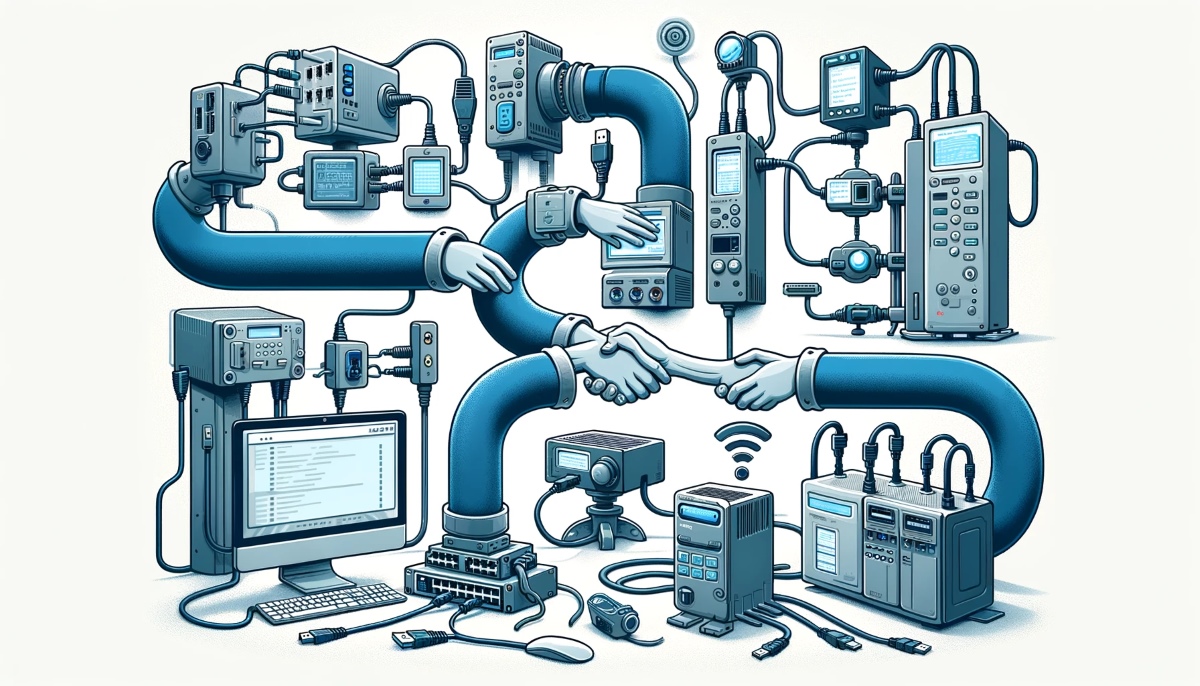
Ethernet/IP (Industrial Protocol) is designed to provide seamless communication in industrial environments. It can communicate with a wide variety of devices and systems, thanks to its foundation on standard Ethernet and its adoption of the Common Industrial Protocol (CIP). Here are some of the devices and systems with which Ethernet/IP can interact:
Programmable Logic Controllers (PLCs): Ethernet/IP allows for real-time communication with PLCs, which are central to many industrial automation processes.
Human-Machine Interfaces (HMIs): Ethernet/IP facilitates data exchange between PLCs and HMIs, allowing operators to monitor and control processes.
Industrial PCs: These computers, designed for rugged industrial environments, can communicate over Ethernet/IP to run applications, collect data, or control processes.
Variable Frequency Drives (VFDs): Ethernet/IP can be used to control and monitor motor drives, adjusting speed and torque as necessary.
Sensors and Actuators: Devices that detect environmental conditions or perform physical actions, such as temperature sensors or solenoid valves, can communicate their status or receive commands over Ethernet/IP.
Robots: In modern manufacturing environments, robots can be integrated into the Ethernet/IP network for coordination and control.
Safety Devices: Devices like light curtains, emergency stop buttons, and safety interlocks can communicate safety-related signals over Ethernet/IP, especially when using the CIP Safety protocol.
I/O Modules: Ethernet/IP can communicate with distributed I/O modules to gather data or send commands directly to the field level.
Vision Systems: Cameras and vision systems used for quality checks, positioning, or other tasks can be integrated into Ethernet/IP networks.
Barcode Scanners and RFID Readers: These devices can be connected to Ethernet/IP networks to track products or components in manufacturing or logistics applications.
Networking Equipment: Switches, routers, and gateways that support Ethernet/IP can be used to build and manage the network infrastructure.
Enterprise Systems: With appropriate gateways or middleware, Ethernet/IP can be bridged to enterprise-level systems like MES (Manufacturing Execution Systems) or ERP (Enterprise Resource Planning) systems, allowing for data exchange between the factory floor and corporate IT.
Other Industrial Protocols: Through the use of gateways or protocol converters, Ethernet/IP can communicate with devices on other industrial networks such as PROFIBUS, Modbus, or DeviceNet.
The versatility of Ethernet/IP and its ability to integrate a wide variety of devices and systems make it a popular choice in modern industrial automation. This interoperability is crucial for achieving the goals of Industry 4.0 and the Industrial Internet of Things (IIoT).
"Platforms established on an Ethernet and Ethernet/IP (TCP) foundation have become increasingly popular in many sectors of industry. This technology, which is both practical and offers time/place savings, has evolved and branched out over time and has been embedded in third-party platforms as well. Below, we have tried to answer some of the main questions we received from our valued visitors about Ethernet/IP (TCP)."
- How does the Ethernet/IP protocol work?
- What are the differences between Ethernet/IP and standard Ethernet?
- What are the advantages and disadvantages of Ethernet/IP?
- In which application areas is Ethernet/IP used?
- What security features does Ethernet/IP have?
- With which devices and systems can Ethernet/IP communicate?
- What is the history of Ethernet/IP?
- How is Ethernet/IP configured?
- What software and tools are available for Ethernet/IP?
- What are the differences between Ethernet/IP and Modbus TCP?
- What is known about the bandwidth and latency of Ethernet/IP?
- Which port number is used for the Ethernet/IP protocol?
- Where does Ethernet/IP fit in the OSI model?
- What certifications and standards are applicable to Ethernet/IP?
- How is Ethernet/IP used in industrial automation?
- With which programming languages can development be done for Ethernet/IP?
- What is the potential and future developments for Ethernet/IP?
- How is diagnostic and fault detection performed on Ethernet/IP?
- Which cables and connectors are used at the physical layer for Ethernet/IP?
- What specific security measures exist for Ethernet/IP?
+ Back to Automation main page
Your shopping cart is empty!