
What protocols can operate over Ethernet?
Hi everyone,
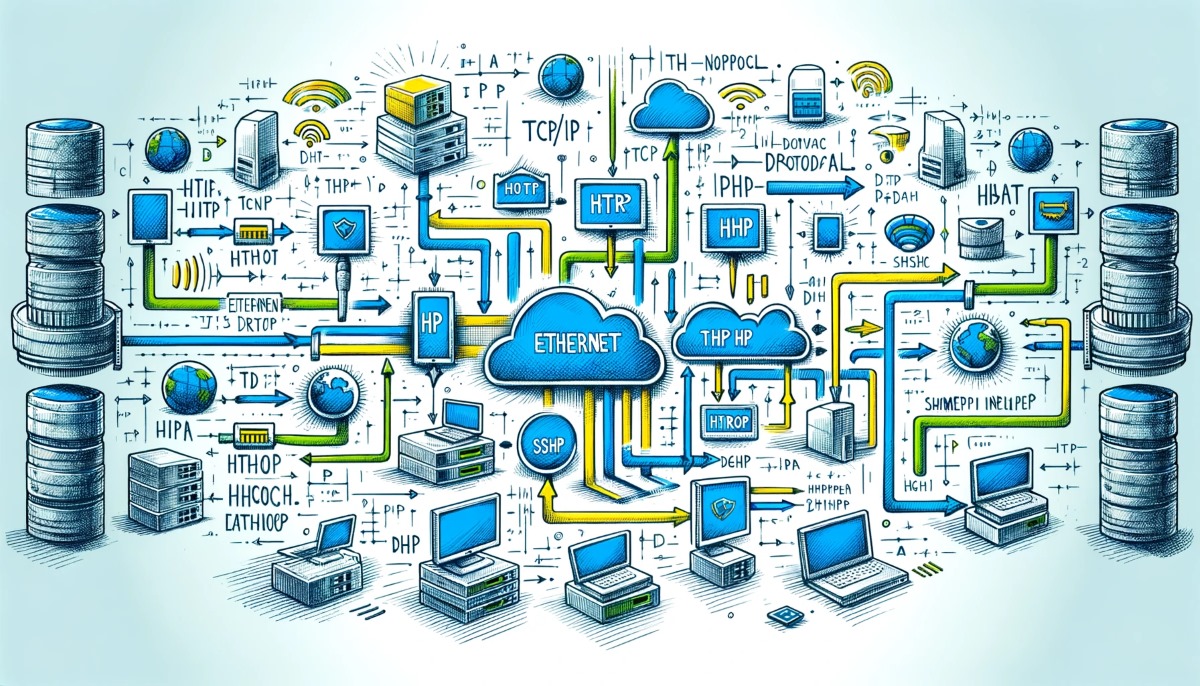
Ethernet is a versatile transport medium, and a wide variety of protocols have been designed to operate over it. Here's a list of some of the most common protocols that can operate over Ethernet:
Internet Protocol Suite (TCP/IP):
IP (Internet Protocol): Used for routing datagrams across network boundaries.
TCP (Transmission Control Protocol): Ensures reliable, ordered delivery of packets.
UDP (User Datagram Protocol): Provides connectionless communication without error-checking.
ARP (Address Resolution Protocol):
Resolves IP addresses to MAC addresses within a local network.
RARP (Reverse Address Resolution Protocol):
Resolves MAC addresses to IP addresses, less commonly used today.
ICMP (Internet Control Message Protocol):
Used for network diagnostics (e.g., ping).
IGMP (Internet Group Management Protocol):
Used by hosts and adjacent routers to establish multicast group memberships.
LLDP (Link Layer Discovery Protocol):
Used by network devices for advertising their identity, capabilities, and neighbors on an Ethernet network.
STP (Spanning Tree Protocol):
Prevents network loops in bridged Ethernet local area networks.
VLAN (Virtual Local Area Network) Protocols:
802.1Q: Standard for network virtualization using VLANs.
LACP (Link Aggregation Control Protocol):
Part of the 802.3ad standard, used to bundle several physical links into a single logical link.
DHCP (Dynamic Host Configuration Protocol):
Assigns IP addresses and other network configuration information to devices on a network.
SNMP (Simple Network Management Protocol):
Used for monitoring and managing devices on an IP network.
NetBIOS & SMB (Server Message Block):
Used primarily by Windows for file and printer sharing.
NFS (Network File System):
Used for file sharing on UNIX and Linux systems.
AppleTalk:
Legacy protocol used by Apple devices for networking, largely obsolete now.
IPv6:
The next-generation Internet Protocol, designed to replace IPv4.
MPLS (Multiprotocol Label Switching):
Used to route data packets through a network based on labels rather than IP addresses.
This list is by no means exhaustive. Ethernet's ubiquity and flexibility have led to its use as the underlying transport for a vast array of protocols and applications in modern networking.
"Platforms established on an EtherNET foundation have become increasingly popular in many sectors of industry. This technology, which is both practical and offers time/place savings, has evolved and branched out over time and has been embedded in third-party platforms as well. Below, we have tried to answer some of the main questions we received from our valued visitors about EtherNET."
- What is Ethernet?
- How does Ethernet work?
- What is the history of Ethernet?
- What types of Ethernet cables are there?
- What are the differences between Ethernet and Wi-Fi?
- What are the different speeds of Ethernet?
- What is the Ethernet protocol?
- What is an Ethernet card and what does it do?
- What is the difference between an Ethernet switch and a hub?
- What protocols can operate over Ethernet?
- What are the advantages and disadvantages of Ethernet?
- What is Power over Ethernet (PoE)?
- What is the structure of an Ethernet frame?
- What is an Ethernet address (MAC address)?
- How has Ethernet evolved and what are the future trends?
- What is Gigabit Ethernet?
- What security protocols are used in Ethernet networks?
- What is the relationship between Ethernet and TCP/IP?
- How is data transmitted in an Ethernet network?
- What is the maximum length of an Ethernet cable?
+ Back to Automation main page
Your shopping cart is empty!