
IEC 60269-3
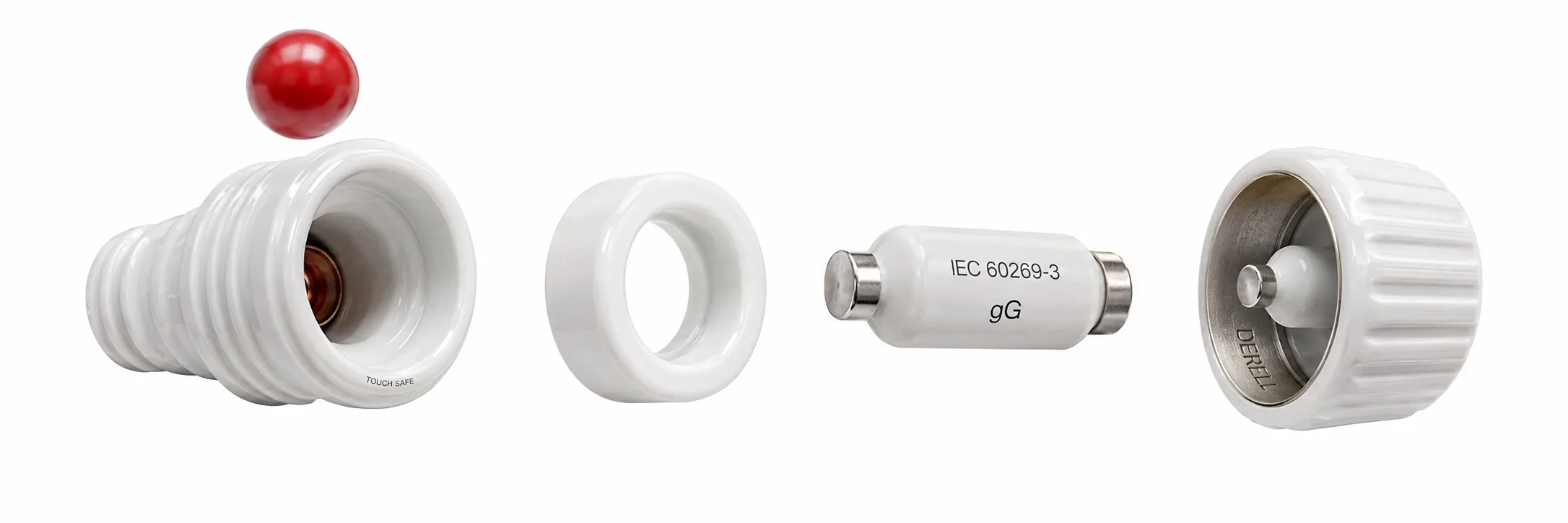
Choosing fuses safely for household and similar installations
Hello everyone,
IEC 60269-3 is the part of the low-voltage fuse series addressing fuse systems intended for operation by unskilled persons, mainly in household and similar applications. Its purpose extends beyond interrupting overcurrent: it takes a system approach to selecting the appropriate fuse-link, handling it safely and preventing replacement with an incorrectly higher current rating.
Understanding the scope
This part is considered together with the general requirements of IEC 60269-1. IEC 60269-2 concerns systems intended for authorized persons or people trained in electrical engineering. The distinction goes beyond whether the building is a home or a factory: system construction and the intended operator also matter. A household installation must not be assumed to have less demanding short-circuit conditions.
IEC 60269-3:2024 applies only to gG fuses. The current IEC record identifies a corrected version incorporating the November 2025 corrigendum. The 2024 edition describes four standardized fuse systems; system counts and details from older editions should not be confused with the current document.
Miniature cartridge and similar fuse-links inside appliances are generally assessed under the IEC 60127 series. Resettable miniature circuit breakers require a separate assessment of the IEC 60898 scope. Being used in a home does not place all these products under IEC 60269-3.
What does gG mean?
gG identifies a general-purpose, full-range breaking characteristic. Correctly selected, these fuses provide overload and short-circuit protection. “Full-range” refers to the operating range from defined fusing conditions up to the rated breaking capacity. It does not mean that a fuse opens immediately when its marked current is slightly exceeded: current magnitude and duration both matter.
After the fuse-element melts, the resulting arc must also be extinguished safely. Protection therefore involves more than melting a wire. Nor does a gG marking guarantee protection of every sensitive semiconductor; such applications require separate consideration of IEC 60269-4 and semiconductor-protection requirements.
The fuse-link, base and carrier form a system
The fuse-link is the replaceable part that operates during a fault. The base, carrier or screw cap provides the electrical connection and mechanical arrangement. Systems such as D and D0 use dimensioning and rating-restricting components to help prevent insertion of a fuse-link above the permitted current rating. These are mechanical safeguards against incorrect replacement, rather than electronic circuits that limit load current.
A component is not suitable merely because it physically fits. The differences between fuse types include voltage, operating characteristic and breaking capacity as well as shape. Preserve the type and characteristics specified for the system. Never defeat a gauge-piece or change a cap to accommodate a higher-rated fuse-link.
Specifications that must be checked together
Rated current: Assess the fuse's ampere rating against the normal load while preserving protection of the cable's current-carrying capacity. Installation method, ambient temperature and cable grouping can change the result. Simply dividing appliance power by voltage is insufficient to select protection for the complete installation.
Rated voltage and AC/DC suitability: The voltage ratings of both the fuse-link and its base must suit the circuit. An AC rating does not establish suitability for a DC circuit of the same numerical voltage. Safe arc extinction and resistance to restriking depend on selecting the appropriate voltage rating.
Breaking capacity: Load-current ratings in amperes and fault-interruption ratings in kiloamperes describe different properties. For example, 16 A denotes rated current, whereas a specified 50 kA denotes breaking capacity under defined test conditions. These are illustrative values; not every IEC 60269-3 fuse has a 50 kA rating. The prospective short-circuit current must not exceed the selected product's capacity at the relevant voltage.
Time-current behavior and coordination: Power supplies and other loads can draw an energization current above their normal operating current. Avoiding unwanted operation must not weaken cable protection. Selectivity between upstream and downstream fuses is checked using manufacturer curves and coordination data. Detailed fuse-selection criteria extend well beyond the ampere rating.
What should testing and documentation establish?
The general requirements and the supplementary requirements of the relevant system address matters such as temperature rise, power dissipation, insulation, operating characteristics, interruption performance and mechanical compatibility. The fuse-holder's acceptable power dissipation also matters: even a correctly rated fuse-link can overheat in an unsuitable holder or one with deteriorated contacts.
Match the manufacturer, part number, gG category, rated current, voltage, dimensional system and breaking capacity to the datasheet. A standard number on a product does not establish that the entire distribution-board design is correct or that every national condition of use has automatically been met. Check the applicable edition and the product's relevant conformity documentation separately.
A common replacement mistake
If a 16 A fuse repeatedly operates, fitting a 25 A fuse-link is not the solution. Investigate the reason for fuse operation, including overload, short circuit, load starting current and connection problems. Discolored bases, loose contacts and cracked caps also need assessment. Simply replacing the fuse-link may leave the underlying problem unresolved.
For safe fuse replacement, isolate the supply, verify absence of voltage by an appropriate method and follow the manufacturer's procedure. An ordinary fuse-holder must not be assumed suitable for switching under load. Fuse-box placement and maintenance, contact temperature and protection against contact are also part of safe operation.
Related protection topics
Residual-current protection, earthing and surge protection perform different functions from a gG fuse and must be considered together for different hazards. Selecting a suitable fuse is insufficient without correct cable cross-section selection. This relationship is central to understanding the role of fuses in household electrical safety.
When comparing products, consider both which fuse type to choose and the scope of IEC fuse standards. This helps prevent confusion between installation-protection fuses and miniature appliance fuses.
Technical references
IEC: IEC 60269-3:2024 and the November 2025 corrigendum
IEC: IEC 60269-1:2024 general requirements
IEC: IEC 60127-1:2023 miniature-fuse scope
Siemens: Fuse Systems technical primer
Eaton Bussmann: D and D0 fuses, bases and accessories