
What is Industry 4.0 and what are its key components?
Hi dear friends,
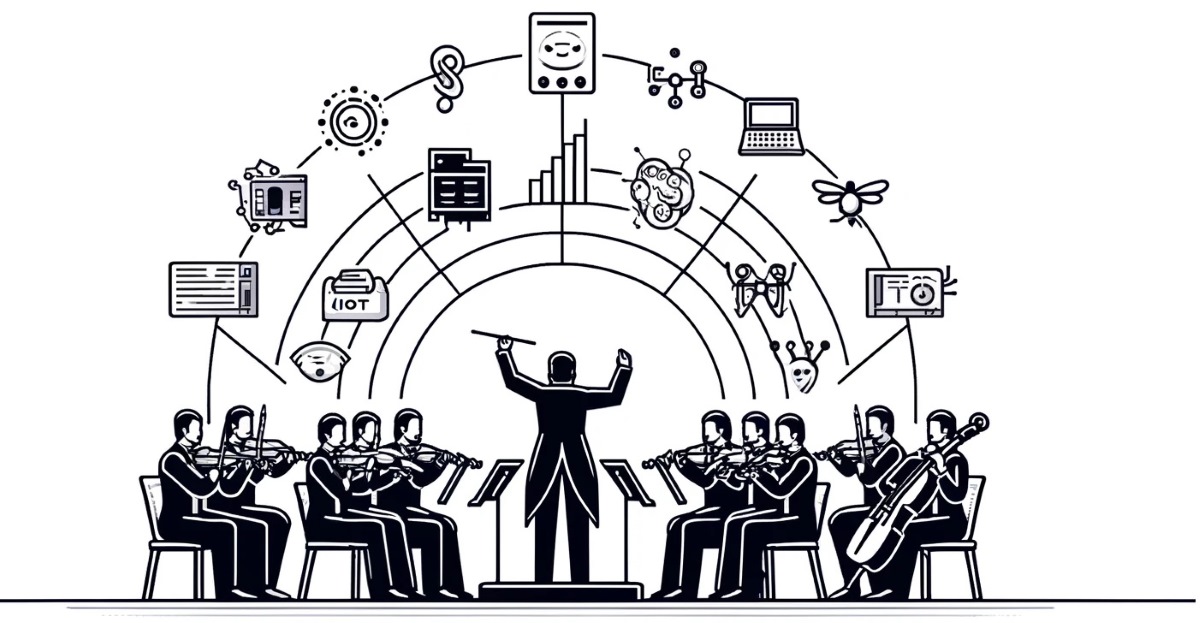
Industry 4.0, also known as the Fourth Industrial Revolution, is a term that describes the integration of advanced technologies into manufacturing and industrial practices. It represents a paradigm shift from traditional manufacturing methods to a more interconnected and automated approach, driven by advancements in technology. The key components of Industry 4.0 are often referred to as the pillars that support and enable this transformation. These components include:
Internet of Things (IoT): IoT refers to the network of physical devices, vehicles, buildings, and other items embedded with sensors, software, and other technologies for the purpose of connecting and exchanging data with other devices and systems over the internet. In the context of Industry 4.0, IoT enables the collection and analysis of data from various sources in real-time, leading to improved efficiency, productivity, and decision-making.
Big Data and Analytics: The vast amount of data generated by IoT devices and other sources in Industry 4.0 requires advanced analytics tools to process, analyze, and interpret. Big data analytics allows for the extraction of valuable insights from large datasets, enabling predictive maintenance, process optimization, and informed decision-making.
Cyber-Physical Systems (CPS): CPS are integrations of computation, networking, and physical processes. In Industry 4.0, CPS involves the use of digital models and simulations to mirror and control physical processes in real-time. This enables a seamless connection between the virtual and physical worlds, leading to improved monitoring, control, and optimization of industrial processes.
Cloud Computing: Cloud computing provides scalable and on-demand access to computing resources such as servers, storage, and applications over the internet. In Industry 4.0, cloud computing enables the storage and processing of large amounts of data, supports the deployment of IoT and analytics applications, and facilitates collaboration and resource sharing across different locations.
Artificial Intelligence (AI) and Machine Learning (ML): AI and ML technologies play a crucial role in Industry 4.0 by enabling the automation of complex tasks, improving decision-making through intelligent algorithms, and enhancing the adaptability of industrial systems. These technologies are used in various applications, such as predictive maintenance, quality control, and supply chain optimization.
Additive Manufacturing (3D Printing): Additive manufacturing, commonly known as 3D printing, allows for the creation of complex and customized products layer by layer. This technology offers flexibility in design, reduces waste, and enables rapid prototyping and production, which are essential for agile manufacturing in Industry 4.0.
Augmented Reality (AR) and Virtual Reality (VR): AR and VR technologies enhance the interaction between humans and machines by providing immersive and interactive experiences. In Industry 4.0, AR and VR are used for training, maintenance, and remote collaboration, allowing workers to visualize complex processes and instructions in real-time.
Robotics and Automation: The integration of advanced robotics and automation technologies is a key aspect of Industry 4.0. These technologies enable the automation of repetitive and hazardous tasks, increase precision and efficiency, and allow for greater flexibility in production processes.
Digital Twins: A digital twin is a virtual replica of a physical object, process, or system. In Industry 4.0, digital twins are used to simulate, analyze, and optimize industrial processes, enabling predictive maintenance, performance monitoring, and product development.
Blockchain: Although not a core component, blockchain technology is increasingly being explored in Industry 4.0 for its potential to enhance security, transparency, and traceability in supply chains and transactions.
Industry 4.0 represents a holistic approach to transforming industrial operations, where these key components work together to create smart, interconnected, and autonomous systems. The adoption of Industry 4.0 technologies is expected to lead to significant improvements in productivity, efficiency, and flexibility, as well as the creation of new business models and opportunities.
.
Industry 4.0 might seem like just a trend at first glance, but the reality is much more. Many products, both large and small, are now becoming compatible with Industry 4.0. Experts at the Automation Foundation have adopted two different approaches to this issue: Supporters and skeptics! Below, we have tried to find answers to your questions from both the perspectives of supporters and skeptics.
Questions about Industry 4.0:
- What is Industry 4.0 and what are its key components?
- What impact does Industry 4.0 have on production processes?
- Which technologies enable Industry 4.0?
- How will Industry 4.0 affect the labor market?
- What are smart factories and digital twins, and how do they work?
- What are the effects of Industry 4.0 on global competition?
- What are the sustainability and environmental impacts of Industry 4.0?
- How are data analytics and artificial intelligence used in Industry 4.0?
- What is the impact of Industry 4.0 on security and privacy issues?
- What steps should be taken to adopt Industry 4.0?
- Which sectors will be most affected by Industry 4.0?
- What are the educational and skill requirements of Industry 4.0?
- What role does the Internet of Things (IoT) play in Industry 4.0?
- How will Industry 4.0 change supply chain management?
- What are the impacts and opportunities of Industry 4.0 for SMEs?
Critical Questions about Industry 4.0:
- Is Industry 4.0 really a revolution or just a marketing strategy?
- Why are the standards and definitions of Industry 4.0 not clear?
- Do the technological innovations brought by Industry 4.0 justify the costs and risks?
- Can smart factories and automation lead to social problems by increasing unemployment rates?
- Are sufficient measures being taken for security and privacy issues in Industry 4.0?
- Can small and medium-sized enterprises (SMEs) face challenges in adopting Industry 4.0?
- Are the sustainability promises of Industry 4.0 realistic, or are environmental impacts being ignored?
- Do the innovations brought by Industry 4.0 really make a difference in meeting consumer demands?
- How will technological advancements affect the skill sets and job security of workers?
- Can Industry 4.0 truly make supply chain management more efficient and transparent?
- Are the impacts of Industry 4.0 on international competition fair and balanced?
- Can artificial intelligence and automation reduce the human factor and creativity in the industry?
- How will the changes brought by Industry 4.0 affect employee job satisfaction and motivation?
- What criteria should be used to measure the success of Industry 4.0 projects?
- Do the innovations brought by Industry 4.0 really provide a competitive advantage, or do they just lead to an increase in costs?
* These questions generally include the ones that may come to mind for many people regarding the " Industry 4.0" topic. Each user or student will have their specific questions depending on a particular situation or application. The answers are not binding and do not express absolute certainty. "There is no objection to sharing our article above, citing it as a source". Automation Foundation 03.2022
 -
- Your shopping cart is empty!