
What are smart factories and digital twins, and how do they work?
Hi dear friends,
Smart factories and digital twins are central concepts in the paradigm of Industry 4.0, representing the integration of advanced technologies into manufacturing processes to enhance efficiency, flexibility, and productivity.
Smart Factories:
A smart factory, also known as a digital or intelligent factory, is a highly digitized and connected production facility that relies on smart manufacturing. It leverages technologies such as the Internet of Things (IoT), artificial intelligence (AI), big data analytics, and robotics to create a self-optimizing, automated manufacturing environment. Key characteristics of a smart factory include:
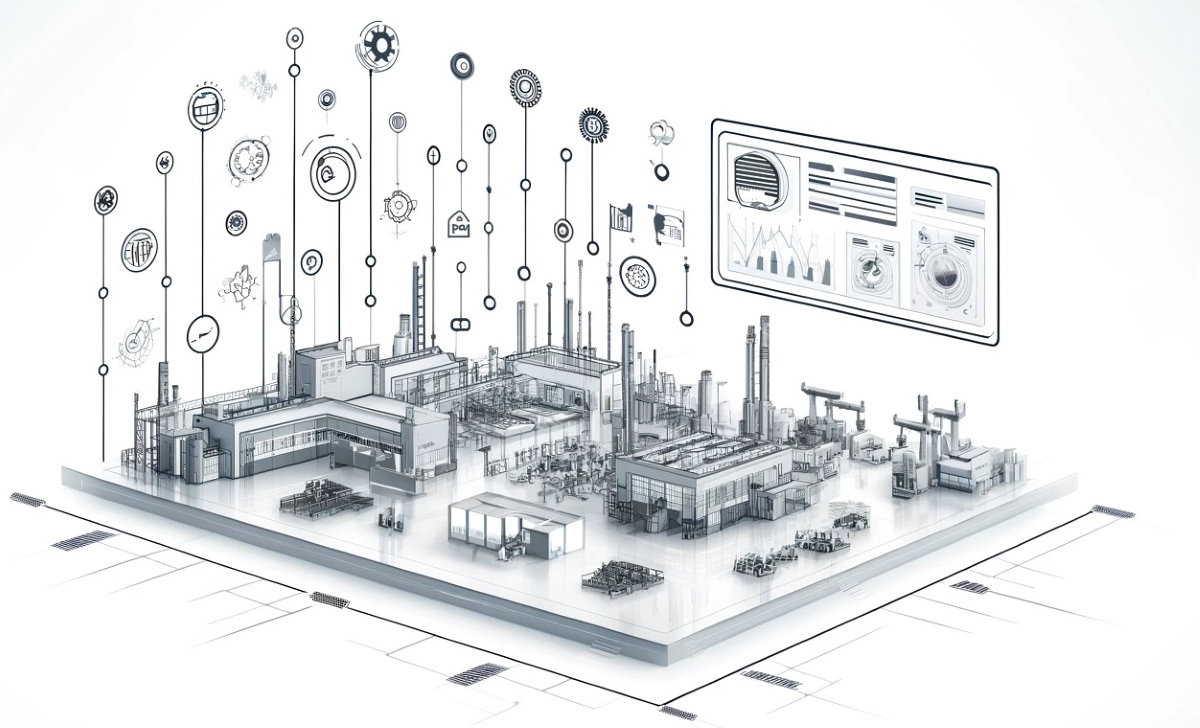
Connectivity: IoT devices and sensors are embedded throughout the factory to collect and transmit data in real-time, enabling seamless communication between machines, systems, and humans.
Automation: Robotics and automated systems are employed to perform repetitive tasks, reduce manual labor, and improve precision and consistency in production.
Data-Driven Decision Making: Big data analytics and AI algorithms are used to analyze the vast amounts of data generated by the factory, providing insights for predictive maintenance, process optimization, and quality control.
Adaptability: Smart factories can quickly adjust to changes in production requirements, market demands, or supply chain disruptions, allowing for more flexible and responsive manufacturing.
Sustainability: Advanced technologies enable more efficient use of resources, reducing waste and energy consumption, and contributing to more sustainable manufacturing practices.
Digital Twins:
A digital twin is a virtual model of a physical object, process, or system, created using data from sensors and other sources. In the context of smart factories, digital twins are used to simulate, monitor, and optimize manufacturing processes. Key aspects of digital twins include:
Real-Time Representation: Digital twins provide a real-time, virtual representation of physical assets, processes, or systems, allowing for continuous monitoring and analysis.
Simulation and Prediction: By using advanced simulation techniques, digital twins can predict how a physical asset or process will behave under different conditions, enabling scenario testing and optimization.
Integration with IoT: Digital twins are often integrated with IoT devices, which provide the data needed to update and maintain the accuracy of the virtual model.
Decision Support: Digital twins offer valuable insights for decision-making, helping manufacturers to identify potential issues before they occur, optimize performance, and reduce downtime.
How They Work Together:
In a smart factory, digital twins play a crucial role in enabling the advanced features of the facility. For example, a digital twin of a production line can be used to simulate changes in the manufacturing process, assess the impact of those changes on efficiency and quality, and then implement the most effective modifications in the physical production line. This integration of digital twins with the broader smart factory ecosystem allows for a more agile, efficient, and data-driven approach to manufacturing.
Overall, smart factories and digital twins represent the convergence of physical and digital worlds in manufacturing, offering a more intelligent, connected, and sustainable approach to production.
.
Industry 4.0 might seem like just a trend at first glance, but the reality is much more. Many products, both large and small, are now becoming compatible with Industry 4.0. Experts at the Automation Foundation have adopted two different approaches to this issue: Supporters and skeptics! Below, we have tried to find answers to your questions from both the perspectives of supporters and skeptics.
Questions about Industry 4.0:
- What is Industry 4.0 and what are its key components?
- What impact does Industry 4.0 have on production processes?
- Which technologies enable Industry 4.0?
- How will Industry 4.0 affect the labor market?
- What are smart factories and digital twins, and how do they work?
- What are the effects of Industry 4.0 on global competition?
- What are the sustainability and environmental impacts of Industry 4.0?
- How are data analytics and artificial intelligence used in Industry 4.0?
- What is the impact of Industry 4.0 on security and privacy issues?
- What steps should be taken to adopt Industry 4.0?
- Which sectors will be most affected by Industry 4.0?
- What are the educational and skill requirements of Industry 4.0?
- What role does the Internet of Things (IoT) play in Industry 4.0?
- How will Industry 4.0 change supply chain management?
- What are the impacts and opportunities of Industry 4.0 for SMEs?
Critical Questions about Industry 4.0:
- Is Industry 4.0 really a revolution or just a marketing strategy?
- Why are the standards and definitions of Industry 4.0 not clear?
- Do the technological innovations brought by Industry 4.0 justify the costs and risks?
- Can smart factories and automation lead to social problems by increasing unemployment rates?
- Are sufficient measures being taken for security and privacy issues in Industry 4.0?
- Can small and medium-sized enterprises (SMEs) face challenges in adopting Industry 4.0?
- Are the sustainability promises of Industry 4.0 realistic, or are environmental impacts being ignored?
- Do the innovations brought by Industry 4.0 really make a difference in meeting consumer demands?
- How will technological advancements affect the skill sets and job security of workers?
- Can Industry 4.0 truly make supply chain management more efficient and transparent?
- Are the impacts of Industry 4.0 on international competition fair and balanced?
- Can artificial intelligence and automation reduce the human factor and creativity in the industry?
- How will the changes brought by Industry 4.0 affect employee job satisfaction and motivation?
- What criteria should be used to measure the success of Industry 4.0 projects?
- Do the innovations brought by Industry 4.0 really provide a competitive advantage, or do they just lead to an increase in costs?
* These questions generally include the ones that may come to mind for many people regarding the " Industry 4.0" topic. Each user or student will have their specific questions depending on a particular situation or application. The answers are not binding and do not express absolute certainty. "There is no objection to sharing our article above, citing it as a source". Automation Foundation 03.2022
 -
-Your shopping cart is empty!