
What types of sensors does the tachometer support?
Hello dear friends,
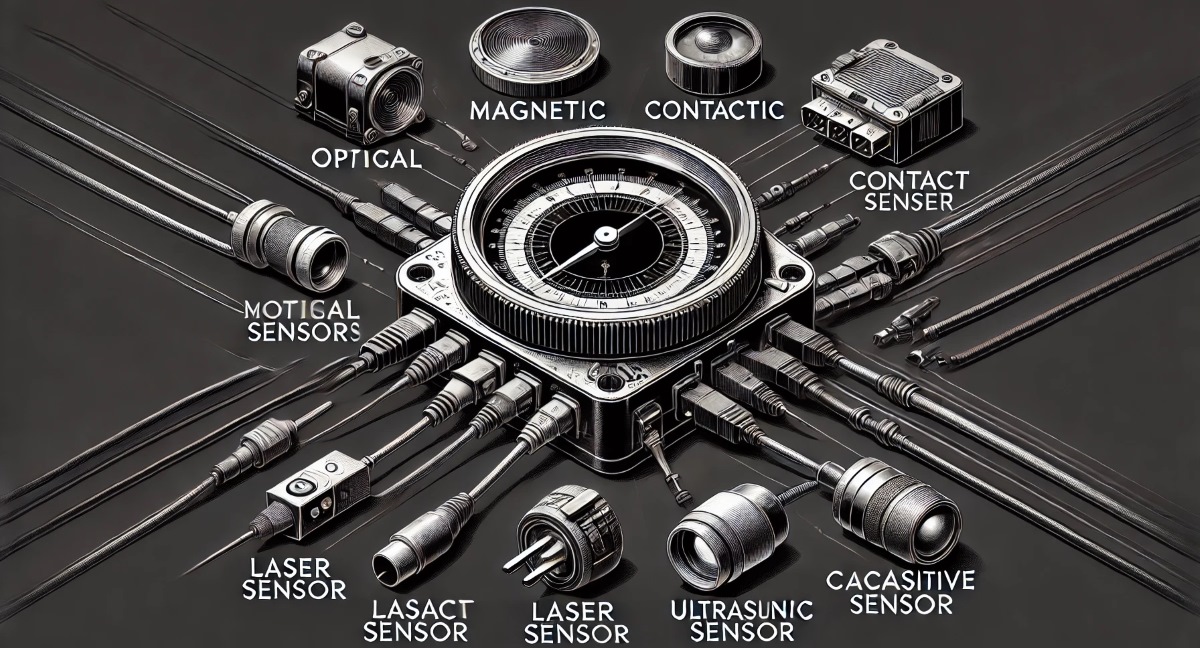
The tachometer supports various types of sensors to measure rotational speed, each with its own working principle and suited for specific applications. The choice of sensor depends on factors such as the required accuracy, the environment in which the tachometer will operate, and the characteristics of the rotating object. Here are some common types of sensors used with tachometers:
Optical Sensors
Description: Optical sensors use a light source (LED or laser) and a photodetector to detect interruptions in the light beam caused by a rotating object with reflective markings or slots.
Applications: They are widely used in industrial applications, laboratory equipment, and automotive testing where non-contact measurement is preferred.
Magnetic Sensors
Description: Magnetic sensors, such as Hall effect sensors or inductive sensors, detect changes in the magnetic field caused by the presence of a ferrous target or a magnet attached to the rotating object.
Applications: These sensors are commonly used in automotive, industrial machinery, and aerospace applications where robustness and resistance to harsh environments are required.
Contact Sensors
Description: Contact sensors, like mechanical tachometers, are directly coupled to the rotating shaft using gears, wheels, or other mechanical linkages to measure speed.
Applications: They are used in applications where direct contact with the rotating object is possible and where environmental conditions permit the use of mechanical components.
Laser Sensors
Description: Laser sensors use the Doppler effect to measure the frequency shift of laser light reflected off a moving surface to determine rotational speed.
Applications: These sensors are ideal for high-precision measurements in research and development, aerospace, and high-speed applications.
Ultrasonic Sensors
Description: Ultrasonic sensors emit ultrasonic waves that are reflected back from the rotating object. The frequency shift of the reflected waves is used to calculate the rotational speed.
Applications: They are used in applications where non-contact measurement is required, and the material of the rotating object is suitable for reflecting ultrasonic waves.
Capacitive Sensors
Description: Capacitive sensors measure changes in capacitance caused by the proximity of a conductive or non-conductive target attached to the rotating object.
Applications: These sensors are used in applications where non-contact measurement is preferred, and the rotating object has suitable dielectric properties.
The choice of sensor for a tachometer depends on the specific requirements of the application, including the measurement environment, the nature of the rotating object, and the desired accuracy. By selecting the appropriate sensor, the tachometer can provide reliable and accurate measurements of rotational speed in various industrial, automotive, and research applications.
Tachometers are widely used devices in both industrial automation and automotive industries for speed measurement and detection of mechanical losses. At this point, we have tried to discuss the questions and answers of our valued members about the Tachometer below.
- What is the measurement range of the tachometer?
- What is the accuracy and precision of the tachometer?
- What types of sensors does the tachometer support? (Optical, magnetic, mechanical, etc.)
- What types of output signals does the tachometer provide? (Analog, digital, frequency, etc.)
- What is the response time of the tachometer?
- What types of displays and indicators does the tachometer have? (LED, LCD, digital display, etc.)
- What is the installation and setup process of the tachometer?
- What industrial communication protocols does the tachometer support? (Modbus, Profibus, Ethernet/IP, etc.)
- What protection classes does the tachometer have? (IP protection class, impact resistance, etc.)
- What are the maintenance and service requirements of the tachometer?
- What types of environments is the tachometer designed for? (High temperature, humidity, dust, etc.)
- What applications can the tachometer be used in? (Motor speed control, conveyor belt speed measurement, etc.)
- What types of power sources are compatible with the tachometer? (Battery, AC/DC power supply, etc.)
- What are the fault detection and troubleshooting features of the tachometer?
- What accessories and additional components does the tachometer come with? (Sensors, cables, mounting hardware, etc.)
- What are the differences between analog and digital tachometers?
* These questions generally include the ones that may come to mind for many people regarding the "Tachometer and speed measuring systems" topic. Each user or student will have their specific questions depending on a particular situation or application. The answers are not binding and do not express absolute certainty. There is no objection to sharing our article above, citing it as a source. 01.2022

Your shopping cart is empty!