
What are the key components of a pump?
Hello valued colleagues,
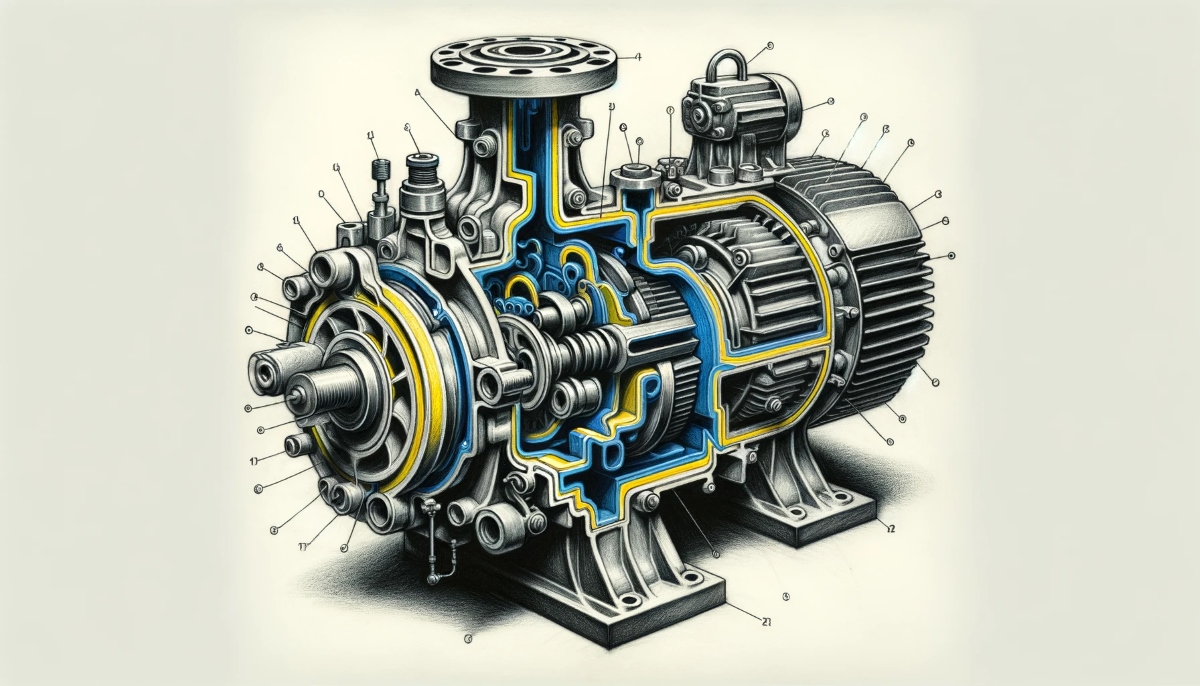
A pump, whether it's a centrifugal pump, a positive displacement pump, or any other type, is composed of several key components. These components are necessary for the pump to function properly and efficiently. Here are some of the main components found in many types of pumps:
Impeller: This is a rotating component in centrifugal pumps that transfers energy from the motor that drives the pump to the fluid being pumped by accelerating the fluid outwards from the center of rotation.
Casing: This is a housing, often volute-shaped in centrifugal pumps, that directs the flow of fluid in the pump and also contains the pressure produced by the pump.
Shaft: The shaft is a rod-like component that transfers the torque from the motor to the impeller.
Bearings: Bearings are components that support the shaft and allow it to rotate with minimal friction.
Seal: The seal prevents fluid leakage from the pump casing where the shaft enters and exits. There are many types of seals, including packing seals, mechanical seals, and lip seals.
Motor or Engine: This is the power source of the pump. It provides the necessary energy to rotate the impeller (or other displacement device in other types of pumps).
Suction and Discharge Ports: These are the inlets and outlets of the pump. The suction port is where the fluid enters the pump, and the discharge port is where the pressurized fluid leaves the pump.
Priming Device: In some pumps, especially centrifugal ones, a priming device might be used to fill the pump with the liquid to be pumped before it starts working, to prevent cavitation and improve performance.
These are just a few of the key components in a pump. The specific components can vary depending on the type and design of the pump. However, most pumps will have these or similar components. Each of these components plays a vital role in the operation of the pump.
Expanding the potential of pump systems with illuminating questions that can come to mind about pump machines can be very exciting. On the other hand, the conveniences that neglected pumps bring to our life are undeniable. Some example questions from our visitors:"
- What exactly is a pump used for?
- What are the different functions of various pumps?
- What are the key components of a pump?
- What type of pumps should I choose for home use?
- How is the maintenance and repair of pumps conducted?
- What factors should be considered when selecting a pump?
- Which pumps are better in terms of energy efficiency?
- What are the differences between water pumps and oil pumps?
- What is the general durability and lifespan of a pump?
- What should I do if a pump overheats?
- Which brands should I prefer when buying a pump?
- What are the differences between industrial pumps and household pumps?
- How do I calculate the power of a pump?
- How do I identify a water pump failure and what should be done?
- How much does a pump cost and what type of expenses can arise?
- What are the advantages and disadvantages of portable pumps?
- How do I reduce a pump's energy consumption?
- What is the environmental impact of pumps?
- What is the noise level of a pump and how can it be reduced?
Your shopping cart is empty!