
What is the impact of automation on labor requirements?
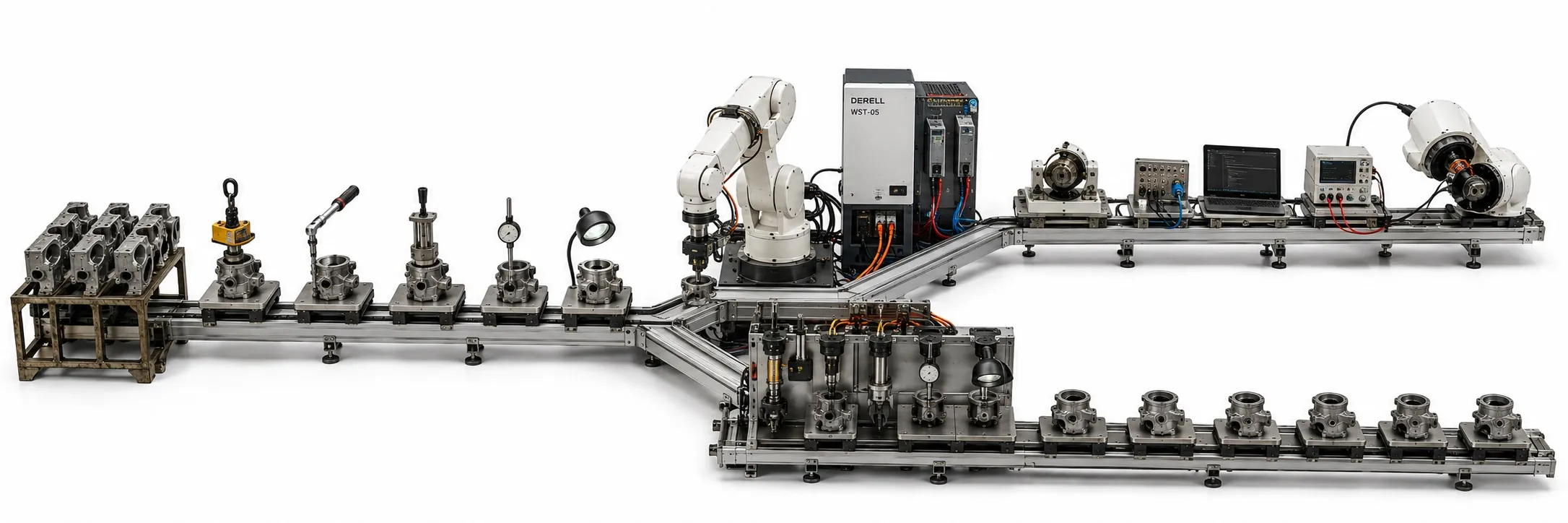
How automation changes staffing and skills
Automation can reduce the labour needed for a given amount of output. Machines take over some tasks, while other responsibilities change. The staffing outcome depends on demand, shift arrangements, maintenance requirements and workers' readiness for new roles. Automating a task is not the same as eliminating an entire occupation.
Look at tasks before counting positions
Repetitive, well-defined work is often easier to automate: moving parts between fixed locations, sorting by a clear rule, counting products or packing similar items. Robotic automation handles physical operations; software automation can transfer records or complete forms. Variable materials, unexpected faults and customer-facing activities may require different kinds of human involvement.
In flexible manufacturing systems, changeovers, tooling adjustments and exception handling still matter. Assess what a person actually does during a shift rather than relying on the job title. Two employees called “machine operators” may have very different exposure to automation.
From doing the movement to managing the process
An employee who previously moved parts manually may take on material replenishment, recipe selection, first-piece inspection and alarm assessment. Not every operator needs to become a PLC programmer. They do need to understand operating conditions and the limits of their authority. Distinguishing a failed sensor signal from a mechanical jam is more useful than repeatedly clearing an alarm.
Maintenance and technical support may place greater emphasis on servo systems, electrical drawings, mechanics and communication networks. Reading fault sequences in SCADA, understanding a waiting condition in a robot program and following cybersecurity procedures are separate responsibilities. They do not necessarily create one new employee each: existing staff or external service providers may cover them.
Higher productivity does not dictate one staffing result
Headcount can fall, remain stable or grow. With unchanged demand, the same output may require less direct labour. With stronger demand, the existing team may produce more. Additional shifts, maintenance, quality and logistics work also affect the result. Assessing robotics and employment requires looking beyond the movement that the robot replaces.
A hypothetical example: Four people producing 800 accepted units in eight hours achieve 25 units per person-hour. If the same team makes 1,600 accepted units in the same time, the figure becomes 50 units per person-hour. Labour productivity has doubled without a change in headcount. This calculation illustrates a measure; it does not predict employment outcomes.
Train for the responsibility, not the buzzword
Industry 4.0 and IoT-connected production can increase the importance of data interpretation, quality monitoring and root-cause analysis. A stop record on a data analytics dashboard must be connected to what happened on the line. However, not every redesigned job becomes more skilled: poorly designed automation can also restrict workers to following screen instructions.
Skills development should match the role. Operators need correct recipe selection and safe stopping procedures; maintenance staff need systematic diagnosis; technical teams may need programming, backup and commissioning knowledge. Practical resources such as DLC training videos can support learning, followed by supervised practice and checks of competence on the actual equipment.
Consider job quality as well as output
Automation can reduce heavy lifting and repetitive movements. It can also increase mental workload through faster production expectations, alarm overload or responsibility for several machines at once. Robot safety and work organisation need to be assessed together. Less physical effort does not mean that every risk has disappeared.
Production counts alone are also a weak measure of individual performance. Material shortages and equipment failures must be distinguished from operator actions. Human experience and creativity can remain valuable in diagnosing faults and improving the process. A machine log does not explain the whole event without operational context.
Plan the transition before commissioning
Before installing automation, map existing tasks, identify those that will shrink or remain, and assign the new responsibilities. Involve employees in trial production, allocate training time and explain who can make which decisions. Evaluate labour per accepted unit, downtime, overtime, errors and workload together rather than treating headcount reduction as the only success measure.
Sources: OECD — task-based assessment of automation · OECD — future of work · EU-OSHA — digitalisation and working conditions