
What is the future of robotics?
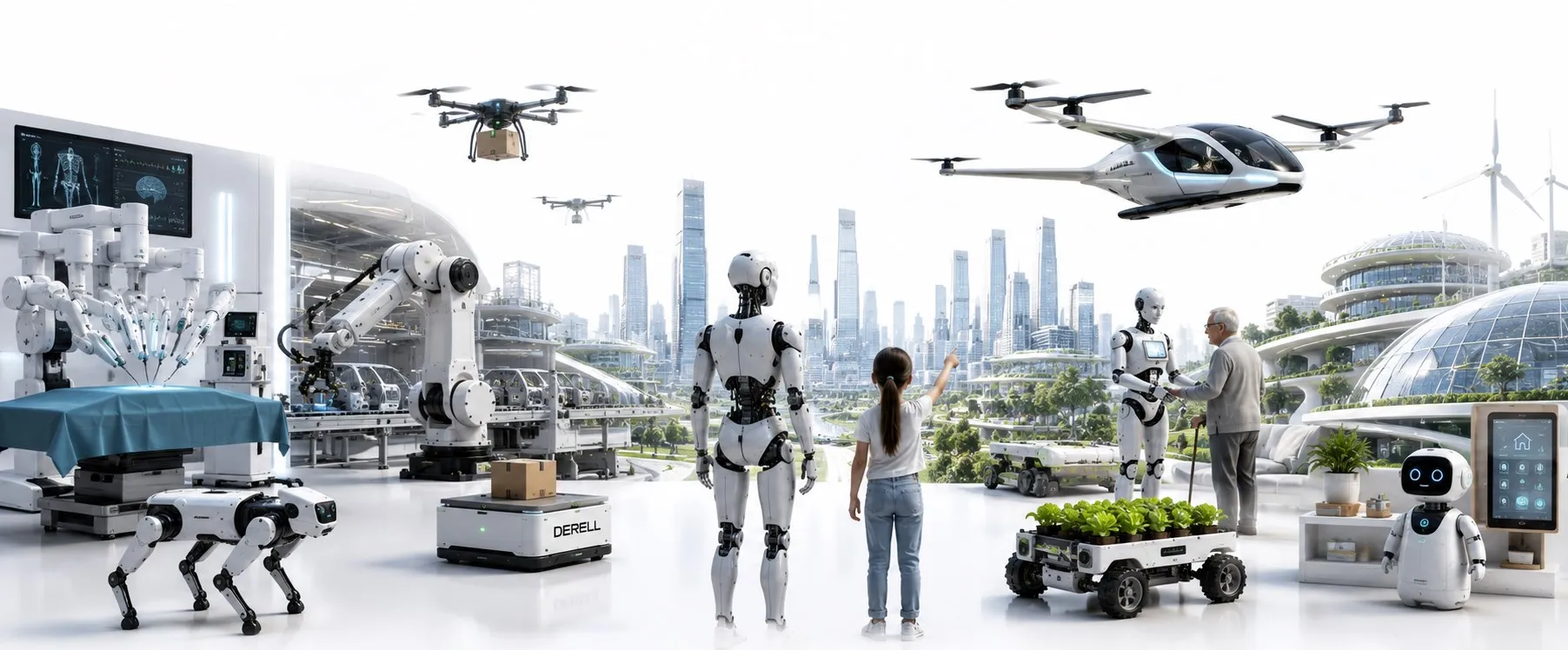
What is the future of robotics?
Hello, dear colleagues,
The future of robotics is taking shape around systems that perceive their surroundings more effectively, adapt to different tasks more easily and work better with people. However, an impressive robot demonstration does not establish reliability in every environment. Meaningful progress depends on repeatable success, safe operation and sustainable operating costs. If you are new to the subject, our introduction to robotics explains the fundamentals.
Artificial intelligence: better perception and more flexible tasks
The relationship between AI and robotics extends beyond image recognition. Models that combine visual, language and movement data are being developed to locate objects, interpret instructions and generate actions. Machine learning can support this flexibility, but not every robot learns on its own, and success at one task does not automatically transfer to another.
Picking up a part in a changing position, for example, requires accurate perception, a suitable gripper and a workable motion plan. This is why sensors and actuators remain essential. Giving instructions in natural language does not remove the need for robot programming, error handling or validated safety functions.
Easier setup and task changes in manufacturing
An important development area in industrial robot applications is reducing the setup time required when products change. This calls for easier reprogramming, suitable fixtures and reliable data exchange. Integration with a PLC, conveyor, camera and operator interface matters as much as the robot arm's individual capabilities.
Servo systems and mechanical components must suit the required load, speed and precision. Real-time motion control and higher-level AI planning serve different purposes. Putting an intelligent decision into practice also depends on the robot's physical limits and surrounding equipment.
Digital twins and virtual commissioning
A digital twin can help engineers examine a robot cell through a virtual model informed by data. Cycle time, reach and potential collisions can be assessed before physical installation. However, a three-dimensional animation is not necessarily a digital twin. Model accuracy, a data relationship with the real system and appropriate validation are essential; simulation results alone cannot replace testing and commissioning on site.
Collaborative robots and humanoids
Collaborative robots can share a workspace with people in suitably designed applications. The label “cobot” does not make every installation safe automatically. The gripper, carried part, operating speed and surrounding machinery must be considered together. Robot safety involves the whole application, beyond the robot itself.
Humanoid robots have potential to work in environments designed for people. Wider adoption depends on dexterity, balance, energy consumption and sustained reliability. A human appearance does not imply human understanding. For a handling or assembly task, a simpler system selected from the available robot types may be more suitable.
From warehouses to everyday life
Autonomous mobile robots can make material transport more flexible. Following a route in a warehouse, however, presents different challenges from making deliveries on a crowded pavement. Autonomous movement requires obstacle detection, localization and appropriate responses to unexpected situations.
Robotics in everyday life develops task by task for the same reason. A home robot must cope with battery runtime, door thresholds, clutter and access to servicing. Success in a controlled laboratory does not guarantee the same performance across different homes.
Healthcare and exploration
Robotics in healthcare covers distinct applications, including surgical assistance, rehabilitation and transport within hospitals. In the robotically assisted surgical systems described by the FDA, the surgeon retains direct control. Robotically assisted surgery and autonomous surgery are different concepts. A new system's clinical benefit must be established for its intended use.
Robots in space exploration carry out exploration tasks and support astronauts. Local decision-making becomes valuable when communication is delayed. Energy availability, environmental conditions and recovery from faults are important design considerations.
Distinguishing RPA from physical robotics
Robotic process automation (RPA) uses software to automate computer tasks such as completing forms or transferring data between systems. Here, the “robot” is a software bot, rather than a mechanical arm. These two areas of automation can support the same workflow: a physical robot moves a product while software updates its order record. Their progress nevertheless needs to be assessed using different technical measures.
What will determine wider adoption?
The limitations of robotics technology still matter when handling varied objects, managing unexpected events and maintaining stable performance over time. Useful measures include task success rate, human interventions per shift, maintenance time and cost per completed task. The purchase price is only one part of the total cost.
For connected robots, industrial cybersecurity is also part of operational continuity. Access permissions, updates and protection of captured images need planning. Processing may happen on the robot or on a remote server; behavior when the network fails must be defined in advance. More connectivity does not necessarily improve every application.
People, skills and responsibility
The impact of robotics on employment and the economy depends on which tasks are automated and how workers prepare for new roles. Maintenance, process knowledge, programming and fault diagnosis remain valuable. Training should cover both operating a robot and evaluating its results.
In robotics ethics, human oversight, data privacy and responsibility for decisions need clear arrangements. A useful goal for future robots is to make work more reliable, accessible and productive while preserving human decision-making authority.
Sources and further reading: IFR: robotics trends for 2026 · Google DeepMind: robotics AI research · NIST: digital twins for robot systems · FDA: computer-assisted surgical systems · IBM: definition of RPA · NASA: robotics.
This article provides general information. Future expectations do not establish a guaranteed outcome or adoption date for every product or application. You may share it with attribution.