
What is the environmental impact of pumps?
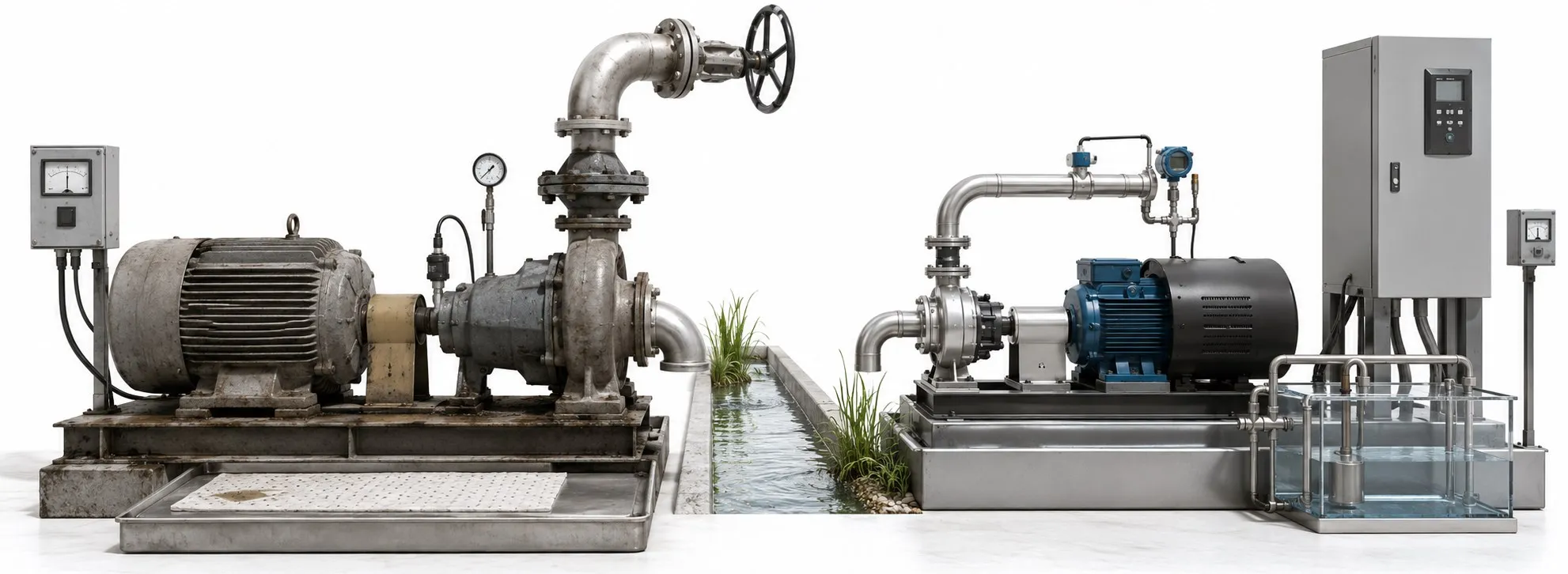
Moving water responsibly: look beyond the pump motor
A pump's environmental footprint comes from the energy it uses, the fluid it handles and the way it changes water movement. Pumping supports drinking-water supplies, wastewater treatment and flood management. The same equipment can also waste electricity, release contaminated liquid or put pressure on a limited water source. Understanding how a pump works helps separate these different effects.
Start with the water source
Efficient pumping does not make unlimited abstraction sustainable. Taking groundwater faster than it is replenished can lower water levels and affect connected streams and wetlands. Depending on local conditions, heavy withdrawal can also contribute to land subsidence or saltwater intrusion. These outcomes depend on the aquifer and the amount withdrawn; they are not inevitable at every well.
Use a flow meter to record the volume taken and a pressure sensor to track delivery conditions. Pressure alone cannot tell you how much water has been withdrawn. Solar pumping drives can change the energy source, but do not remove abstraction limits or leakage risks. Wastewater pumps have a different role: they deliver wastewater to treatment. The pump itself does not remove pollutants. Reliable transfer and overflow prevention are what connect pumping to the wider environmental benefit.
Reduce the electricity needed for the actual duty
An electric pump motor produces no combustion exhaust at the pump, although electricity generation may create indirect greenhouse gas emissions. A diesel-driven unit also produces exhaust locally. When assessing pump power, use measured electrical input and operating hours, rather than treating the motor nameplate as an electricity meter. The distinction between kW and kWh matters here.
Pump selection should match the required flow and head. Oversizing, excessive pressure, restrictive pipework and blocked filters can all increase the energy needed to deliver useful flow. Pump efficiency must be considered at the operating point. For a centrifugal pump with varying demand, a variable frequency drive and suitable PID control can help match output to demand within the manufacturer's operating limits. Adding a drive is not a universal energy-saving guarantee. High static head can sharply limit how far speed may be reduced; savings need to be checked against both pump and system curves.
An example with the same useful output
Assume both systems deliver 100,000 m³ per year at the same required head. The input powers below are illustrative average measurements for the complete pumping system, not motor ratings or product claims.
| Measure | Existing system | Improved system |
|---|---|---|
| Average input power | 10 kW | 7 kW |
| Annual running time | 2,000 hours | 2,000 hours |
| Annual electricity use | 20,000 kWh | 14,000 kWh |
| Energy per delivered volume | 0.20 kWh/m³ | 0.14 kWh/m³ |
The assumed improvement saves 6,000 kWh per year, or 30%. With an illustrative factor only of 0.40 kg CO₂e/kWh, the associated difference would be 2,400 kg CO₂e per year. That factor is not a current grid value for Türkiye or any specified country. An actual emissions assessment needs an appropriate factor for its period and accounting method. Reducing pumping energy means using less electricity for a comparable useful duty, rather than simply moving less water.
Contain the fluid and fix the cause of leaks
A clean-water leak wastes water and the energy already used to move it. An oil or chemical leak can additionally contaminate soil and water. Water pumps and oil pumps have different fluid-compatibility requirements, while hydraulic pumps bring their own oil-containment concerns. Seals, gaskets and connections must suit the fluid, temperature and pressure. Hazardous service may require an appropriate sealing arrangement, secondary containment and leak detection. Cleaning up a spill does not repair the leak.
Treat noise as information, not just a nuisance
Pump noise can disturb nearby people. Cavitation, poor alignment, loose connections and worn bearings can increase noise or vibration. Cavitation involves the formation and collapse of vapour bubbles and can damage pump components. Vibration measurements and operating records help identify emerging pump faults; overheating deserves investigation too. Acoustic treatment can reduce transmitted noise, but cannot correct inadequate suction conditions or a damaged bearing.
Include maintenance, replacement and disposal
Planned maintenance can prevent avoidable leaks and wear and extend pump service life. Repairing a suitable unit avoids unnecessary material use, but keeping a badly inefficient installation indefinitely can also carry a substantial energy penalty. Consider whole-life cost alongside energy efficiency. Separate used oils, contaminated parts, recoverable metals, the motor and control electronics into appropriate recovery or waste streams.
Technical references: US DOE — pump systems · Variable speed pumping guide · US EPA — groundwater · Grundfos — shaft seals · Grundfos — cavitation