
Faq for Nuclear energy
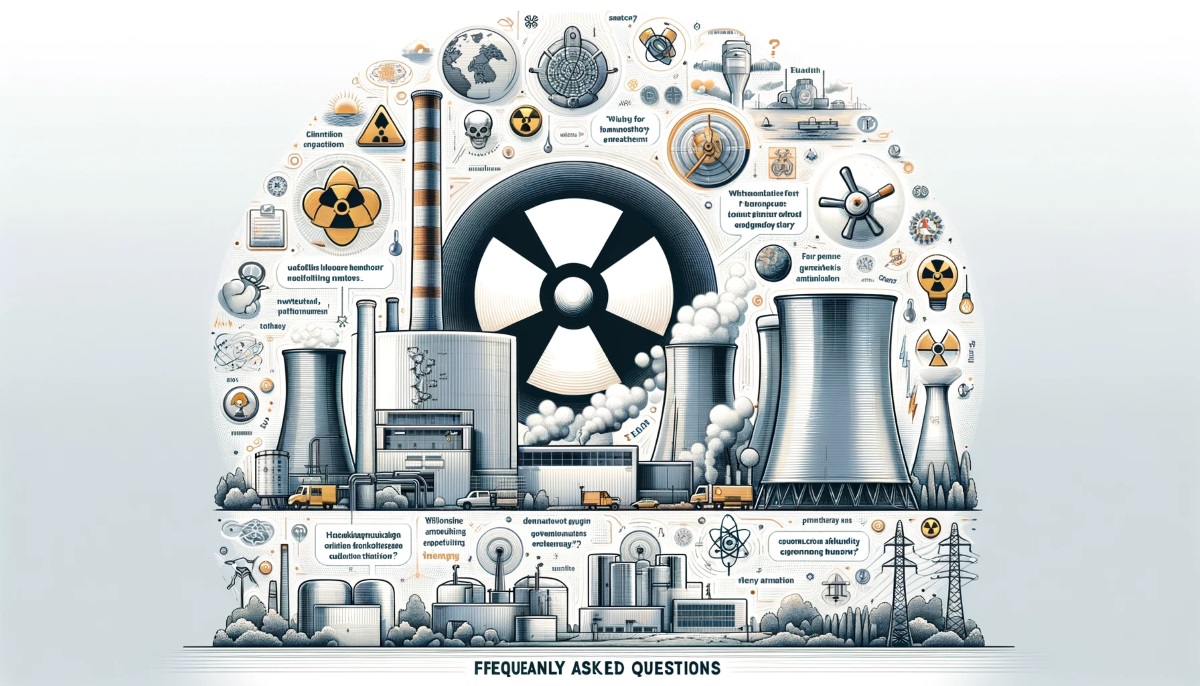
Hello inquisitive and curious friends,
What is Nuclear Energy?
Nuclear energy is the energy stored in the nucleus of an atom. It can be released through the splitting or merging of atomic nuclei. This energy is commonly used for electricity generation and is harnessed in a controlled nuclear reaction within a nuclear reactor.
Production of Nuclear Energy:
Fission:
This process involves a heavy atomic nucleus being split into two or more lighter atomic nuclei, typically as a result of being struck by a neutron.
Radioactive isotopes, like Uranium-235 or Plutonium-239, are commonly used for nuclear fission.
A large amount of energy is released during the fission process, which is used to produce steam that turns a turbine to generate electricity.
Fusion:
This process involves two light atomic nuclei merging to form a heavier atomic nucleus.
This is the main source of energy in the sun and stars.
Fusion has the potential to provide a nearly limitless source of energy, but currently, technological challenges prevent us from achieving a commercially viable fusion reaction.
Advantages of Nuclear Energy:
High Energy Density: Nuclear fuels, like uranium, have a high energy density; thus, small amounts of fuel can produce large amounts of energy.
Low Carbon Emissions: When operated correctly, nuclear power produces electricity with almost zero carbon emissions, which is crucial in combating climate change.
Continuous Power Generation: Nuclear power plants can produce energy continuously, independent of variable sources like wind or solar energy.
Disadvantages of Nuclear Energy:
Radioactive Waste: Nuclear reactors produce radioactive waste that needs to be stored safely.
Nuclear Accidents: Nuclear incidents like Chernobyl and Fukushima highlight the potential dangers of nuclear power.
High Initial Costs: Building nuclear power plants is expensive.
Proliferation Risks: Nuclear technology can potentially aid the spread of nuclear weapons.
Conclusion:
Nuclear energy presents a potentially powerful tool to meet the world's energy needs but also brings with it environmental, economic, and social risks and challenges. Consequently, the approach to nuclear energy often varies based on the region, existing energy infrastructure, and policy.
- What is nuclear energy?Nuclear energy is an immensely vast subject. Whether we are aware of it or not, it has actively entered our lives in a direct or indirect manner. This topic is an expertise in its own right. We have tried to address some of the most frequently asked questions from our visitors below.
- How is nuclear energy produced?
- What happened in nuclear disasters like Chernobyl and Fukushima?
- Is nuclear energy safe?
- What are the advantages and disadvantages of nuclear energy?
- What impact does nuclear energy have on the environment?
- What happens to nuclear waste?
- Where are nuclear energy resources located?
- Is nuclear energy more effective than fossil fuels?
- What is the cost of nuclear energy?
- What is the relationship between nuclear energy and nuclear weapons?
- What are alternative energy sources to nuclear energy?
- Where are nuclear power plants usually located and why?
- What are the potential harms of nuclear power plants to the surrounding environment?
- How is nuclear energy viewed politically?
- Who uses nuclear energy and in which countries is it popular?
- What is the future of nuclear energy?
- What is nuclear fusion and is nuclear fusion energy feasible?
- What are the international standards and regulations for using nuclear energy?
- Are there medical and industrial uses for nuclear energy?
- Nuclear media?
These questions also include the kind that many people may think of concerning nuclear power. Each user or student will have their own specific questions depending on a particular situation or application. The answers are not binding or absolutely definitive. "There is no issue with sharing our article above as a reference." 09.2020