
Nuclear energy and weapons?
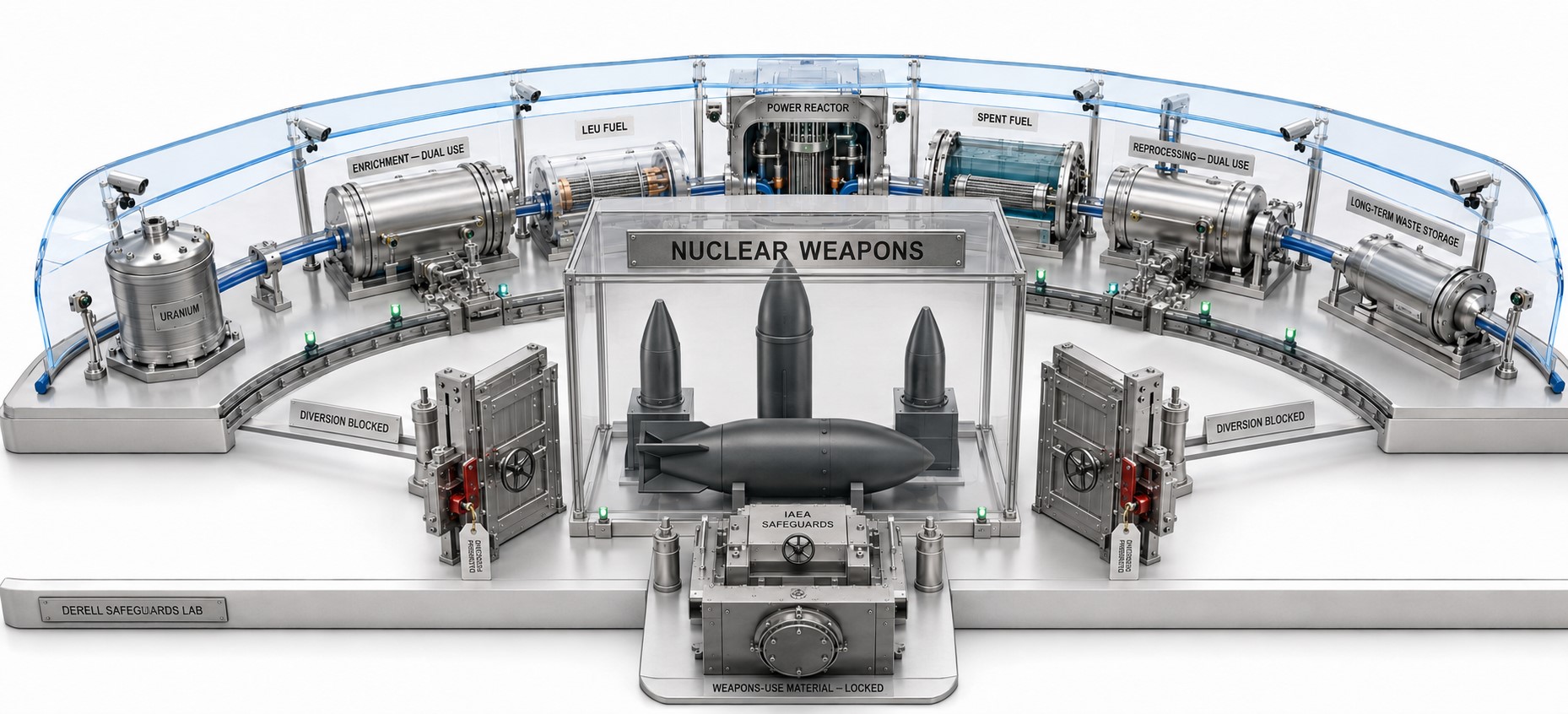
Shared technology, different purposes: why verification matters
A civilian nuclear power programme is not a weapons programme. The two can nevertheless draw on overlapping knowledge, materials and fuel-cycle capabilities. That overlap explains the need for material accounting, international safeguards and credible verification. The existence of a power station, by itself, is not evidence of weapon development.
Start by separating the underlying physics from the purpose of a facility and the use of its material. Our explanation of nuclear energy introduces the physics; the guide to nuclear electricity generation follows the conversion of reactor heat into useful power.
A power reactor cannot simply become a nuclear bomb
Today's nuclear power reactors produce heat through controlled fission. Nuclear weapons are engineered to release energy extremely rapidly. Losing control of a reactor does not turn it into a weapon. The fuel characteristics, arrangement and overall design differ.
Chernobyl and Fukushima were reactor accidents, rather than nuclear weapon detonations. The hydrogen explosions at Fukushima, for example, were chemical events. This distinction does not diminish the seriousness of radioactive releases. It means that reactor safety and non-proliferation address different problems.
The fuel cycle is where dual-use concerns arise
Dual use describes knowledge or technology that can serve civilian and military purposes. Uranium enrichment and spent-fuel reprocessing are particularly sensitive nuclear activities. They can have civilian purposes while also raising proliferation concerns that require effective oversight.
There is no single fuel specification for every reactor. Common light-water reactors use enriched uranium; some other reactor types can use natural uranium. Explaining all nuclear technology through one enrichment percentage is therefore misleading. Uranium resources, fuel preparation and spent-fuel management are separate stages.
Operating a power station does not imply ownership of every fuel-cycle facility. Obtaining reactor fuel and maintaining a national fuel-production capability are different arrangements. Keep that distinction in mind when comparing countries that use nuclear power.
Safety, security and safeguards answer different questions
These three fields complement each other. A reliable cooling system does not demonstrate that material remains in peaceful use. Equally, a safeguards inspection is not a guarantee against an operating accident.
| Field | Main question | Examples |
|---|---|---|
| Safety | How are people and the environment protected from accidents? | Cooling, radiation protection and emergency preparedness |
| Security | How are theft, sabotage and unauthorized access prevented? | Physical protection and authorized access |
| Safeguards | Is nuclear material remaining in peaceful use? | Material records and independent verification |
“Inspected” is incomplete without knowing what was inspected. The responsibilities addressed by international standards and regulation must be understood within the relevant field.
What the IAEA actually verifies
The International Atomic Energy Agency (IAEA) applies safeguards under legal agreements to independently verify that nuclear material is not diverted from peaceful uses and facilities are not misused. Its assessment brings together State declarations, material records and verification findings.
Verification can involve record reviews, independent measurements, sample analysis, seals and surveillance. It is a continuing assessment of consistency, rather than a simple visual inspection of a building. Questions and discrepancies require follow-up.
The Agency's authority comes from the applicable agreements. Comprehensive safeguards agreements, voluntary offer agreements and item-specific agreements do not establish identical coverage. A claim that a programme is “under IAEA inspection” therefore needs an explanation of scope.
Why the Additional Protocol changes the picture
An Additional Protocol supplements a safeguards agreement with further verification tools, including broader access to information and locations. For States with comprehensive safeguards agreements, it strengthens the IAEA's ability to provide assurance about the absence of undeclared nuclear material and activities.
It does not automatically apply in every country. The legal arrangements and their implementation matter. A verification conclusion must also be read in light of the available evidence: missing information or restricted access can limit what can be established.
The NPT combines restraint, cooperation and disarmament
The Treaty on the Non-Proliferation of Nuclear Weapons (NPT) entered into force in 1970. Its framework connects non-proliferation, peaceful nuclear cooperation and nuclear disarmament.
It sets obligations for non-nuclear-weapon States parties not to acquire nuclear weapons and to accept IAEA safeguards. It addresses peaceful use alongside the relevant obligations, and includes a commitment to good-faith disarmament negotiations. It is not a general ban on civilian nuclear energy. These legal commitments belong within the wider discussion of nuclear policy and diplomacy.
Useful applications still require accountable institutions
Medical and industrial applications illustrate how much nuclear technology extends beyond power stations and weapons. Fusion research is another distinct energy field. A useful application does not remove the responsibilities associated with its material and activities.
Verification, physical protection and material management belong in programme planning and cost assessments. Developers of future reactor technologies must also consider how their systems can be verified. Environmental impacts and local risks require their own assessments.
Sources and references
IAEA: Safeguards explained | IAEA: Safeguards legal framework | IAEA: The Additional Protocol | IAEA: Safeguards in practice | IAEA: The NPT framework | UN: Text of the NPT | IAEA: Safety, security and safeguards | IAEA: Fuel-cycle and dual-use concerns | IAEA: Differences between reactor fuel cycles | NRC: Radiation protection questions | IAEA: Lessons from the Fukushima accident