
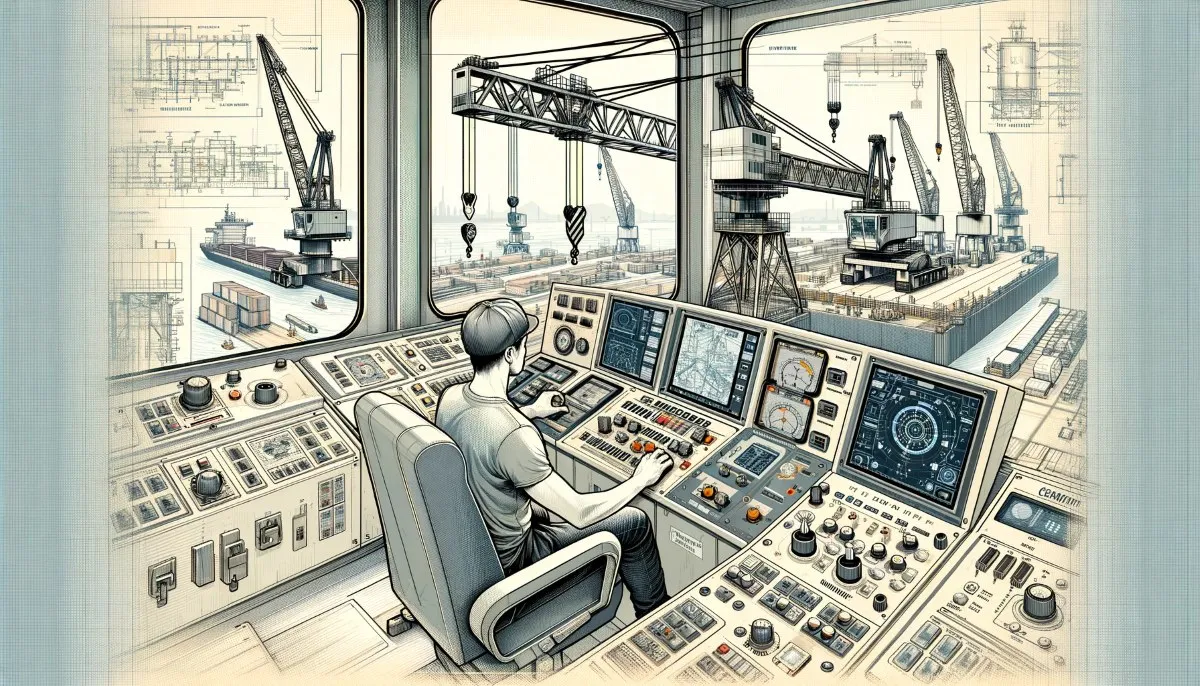
Crane operation: the decisions behind a controlled lift
A crane operator controls the lift, guides the load through its route and places it at the destination. Doing that well requires more than familiarity with the controls. The operator must understand the load, the machine's limits, the working area and the team's communications. Knowing when to stop is a core operating skill. Understanding how a crane works provides the foundation.
Training must fit the equipment and the work
An overhead crane, a mobile crane and a tower crane present different operating demands. Training for the relevant crane type should cover capacity information, controls, rigging, exclusion areas and emergency procedures. Before using an unfamiliar machine, learn its control directions, brake response, speed settings and protective functions. A beginner practising without competent supervision is not receiving appropriate practical training.
Training, certification and assessment on the actual equipment are distinct parts of competence. Check the requirements of the country and workplace where the crane is used. For work in Türkiye, MYK publishes separate qualification titles for overhead, mobile and tower crane operators; verify the applicable scope and current requirements. Studying crane standards supports learning, but does not replace equipment-specific instruction.
Start the shift with the machine's condition
Read the previous shift's fault reports and operating restrictions before taking control. Follow the manufacturer's pre-use procedure for the hook, rope or chain, controls, visible damage and surrounding area. Check travel and hoist limits and the emergency-stop function by the prescribed safe method. Do not create an overload to test a protective device.
The operator's daily check does not replace maintenance or a formal examination. Damage, brake drift or unexpected movement calls for taking the equipment out of use and reporting the problem. The next lift is not an acceptable way to find out whether a fault has disappeared.
Establish the load and the complete route
Confirm weight, centre of gravity, attachment points and landing position. Assess lifting capacity with rigging and other attachments accounted for as required by the chart notes. A crane scale or load cell can assist measurement; it cannot replace the load chart or verification of the setup.
For a boom crane, check radius and configuration throughout the planned movement. For an overhead crane, check the relevant hoist rating and the load path. Choose lifting accessories for the actual connection arrangement. Ground support, wind, obstacles and power lines belong in the selection and positioning assessment.
Make communication unambiguous
One designated signal person gives normal movement instructions; anyone who sees danger may give a stop signal. Agree on signals and direction references before starting. If an operation depends on signals and communication is lost, stop safely. Do not assume that the last instruction remains valid. Where communications cover several cranes, identify the intended machine clearly.
With radio controls, the operator must still maintain a safe position and a clear view of the load path and escape route. Stay out of the gap between the load and a wall or stack. Keep people clear of suspended loads and crushing zones. These are practical crane safety responsibilities.
Control motion without defeating protection
Abrupt acceleration, sharp reversals and side pulling can increase load swing and forces on the equipment. Use the speeds and operating methods permitted by the manufacturer. Do not carry loads over people or leave the controls with a load suspended. Ordinary material-lifting equipment must not be used to carry people. Special tasks, such as a two-crane lift, need a specific plan and competent coordination.
Do not bypass overload warnings, movement limits or communication faults to continue production. Changing drive or controller settings to override a warning is not part of routine crane operation.
Technical understanding improves fault reports
The crane drive controls motion, while the mechanical brake and its coordination with the drive have separate roles. Basic knowledge of regenerated energy and braking resistors helps an operator report a useful detail such as “the fault occurs only during lowering”. A braking resistor is not a mechanical holding brake.
On equipment using encoder feedback or PLC control, record the fault code, movement direction and conditions at the time. Observing a fault safely and opening a cabinet to repair it are different responsibilities. Matters such as drive and brake compatibility belong with the authorised technical team.
Leave a useful handover
Record machine identity, time, load information, symptoms and action taken. “14:20: fault code appeared during lowering; equipment taken out of service and maintenance notified” gives the next team something to act on. “The crane sometimes plays up” does not. An operator must not declare a fault resolved beyond their authority.
Phone use, fatigue and poor visibility can undermine attention. If concentration cannot be maintained, stop safely and inform the responsible person. At the end of the shift, follow the manufacturer's parking and shutdown procedure and pass on all outstanding faults and restrictions.