
What are the differences between different types of fuses ?
Hi everyone,
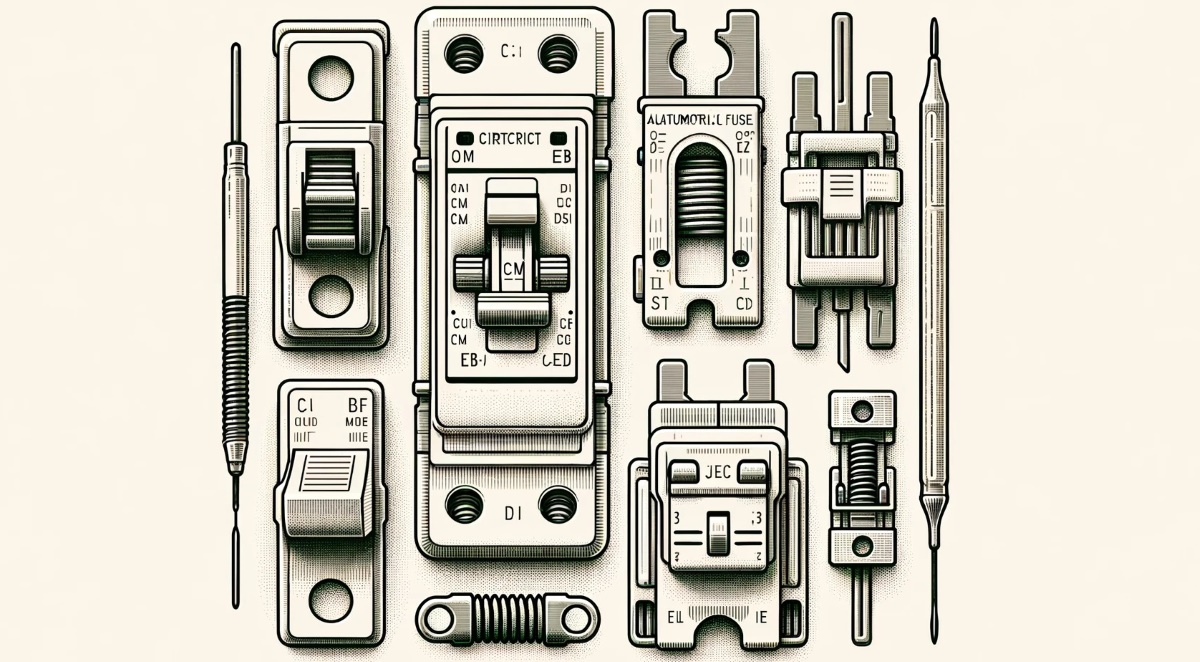
Fuses come in various types, each designed for specific applications and offering different characteristics. Here's a detailed overview of the differences between different types of fuses:
Cartridge Fuses:
Construction: Enclosed in a cylindrical body, usually made of ceramic or glass.
Application: Used in residential, commercial, and industrial electrical systems for general overcurrent protection.
Characteristics: Available in fast-acting and time-delay variants. They provide reliable protection but require replacement after blowing.
Plug Fuses:
Construction: Screw-in type fuses that fit into a threaded socket, commonly found in older residential fuse panels.
Application: Primarily used for protecting branch circuits in homes.
Characteristics: Simple installation and replacement, but limited to low current ratings and primarily used in older installations.
Blade Fuses:
Construction: Compact, plastic-bodied fuses with flat metal blades for electrical contacts.
Application: Widely used in automotive applications for protecting circuits against overcurrents.
Characteristics: Color-coded for easy identification of current rating, easy to install and replace.
Glass Tube Fuses:
Construction: Cylindrical glass body with metal end caps, allowing visual inspection of the fuse element.
Application: Commonly used in electronics, appliances, and automotive applications for low-current protection.
Characteristics: Fast-acting, inexpensive, and provide visual indication of a blown fuse.
Resettable Fuses (PTCs):
Construction: Made from a polymer material that changes resistance with temperature.
Application: Used in electronic devices for protection against overcurrents and overheating.
Characteristics: Automatically reset after the overcurrent condition is removed, reducing the need for replacement.
High Rupture Capacity (HRC) Fuses:
Construction: Enclosed in a ceramic or fiberglass body, capable of withstanding high fault currents.
Application: Used in industrial settings for protecting high-voltage electrical equipment and circuits.
Characteristics: High breaking capacity, suitable for protecting against large fault currents.
Semiconductor Fuses:
Construction: Designed with materials and construction to protect sensitive semiconductor devices.
Application: Used in power electronics and variable speed drives to protect against overcurrents in semiconductor devices.
Characteristics: Fast-acting, low I²t values to minimize damage to semiconductor components.
Thermal Fuses:
Construction: Contains a fusible alloy that melts at a specific temperature.
Application: Used in appliances and electronics for over-temperature protection.
Characteristics: One-time use, provides protection against overheating by breaking the circuit at a predetermined temperature.
In conclusion, the differences between various types of fuses lie in their construction, application, and characteristics. Selecting the appropriate type of fuse for a specific application is crucial for effective protection against overcurrents and other electrical hazards.
Investigating the Term 'Fuse' Used Both Technically and Socially: Answers to Technical Questions from Our Valuable Members. We have attempted to find answers to questions posed by our valuable members regarding the technical aspects of the term 'fuse.'
- What is an electrical fuse, and what is its primary function?
- What are the differences between different types of fuses (e.g., cartridge fuses, circuit breakers)?
- How can I tell when a fuse needs to be replaced?
- How is the fuse rating (ampere value) determined, and how is it related to the load in a circuit?
- Why does a fuse blow or burn out, and what should I do in that situation?
- What should I consider regarding the placement and maintenance of a fuse box?
- What role do electrical fuses play in home safety?
- What safety precautions should be taken when changing a fuse?
- Are there special types of fuses for high-power-consuming devices?
- What factors should be considered when selecting an electrical fuse?
++ Fuses Homepage
"These
questions often include those that may come to mind for many people
regarding 'fuses and electrical protection.' Each user or student will
have their own specific questions depending on a particular situation or
application. The answers are not binding or entirely definitive. There is no objection to sharing our above article, citing it as a source. - Automation Mall Community, 03/2022"
 -
-
Your shopping cart is empty!