
What are alternative energy sources to nuclear?
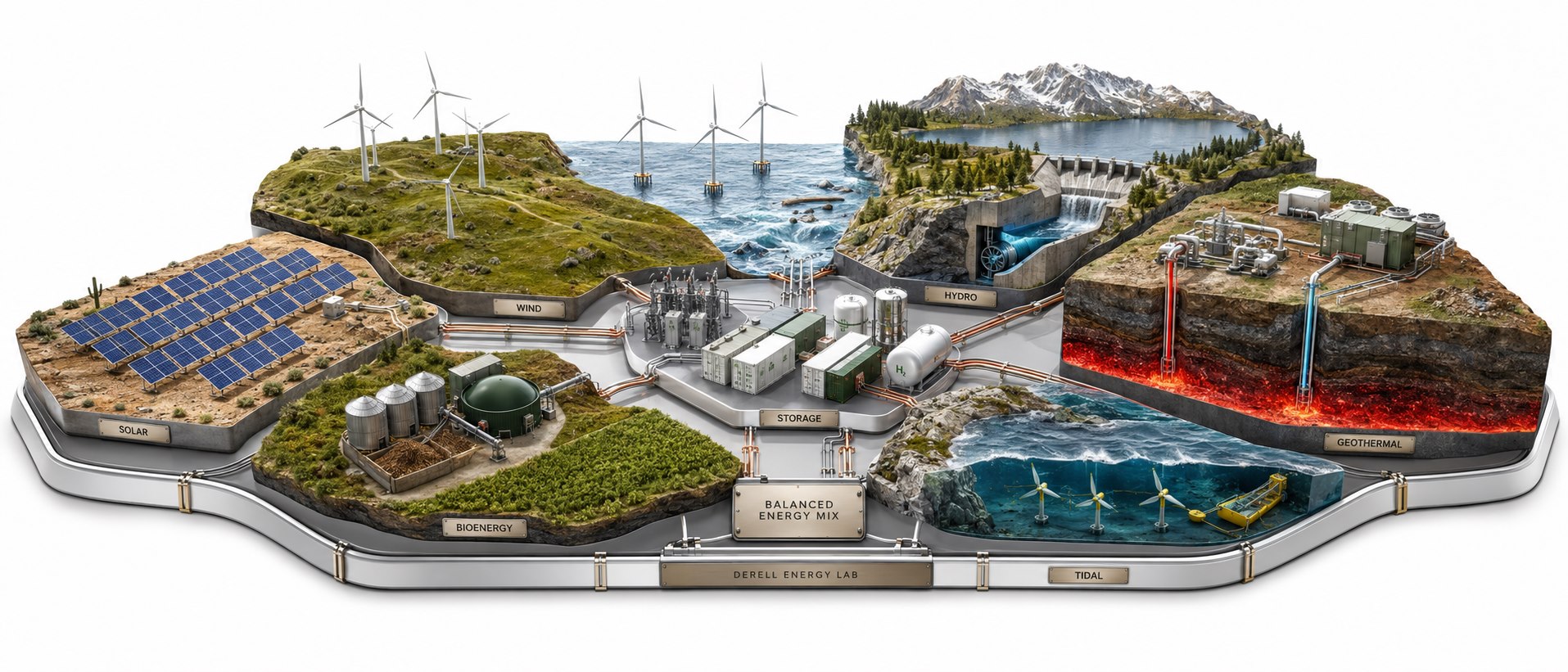
Replacing nuclear power means replacing a service
Solar, wind, hydropower, geothermal and sustainably supplied bioenergy can contribute electricity in place of nuclear generation. Coal, natural gas and oil can also generate electricity, but remain fossil fuels. A useful comparison asks how a system will deliver the required energy, at the required time, with acceptable environmental impacts and total cost.
The operating pattern of a nuclear power station differs from that of a solar farm. Renewable and low-carbon are different classifications: commercial nuclear fission is generally not classed as renewable, yet typically has low life-cycle greenhouse gas emissions. The renewable options also differ substantially in their availability and environmental constraints.
Solar and wind bring abundant energy, with variable output
Solar photovoltaics convert light directly into electricity. Rooftops can provide useful installation space without dedicating a separate field; larger ground-mounted projects require suitable land and grid access. Output stops at night and varies with sunlight during the day. A solar thermal collector supplying hot water provides a different service from a photovoltaic panel. Heat demand and electricity demand should be assessed separately.
Wind turbines extract energy from moving air without consuming fuel. Their output depends on wind conditions, so installed capacity is not a promise of constant production. Siting must account for wind resources, turbine interactions, wildlife, noise and connection capacity. Wind and solar may complement each other at a particular location, but that relationship must be evaluated rather than assumed.
Hydropower and geothermal depend on the site
Hydropower uses water flow or a difference in elevation. A reservoir plant can adjust generation within its water and operating constraints; a run-of-river scheme is more directly tied to available flows. Drought, habitat changes and impacts on communities matter. Some reservoirs also emit methane. Calling every hydro scheme emission-free and permanently reliable overlooks important differences.
Geothermal energy draws on underground heat. Suitable resources can support electricity generation largely independent of the weather, as well as direct heating. Not every hot-water resource is suitable for generating electricity. Drilling, reservoir management, fluid chemistry and naturally occurring gas releases at some sites require assessment. Geothermal therefore also has site-specific environmental impacts.
Bioenergy and marine energy need careful distinctions
Bioenergy converts organic feedstocks into heat, electricity or fuels. With an available fuel supply, generation can be scheduled. However, it is not automatically carbon-neutral. Feedstock origin, land-use changes, regrowth, transport and conversion affect the outcome. Using an appropriate waste stream and causing forest loss to supply a plant cannot be treated as environmentally equivalent.
Tidal energy follows highly predictable astronomical cycles, but predictability does not mean availability whenever demand rises. Wave energy responds more strongly to weather and sea conditions. Marine projects also face maintenance, corrosion, suitable-location and ecosystem considerations. Tides and waves should not be assigned an identical set of benefits and limitations.
A non-nuclear option is not necessarily a low-carbon one
Natural gas, coal and oil are alternative fuels for electricity generation. Depending on their design, gas plants can offer operational flexibility, but combustion emissions and supply-chain methane leakage remain concerns. Coal and oil also create climate and air-pollution impacts. Both nuclear-versus-fossil comparisons and assessments of renewable energy benefits need to look beyond fuel prices.
Hydrogen carries energy; storage moves it through time
Hydrogen is an energy carrier, produced using energy from another source. Electrolysis can make hydrogen for storage and later use in a fuel cell, but the process involves conversion losses. Its climate impact depends on the production route and electricity supply. Batteries and pumped storage are not primary energy sources either. Energy storage makes previously generated energy available at another time.
Megawatts alone cannot tell you what a system delivers
Capacity in MW describes power; generation in MWh or kWh describes energy delivered over time. Consider a hypothetical 100 MW plant in a year with 8,760 hours. A 20% capacity factor gives 175,200 MWh; 80% gives 700,800 MWh. These are illustrative assumptions, not current averages assigned to particular technologies. Matching annual energy still does not establish that evening demand will be met.
Planning therefore combines grid integration, transmission, storage, controllable generation and flexible demand. A process that can safely run at a different hour offers flexibility; efficiency reduces the energy needed to perform the same job. These measures support renewable electricity systems. Storage power, energy capacity and duration should be chosen to meet the system’s actual balancing needs.
Compare complete costs and complete environmental impacts
A comparison of nuclear costs with the economics of renewable energy should include investment, financing, fuel, maintenance, networks, storage where needed, and end-of-life work. Environmental assessment also covers materials, land, water and waste rather than operating emissions alone. Nuclear waste management differs from other technologies’ waste issues; ignoring either side produces a poor comparison.