
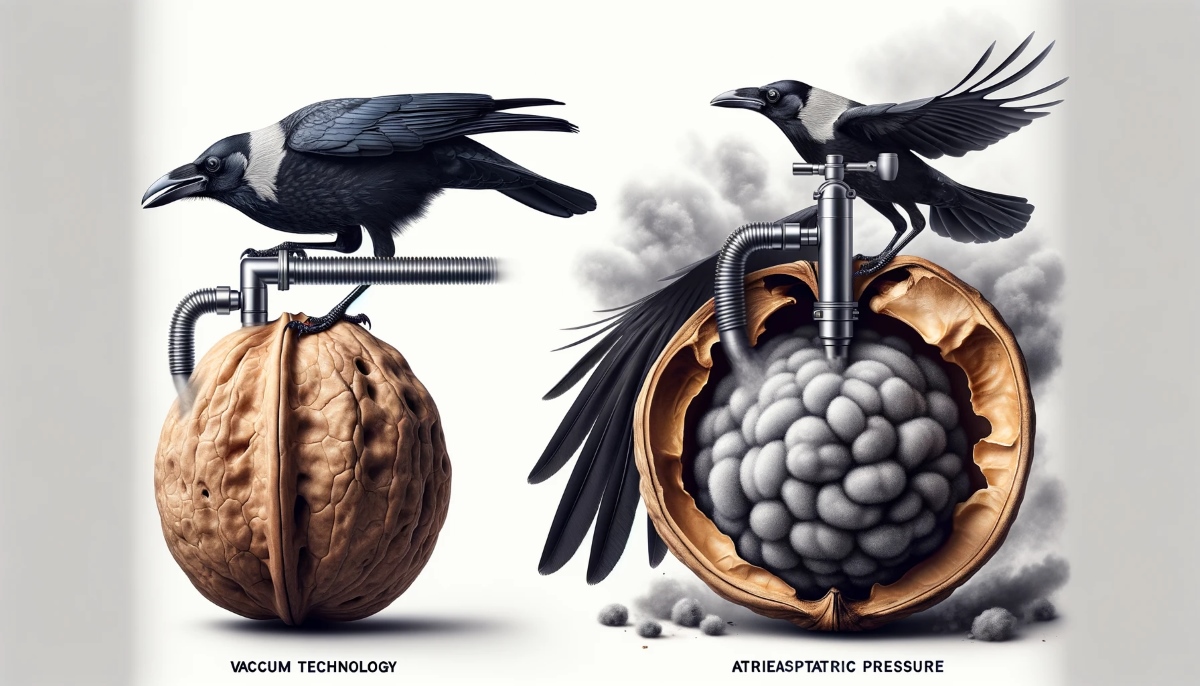
What are the key differences between vacuum technology and atmospheric pressure technology?
Hello dear colleagues,
Vacuum technology and atmospheric pressure technology are fundamentally different, based on the conditions in which they operate. They are used in various applications, ranging from industrial processes to scientific research. Here's a brief explanation of the two and how they differ:
Vacuum Technology:
Vacuum technology operates in conditions where the pressure is significantly lower than the atmospheric pressure. These conditions are often utilized in industries and scientific research where interactions with air or other gases can interfere with the process or results. Some examples include vacuum chambers used in semiconductor fabrication, vacuum tubes in electronics, and the vacuum of space utilized by satellites and spacecraft.
Key features of vacuum technology:
- It deals with pressures lower than the atmospheric pressure.
- It is employed in numerous industries, such as electronics, semiconductors, pharmaceuticals, food packaging, and more.
- The removal of air or gas reduces the risk of unwanted chemical reactions, oxidation, contamination, or interference from air or gas molecules.
Atmospheric Pressure Technology:
Atmospheric pressure technology operates under conditions that are at or around the pressure of the surrounding environment, which is the atmospheric pressure at sea level. Applications can be seen in everyday devices like weather instruments that measure atmospheric pressure, and in industrial settings, such as pressure cooking, autoclaves, and various chemical processes.
Key features of atmospheric pressure technology:
- It deals with pressures at or around the standard atmospheric pressure.
- It's common in a range of fields, including weather forecasting, food industry (pressure cooking), medical field (autoclaves), and various chemical and physical processes.
- These conditions allow for "normal" interactions between gases, liquids, and solids, and are often used when such interactions are required for a process or experiment.
In summary, the key difference between vacuum technology and atmospheric pressure technology lies in the pressure conditions they operate in, which in turn significantly affects their applications and the interactions they enable or prevent.
Below, you can find the items where we try to answer the most frequently asked questions from our users. Vacuum control technologies are advancing every day, and factors such as efficiency, environmental compatibility, and carbon footprint are becoming prominent.
Regarding Vacuum Sensors:
- What is a vacuum sensor and how does it work?
- What are the different types of vacuum sensors?
- What are the use cases for vacuum sensors?
- What are the advantages and disadvantages of vacuum sensors?
- How do I maintain and calibrate vacuum sensors?
- How can I check the efficiency of a vacuum sensor?
- What materials are typically used in vacuum sensors?
- What is the difference between a vacuum sensor and a pressure sensor?
- How long is the lifespan of vacuum sensors?
- What factors should I consider when choosing a vacuum sensor?
Regarding Vacuum Pumps:
- What is a vacuum pump and how does it work?
- What are the different types of vacuum pumps?
- What are the use cases for vacuum pumps?
- How do I maintain and repair vacuum pumps?
- What are the advantages and disadvantages of vacuum pumps?
- What should I look for when choosing a vacuum pump?
- How do I measure the purity of vacuum created by a vacuum pump?
- What types of oil should I use for vacuum pumps?
- What is the difference between a vacuum pump and a pressure pump?
- How much energy does a vacuum pump consume?
Regarding Vacuum Technologies:
- What is vacuum technology and in what fields is it used?
- Why is vacuum technology important?
- What materials are used in vacuum technologies?
- What types of industries commonly use vacuum technologies?
- What are the latest innovations in vacuum technologies?
- What are the key differences between vacuum technology and atmospheric pressure technology?
- What types of safety measures are taken in vacuum technologies?
- How do you think vacuum technologies will evolve in the future?
- How sustainable are vacuum technologies for the environment?
- What is the energy efficiency of vacuum technologies?
+ Vacuum Sensors homepage+ Vacuum Pumps homepage
These questions generally cover many questions that might come to mind about vacuum control systems and vacuum sensors. Each user or student will have their own specific questions depending on a particular situation or application. The answers are not binding or definitive. "There is no problem in sharing our article above as a source. 02/2020"
Your shopping cart is empty!