
What are some common applications of robotics in daily life?
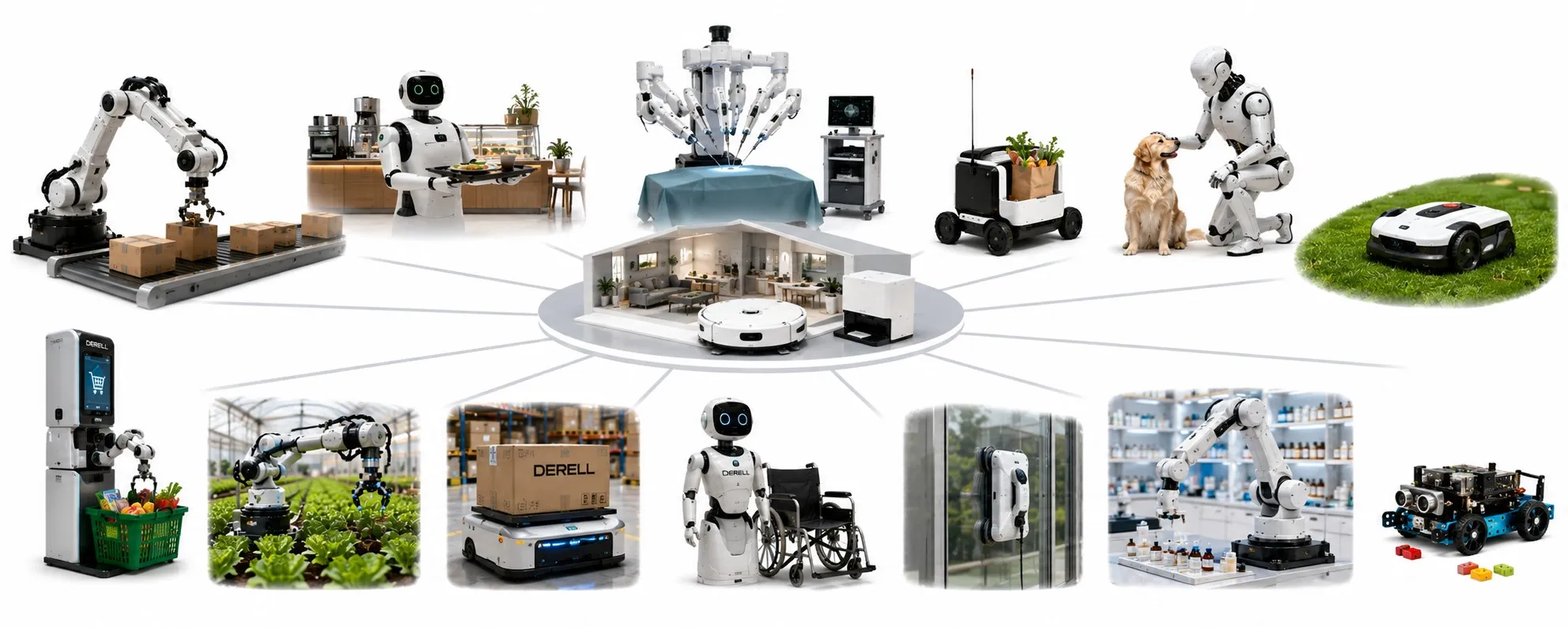
Robots can affect your day without ever entering your home. An online order may pass through a robotic fulfilment system; a hospital may use a mobile robot to move supplies; a classroom rover can turn a few lines of code into visible motion. A robot vacuum is simply the example most people recognise first.
The useful question is what physical task the system performs and how it is controlled. Robotics brings mechanisms, sensing and control together. A robot need not look human, and its level of independence can range from tightly supervised operation to autonomous action within a defined environment.
Start with a simple example: an obstacle in the way
Press Start. The robot approaches the obstacle, pauses, then takes the illustrated route around it. The indicators separate sensing, planning and movement. Stop freezes the demonstration; starting again returns it to the beginning.
The yellow patch represents detection, and the dashed line is a prepared teaching route. This animation does not read a real sensor or calculate a new path. Its purpose is to connect a measurement, a control decision and a motor command. Explore sensors and actuators, how robots work and the main robot components to see what a real implementation needs.
Behind the parcel: handling and fulfilment
Warehouse robots can bring inventory shelves to a workstation or transfer individual items and packages. These are different jobs: a mobile platform transports a load, while a robot arm handles an object. Our overview of robot applications across industries puts both in context.
Automation does not imply an empty warehouse. People may still pick items, maintain equipment and deal with exceptions. Assessing the employment effects means considering that distribution of work, rather than assuming every robotic task replaces an entire job.
At home: useful help with practical limits
Floor-cleaning robots and robotic lawn mowers handle specific tasks in suitable spaces. Navigation varies by model: sensors, cameras or mapping may be involved. Cables, thresholds and unsuitable surfaces can still cause trouble. Cleaning the brushes, filters and sensing surfaces remains part of ownership.
A robot can follow a simple obstacle-response rule without human-like intelligence. AI may improve object recognition or route planning in some products, but robotics and AI are not interchangeable terms.
In the classroom: test a decision you can see
A line-following rover makes feedback concrete. Change a sensor threshold or a motor command, run the program and observe the result. This combines programming with testing and troubleshooting. For anyone building a first robot, a small measurable task is a useful starting point: drive straight, detect an obstacle, then turn.
In healthcare: assistance has different meanings
In established robot-assisted surgical systems, the surgeon controls instruments from a console. Describing them as machines that independently perform an operation is misleading. Hospitals may also use supply-transport robots and rehabilitation equipment operated under professional supervision. These healthcare applications have different purposes and levels of human control. The presence of a robot does not itself guarantee a better treatment outcome.
In public spaces: service, inspection and transport
Some hotels and restaurants use robots to carry trays or guide visitors. Carrying food, taking an order and cooking it are separate capabilities. Inspection or patrol robots collect images and measurements; some drones perform programmed missions. The type of robot and the operator's responsibility should be clear. Remote control is different from autonomous operation.
Cars also combine sensing, control and physical action, but parking assistance is not a promise of driverless travel. Level 2 driving assistance requires the driver to remain attentive and supervise the system. When discussing autonomous vehicles, distinguish the operating conditions, system limits and any requirement for a person to take over.
Four questions that matter more than the label
What task does it perform? Where can it operate? What can it fail to detect? Who intervenes when needed? These questions turn a demonstration into something you can assess. Consider robot safety around people and privacy and ethics where cameras or microphones are involved. Knowing the limitations of current robotics helps separate an impressive example from dependable everyday operation.
References
IFR — Service robot applications · iRobot — Navigation and coverage · Amazon — Robots in fulfilment centres · LEGO Education — Sensor feedback and programming · FDA — Robotically assisted surgical systems · NHTSA — Driving automation and driver responsibility