
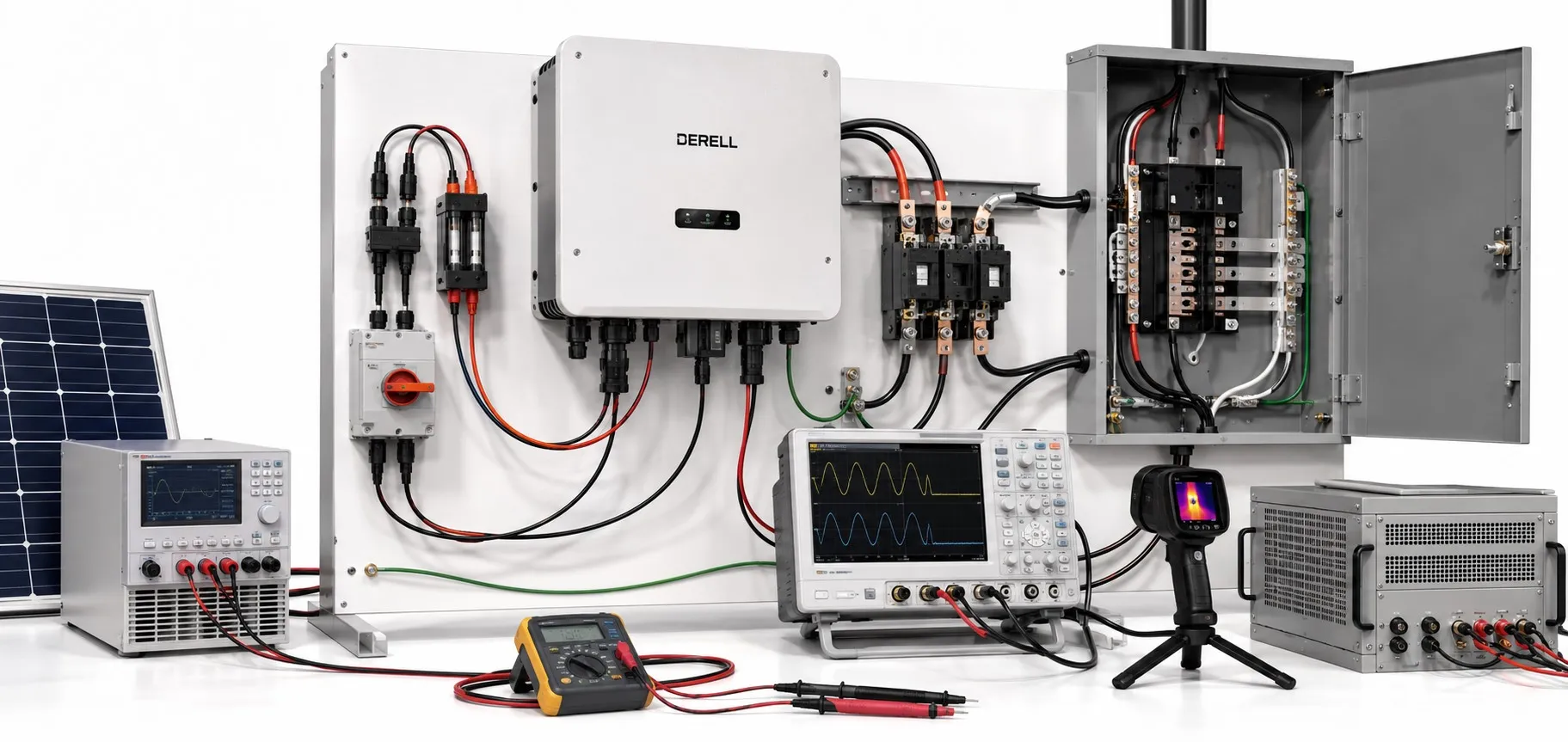
UL 1741: What an Inverter’s Certification Actually Covers
UL 1741 is a safety standard used to evaluate inverters, converters, charge controllers and interconnection equipment for distributed energy resources. Its scope includes equipment intended for stand-alone systems as well as systems that operate in parallel with the utility grid. It belongs to the wider family of UL standards commonly referenced in North American product specifications.
For a buyer, the useful question is: What has this particular product been evaluated to do? The answer depends on its certification record, operating modes and ratings. A reference to UL 1741 alone does not establish that every grid-support function, battery combination or backup arrangement is covered.
Which Equipment Falls Within Its Scope?
Photovoltaic systems are a familiar application, but the standard also addresses suitable equipment used with other distributed energy sources. Power conversion equipment for energy storage can be relevant too; the assessment follows the equipment’s function and intended configuration.
A solar inverter converts DC power into AC power. If it exports energy to the grid, it must also behave appropriately at the grid connection. This is why comparing inverter types requires more than matching their kilowatt ratings: grid export, battery operation and backup supply are distinct capabilities.
The word “inverter” can also describe a variable frequency drive used to control a motor. That shared name does not make a motor drive suitable or certified for exporting power to a utility network. Always check the intended application.
Safety, Ratings and Installation Conditions
Electrical safety assessment considers matters such as insulation, accessible live parts, connections and protective grounding. Applicable tests examine product behaviour under normal operation and specified abnormal conditions, including risks associated with electric shock and fire.
Thermal behaviour and protective arrangements are also relevant. However, a certified product still needs correct wiring, suitable protective devices and installation within its ratings. Solar inverter safety depends on how the equipment is applied as well as how it was designed.
Environmental suitability deserves a separate check. Look at the stated IP protection rating, any other enclosure classification, the permitted temperature range and the manufacturer’s operating conditions. An outdoor rating should not be read as blanket approval for salt exposure, corrosive atmospheres or unrestricted installation locations.
Understanding UL 1741 SA and SB
UL 1741 provides the underlying product assessment framework. A specification that names only the base standard leaves an important question unanswered: which supplemental requirements are included in the product’s certification?
Supplement A, usually called UL 1741 SA, introduced assessment of advanced grid-support functions using applicable Source Requirement Documents. California Rule 21 is a well-known example. The source document matters because it defines requirements and settings used alongside the test methods.
Supplement B, or UL 1741 SB, addresses grid-interactive functions associated with IEEE 1547-2018 and the test procedures in IEEE 1547.1-2020. A product certified to SA should not be assumed to hold SB certification. Verify the actual scope rather than relying on a shortened marketing description.
The IEEE documents have different jobs: IEEE 1547 defines interconnection and interoperability requirements; IEEE 1547.1 defines conformity assessment test procedures. The applicable editions, amendments and project acceptance criteria need to be considered together.
Anti-Islanding Does Not Rule Out Backup Power
An unintentional island occurs when a distributed energy source continues energizing a section of the network that has become disconnected from the wider grid. Appropriate anti-islanding behaviour is therefore an important part of grid-interconnection assessment.
A properly designed backup system can still supply selected loads after separating them from the utility. Whether a solar inverter can operate during an outage depends on its supported operating modes, the isolation or transfer arrangement and the system configuration. A grid-interactive certification does not, by itself, establish backup capability.
Likewise, ride-through and anti-islanding address different situations. Ride-through concerns how equipment responds to specified voltage or frequency disturbances while the grid remains present. Anti-islanding concerns an unintended electrical island. Their requirements must work together within the applicable grid profile.
How It Relates to Other Standards
IEC 62109 addresses the safety of power converters used in photovoltaic systems. Although it shares some safety objectives with UL 1741, certification to one should not be treated as automatic acceptance under the other.
Storage projects introduce another distinction. UL 1973 concerns batteries within its scope, while UL 9540 addresses energy storage systems. Combining a UL 1741-certified inverter with a separately certified battery does not automatically create a UL 9540-certified system. The approved combination and system-level documentation matter.
There is also a difference between evaluating a product and checking an installed system. The IEC 62446 series deals with photovoltaic system documentation, verification and maintenance. Those activities answer practical installation questions that an inverter’s product certificate cannot resolve on its own.
Does Certification Establish Efficiency or Service Life?
UL 1741 certification is not a promised energy-saving percentage. Conversion losses, MPPT performance, operating temperature and loading all affect energy yield. When assessing inverter efficiency, compare the stated measurement conditions as well as the headline figure.
Certification also does not guarantee a particular inverter service life or uptime. Warranty coverage, replacement parts, technical support and maintenance arrangements should be reviewed separately when estimating ownership costs.
What to Check Before Specifying an Inverter
When selecting a solar inverter, start with the exact model designation. Request the certification body’s name, the certification or file number, the applicable standard edition and explicit confirmation of any required SA or SB scope. Where the record identifies hardware or firmware versions, check that the supplied equipment matches.
For products certified by UL Solutions, Product iQ provides certification information. If another certification body issued the document, use that body’s official records to verify it. Product certification and permission to connect a specific installation are separate matters. The utility’s requirements and the relevant authority’s acceptance still need to be checked.
During installation and commissioning, match the approved wiring arrangement, protective equipment and grid settings to the manufacturer’s documentation. Keep these records available for subsequent inverter maintenance, troubleshooting and equipment changes.
Edition note: As checked on October 1, 2026, the official standards catalog lists UL 1741 as Edition 3, with a latest revision date of August 14, 2026. The edition and transition arrangements applicable to an individual product or project should be confirmed separately.