
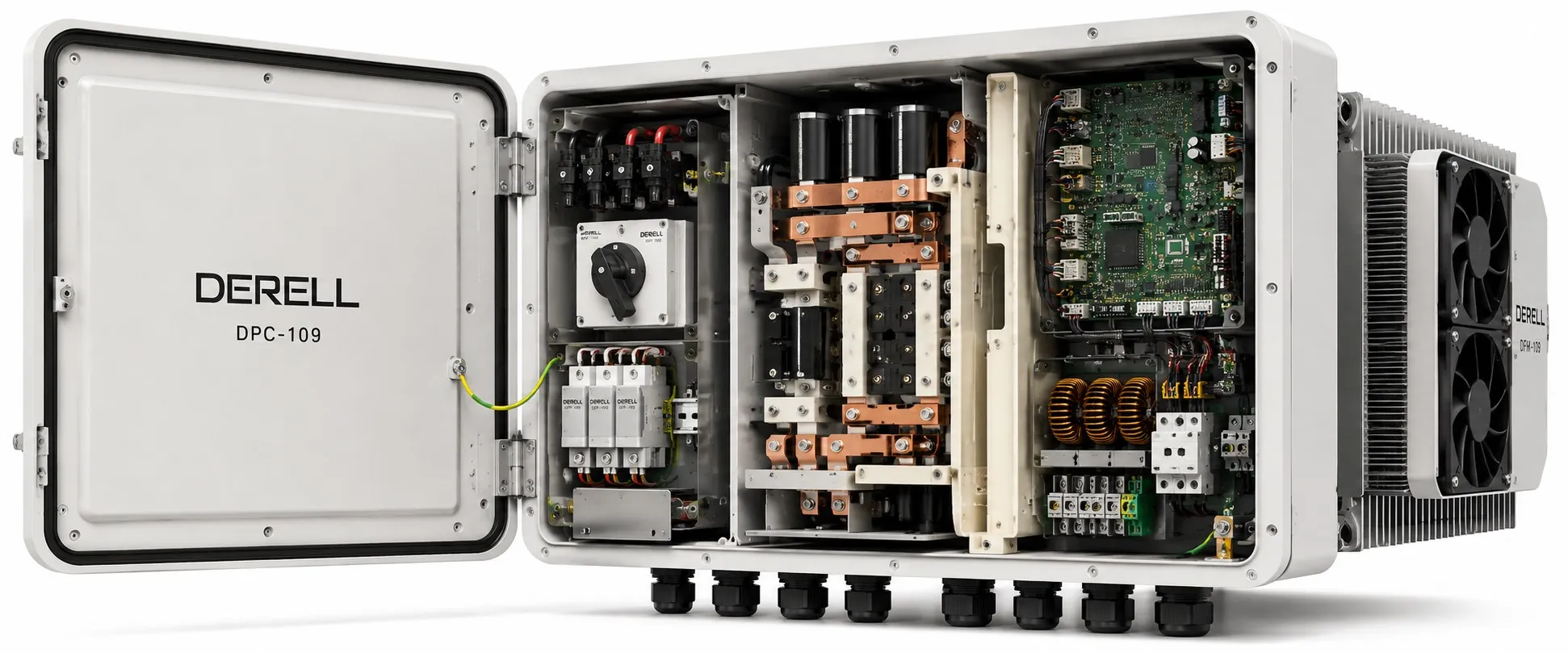
IEC 62109: What It Means for PV Inverter Safety
IEC 62109 is a series of international safety standards for power conversion equipment used in photovoltaic systems. It addresses hazards such as electric shock, fire, excessive temperatures and mechanical injury. When a solar inverter lists IEC 62109 in its documentation, the useful next step is to check which model, standard edition and operating conditions the supporting evidence covers.
A product safety assessment does not, by itself, establish energy yield, permission to connect to a utility network or compliance of the completed installation.
How the IEC 62109 Series Is Organized
Part 1 — General requirements: IEC 62109-1 establishes the common safety requirements for PV power conversion equipment. Its scope includes protection against electrical energy, fire, mechanical hazards and other risks. Safety assessment considers the equipment under the operating and fault conditions specified by the applicable requirements.
Part 2 — Particular requirements for inverters: IEC 62109-2 covers PV equipment that converts DC power to AC power, including products that combine an inverter with other functions. Relevant inverter configurations include grid-interactive, stand-alone and multiple-mode designs. Part 2 is used together with Part 1.
Part 3 — Electronics combined with photovoltaic elements: IEC 62109-3 adds safety requirements for electronic devices incorporated mechanically or electrically with PV elements. A combination sold as one product is central to its scope. Its tests can also help assess compatibility between separately supplied modules and electronics intended for installation close together. The assessment has an important connection with IEC 61730 module safety requirements.
Edition check — October 1, 2026: Published documents include IEC 62109-1:2010, IEC 62109-2:2011 and IEC 62109-3:2020. The 2026 PRV versions of Parts 1 and 2 are, at this date, Final Draft International Standards available during their voting periods. A pre-release draft should not be described as a completed replacement publication. Always identify the part and edition when reviewing a specification or certificate.
What Product Safety Means in Practice
Protection against electrical hazards: PV inverter safety involves more than a shutdown message on a display. Insulation, accessible surfaces, electrical connections and protective arrangements all matter. Any required protective grounding must also be implemented correctly during installation.
Residual-current monitoring: Some inverters incorporate an RCMU that monitors AC and DC residual currents. Its presence does not automatically remove the need for an external residual-current device. The required device type and rated residual current depend on the inverter, installation and applicable rules. Understanding the differences between Type A and Type B RCDs helps explain why one universal selection cannot be applied to every PV inverter.
Installation conditions: Safety documentation assumes that the product is used within its stated limits. Correct inverter installation includes the specified mounting orientation, ventilation clearances and connection arrangements. The manufacturer's limits must also suit the site's temperature and weather exposure.
Separate Safety Evidence from Performance Claims
MPPT performance: Maximum power point tracking concerns how effectively an inverter follows the available operating point of its PV source. An IEC 62109 assessment does not establish a particular tracking efficiency. IEC 62891 provides procedures for measuring static and dynamic MPPT efficiency. When comparing solar inverter efficiency, look for performance measurements alongside the safety documentation.
Anti-islanding: IEC 62116 provides a test procedure for islanding-prevention measures in utility-connected PV systems. Applicable grid connection requirements need their own review. A reference to IEC 62109 alone also does not establish whether an inverter can supply loads during a power outage.
Battery operation: Inverters covered by the series may be designed to work with energy storage. That does not make every assessed inverter battery-compatible or capable of backup operation. A solar battery system requires confirmation of the supported battery combinations, operating modes and protective equipment.
Where IEC 62109 Fits in a PV Project
A PV module, an inverter and the completed installation are different subjects of assessment. Evidence for the inverter does not automatically extend to the modules, wiring or installation work around it.
Array design: The IEC 62548 series addresses PV array design requirements. An inverter certificate cannot establish that the project's cables and protective arrangements have been selected correctly.
Commissioning and records: Relevant parts of the IEC 62446 series address documentation, verification and maintenance. Factory product assessment and on-site checks serve complementary purposes.
Market-specific requirements: Standards such as UL 1741 provide separate assessment frameworks. IEC 62109 evidence should not be treated as an automatic substitute for UL certification or approval from a particular utility.
Reading an Inverter Certificate: Four Useful Checks
During inverter selection, move beyond the standards list on the sales sheet and check the supporting documents.
Match the product: Confirm the manufacturer, model designation and covered variants. A document for a similar product in the same range may not cover the unit being supplied.
Identify the evidence: Read the standard parts and edition years. Establish whether the document is a test report, a certificate or a manufacturer's declaration, and check its stated scope.
Read the conditions: Compare permitted input ratings, environmental limits, protective devices and any additional conditions with the installation manual and project requirements.
Keep a usable record: Retain the product documentation alongside commissioning results and inverter maintenance records. This makes later inspections and equipment changes easier to assess. Product safety evidence remains useful throughout the equipment's service life, but correct installation and maintenance remain essential.