
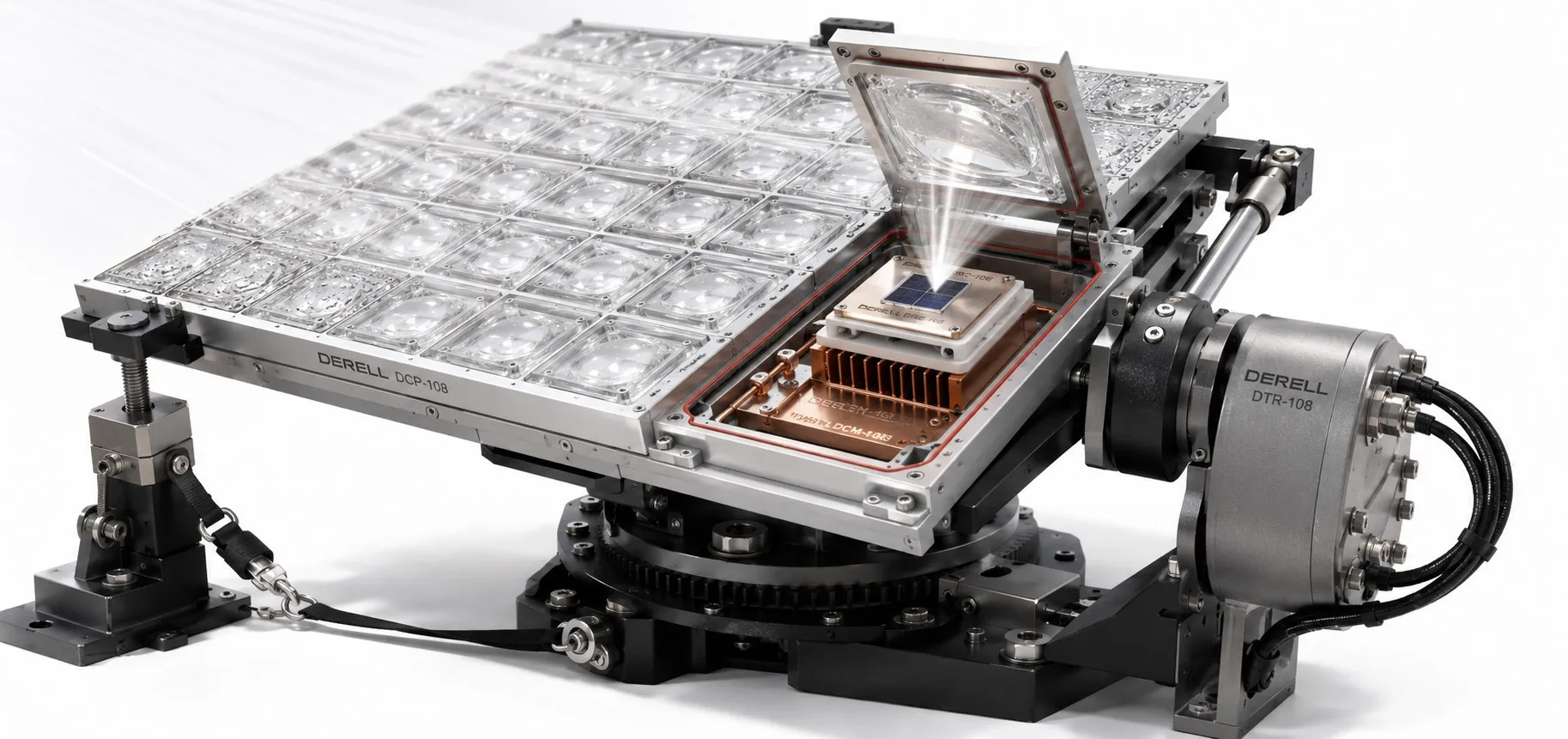
IEC 62108: Understanding CPV Design Qualification
IEC 62108 defines design qualification and type approval requirements for concentrator photovoltaic modules and assemblies. Usually shortened to CPV, this technology uses lenses or mirrors to direct sunlight onto photovoltaic cells. Electricity is still generated through the photovoltaic effect; the optical system changes how sunlight reaches the cells.
The third edition is IEC 62108:2022. It evaluates electrical, mechanical and thermal characteristics of CPV products intended for outdoor use.
What qualification establishes: A design has been assessed against specified test requirements. It does not establish superior energy production in every climate, freedom from failures or a guaranteed 25-year operating life. Those claims require their own evidence and clearly stated conditions.
What Makes Concentrator Photovoltaics Different?
In a conventional solar panel, cells occupy much of the light-receiving area. A CPV system collects light over an optical aperture and directs it onto a smaller cell area. High-concentration designs can use highly efficient multi-junction cells. Comparing PV technologies therefore requires attention to the optics and operating conditions as well as the cell technology.
Concentration does not create additional sunlight. It redistributes the light collected by the optics. Optical losses, cell temperature, alignment and electrical conversion determine how much usable power emerges from the system.
High-concentration CPV depends heavily on direct normal irradiance, or DNI. Diffuse light scattered by clouds and the atmosphere cannot be concentrated in the same way. As a result, weather-related changes in output need a technology-specific assessment. When comparing panel efficiency, identify the measurement conditions and whether the stated area refers to the cells or the optical aperture.
Why Tracking Accuracy Matters
Focusing sunlight onto a small receiver leaves less room for pointing error. High-concentration systems commonly use two-axis tracking. Their accuracy depends on the complete mechanism: structural stiffness, drivetrain backlash, wind loading, actuation and control all affect where the light lands.
Choosing the actuator: An electric motor needs more than enough torque to move the platform. Low-speed behavior, load holding, travel limits and the transmission must suit the application. A servo motor is one possible solution, alongside other motorized actuators. IEC 62108 does not prescribe servo actuation for every CPV system.
Measuring position: An appropriate absolute encoder can provide angular feedback. However, knowing the motor shaft angle does not necessarily establish the actual optical pointing angle when backlash or structural movement is present.
Coordinating motion: A PLC or dedicated tracker controller can manage movement, travel limits and weather-dependent operating decisions. Designs using optical feedback may incorporate photodiode sensing. Other trackers use calculated solar position, so optical feedback is not a universal requirement.
Where a VFD fits: A variable frequency drive may form part of an AC motor tracking system, but speed control alone does not deliver accurate pointing. Position control and the mechanical arrangement remain necessary. Solar tracker design qualification is addressed separately by IEC 62817. Qualification of a CPV module does not automatically qualify the entire tracking mechanism.
What Does IEC 62108 Test?
The test program includes visual inspection, electrical performance measurements, thermal cycling, damp heat, humidity-freeze, hail impact, mechanical loading and outdoor exposure. It also addresses dust and water ingress, terminal robustness, diode thermal behavior and hot-spot endurance.
A distinctive CPV concern: The standard includes an off-axis beam damage test. Concentrated light reaching an unintended location makes optical alignment relevant to more than energy production.
Temperature monitoring in operation: Separately from qualification testing, suitable temperature sensors can help monitor a receiver or heat sink. The measurement location matters: a heat-sink reading and a cell temperature are not interchangeable.
Electrical integrity: Ground-path continuity, electrical insulation and wet insulation are also assessed. These product tests do not remove the need for correct grounding in the installed system.
Qualification, Safety and Performance: Different Questions
CPV safety: IEC 62688 addresses construction and testing requirements associated with electric shock, fire and mechanical injury. Its test sequences can be coordinated with IEC 62108 for CPV safety and qualification assessments.
Conventional PV modules: IEC 61215 and IEC 61730 are useful references for understanding design qualification and module safety in conventional PV. Their applicability should not be transferred to a CPV product without checking the relevant scope.
Power conversion equipment: The IEC 62109 series addresses PV converter safety. Qualification of the optical module and receiver does not establish compliance of the inverter connected to them.
Installation design and verification: Depending on the project, applicable IEC 62548 array design requirements and IEC 62446 documentation and verification requirements need separate consideration. CPV-specific measurement methods and manufacturer instructions remain important.
Power ratings and energy measurements: The IEC 62670 series addresses reference conditions, energy measurement and CPV performance rating. Passing a qualification test program does not determine the annual energy yield at a particular site.
Solar Tracking and MPPT Have Different Jobs
The tracker changes the physical orientation of the optics. Maximum power point tracking changes the electrical operating point of the PV source. One helps sunlight reach the receiver; the other seeks the available electrical power under the resulting conditions.
If a tracker points away from the correct angle, MPPT cannot recover light that misses the cells. Likewise, perfect pointing cannot resolve an incompatible solar inverter input. During inverter selection, check the CPV array's voltage, current and operating characteristics against the converter's limits.
How to Review a CPV Product
Match the evidence to the hardware: Check the model designation, optics, cell arrangement, cooling configuration and covered variants. A product using a different lens or receiver should not be assumed to remain within an earlier assessment.
Plan for maintenance: Optical cleaning, alignment checks and tracker servicing belong in the operating plan. General solar panel maintenance guidance is a starting point; CPV also needs the manufacturer's optical and mechanical maintenance instructions.
Separate service life from warranty: Expected panel life, contractual warranty coverage and design qualification answer different questions. Review service support and replacement-part availability alongside the qualification documents.
Use site-specific energy assumptions: An installation cost and payback assessment should include DNI data, tracker consumption, maintenance and availability. Overall PV system efficiency cannot be inferred from a cell's laboratory efficiency alone.
When preparing a specification, organize the relevant solar energy standards around the product, safety assessment, tracking equipment and installed system. The useful question is which configuration was assessed, against which requirements, and for which operating conditions.