
How do weather conditions affect the efficiency of solar panels?
Hello, friends of solar energy,
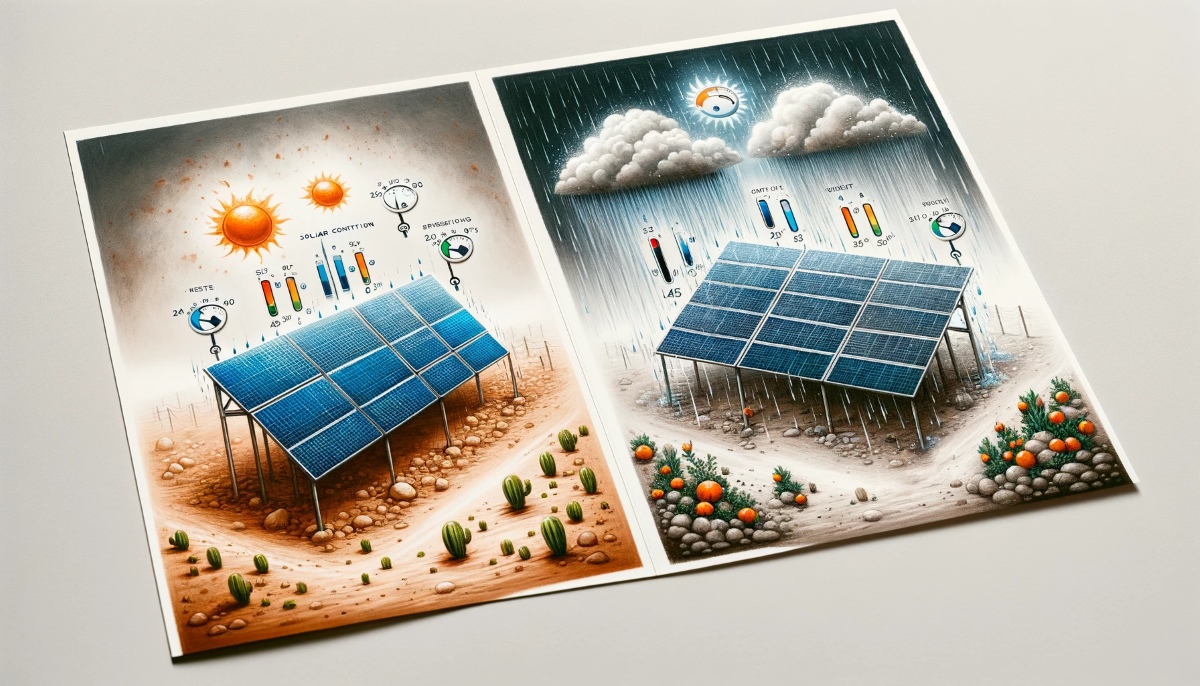
Weather conditions can significantly impact the efficiency of solar panels. Here are some key factors:
1. Sunlight:
This is the most obvious factor. More sunlight equals more energy production. Cloudy or overcast days will reduce the amount of sunlight that reaches the panels, and thus reduce energy production. However, modern panels are increasingly efficient and can still generate power even on cloudy days, albeit at a reduced rate.
2. Temperature:
Contrary to what some might think, solar panels actually become less efficient as temperatures increase. This is because solar panels convert light, not heat, into energy, and high temperatures can reduce their performance. Each panel has a 'temperature coefficient' rating that indicates how much efficiency decreases for each degree above 25°C (77°F).
3. Snow:
Snow can potentially cover panels, effectively blocking sunlight. However, because panels are usually installed at an angle, snow often slides off. Even a light dusting of snow can reduce efficiency, but panels can still produce energy if some light penetrates the snow.
4. Dust and Debris:
Dust, leaves, bird droppings, or other debris can cover solar panels and block sunlight, reducing their efficiency. Rain often helps clean the panels, but in dry areas, they may need to be cleaned manually.
5. Rain and Humidity:
Rain can help to clean solar panels, keeping them running at maximum efficiency. However, in areas with high humidity, the increased moisture can potentially lead to corrosion over time, particularly if the panels are not properly sealed and protected.
6. Wind:
Wind itself does not generate solar power, but it can help cool the panels and counteract the efficiency loss caused by high temperatures. However, strong winds, especially when coupled with debris, can potentially damage solar panels.
Each of these weather factors can affect the overall efficiency and effectiveness of solar panels. The design and quality of the panels, as well as proper installation, can help mitigate some of these impacts. For example, high-quality panels are usually designed to withstand high winds, and proper installation should take into account the average snowfall and sun exposure in the area.
Expanding the potential of solar energy and solar systems with interesting and speculative questions can be very exciting. Solar energy has already become a part of our lives, even if it undergoes transformation in the future. Here are some example questions from our visitors:
- What is a solar panel and how does it work?
- How long does it take to install solar panels?
- What type of roof is required for solar panel installation?
- How often should solar panels be maintained?
- How long do solar panels last?
- What are the different types of solar panels (monocrystalline, polycrystalline, thin film, etc.), and what are the differences between them?
- How is the efficiency of solar panels measured?
- How do weather conditions affect the efficiency of solar panels?
- Can solar panels produce energy without sunlight (at night or during cloudy weather)?
- Do I need an inverter in my solar panel system?
- What is the difference between string inverters and micro-inverters?
- What is the environmental impact of solar panel systems?
- What is the cost of installing solar panels, and how long will it take to recoup this cost?
- What incentives can I get from the government or other sources for installing solar panels?
- What can I do to increase energy efficiency in solar panel systems?
- Solar systems with interesting and speculative questions !!
- How about I put a solar panel on the roof of my car?- Movies and TV shows with Solar energy?
+ Back to solar system main page -
These questions often include those that many people may have in mind about Solar energy. Each user or student will have their specific questions depending on a particular situation or application. The answers are not binding or entirely definitive. "You are welcome to share the article above, as long as you provide the appropriate attribution.02/2020"
Your shopping cart is empty!