
What infrastructure needs exist for solar powered vehicles?
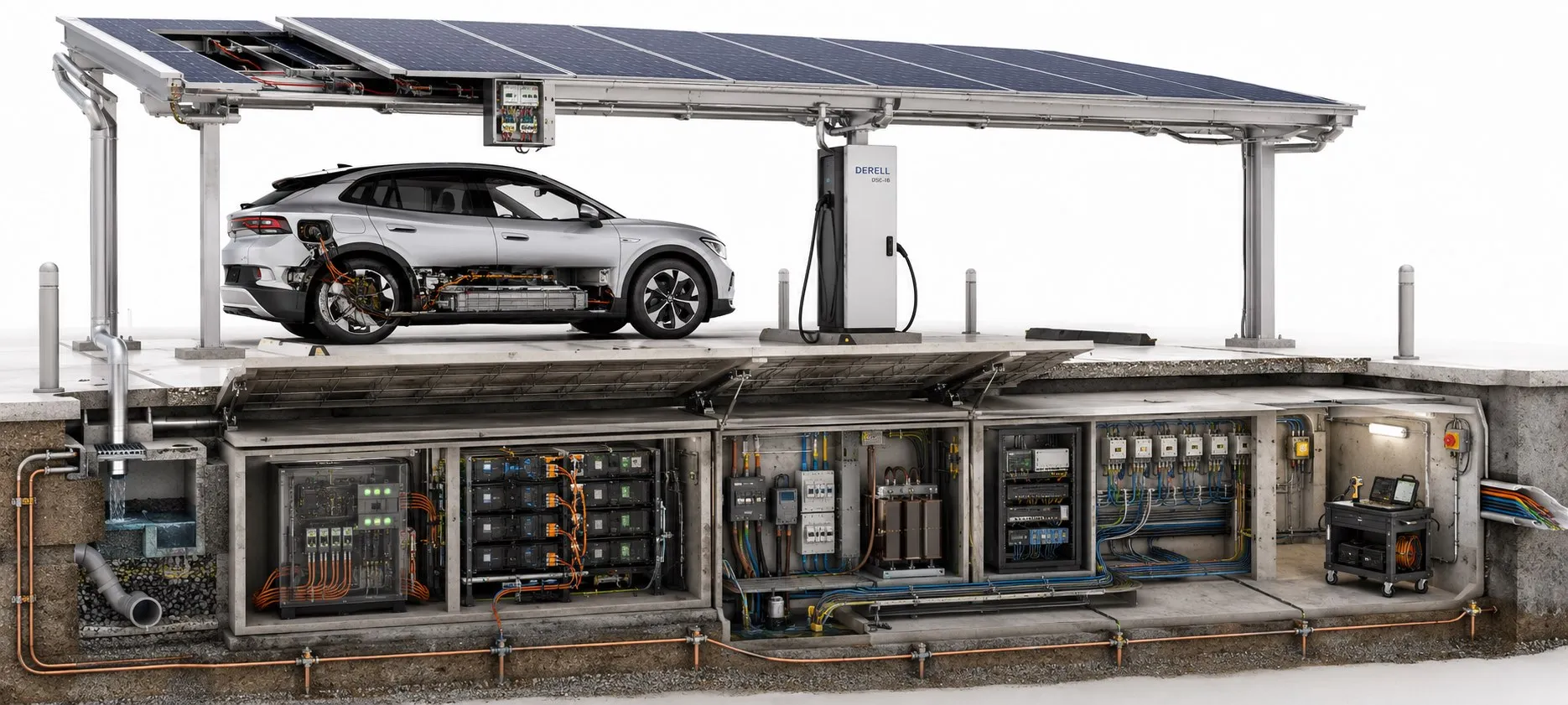
What infrastructure do solar-powered vehicles need?
Solar vehicle infrastructure involves more than a charging station fitted with panels. Energy demand, parking time, charging compatibility, electrical capacity and servicing all matter. Solar generation on the vehicle and solar generation at a parking site are different systems.
Within solar energy and vehicles, panels may be integrated into the vehicle or installed on a building that supplies its charging equipment. The difference between electric and solar vehicles matters: a solar vehicle with a compatible external charging inlet does not necessarily need a dedicated solar station. The vehicle design determines which energy sources it can use.
1. Establish daily energy demand and parking time
Where and how long the vehicle parks matters alongside distance travelled. Assess driving range requirements, consumption and charging losses together. Understand the difference between kW and kWh: charger power is not the same as the energy delivered over a day.
A vehicle parked at work during daylight needs a different plan from a fleet returning to its depot at night. Weather conditions, geographic location and shading and panel orientation affect generation. Matching annual solar generation to annual consumption does not establish that enough solar electricity is available during every charging session.
2. Match charging equipment to the vehicle and site
The difference between a wallbox and a regular socket matters when planning sustained charging. When comparing 7.4 kW, 11 kW and 22 kW charging options, consider the vehicle's accepted power, electrical phases and site capacity. A higher-rated charger does not make every vehicle charge faster.
Type 2 and CCS connections serve different charging applications; connections vary by market and model. Check electrical characteristics and communication compatibility as well as connector shape. A solar panel is not a source to connect directly to the vehicle's external charging inlet. For onboard generation, MPPT control and a suitable converter belong within the system design.
3. Assess grid capacity and load management
Not every installation automatically requires a grid or electrical service upgrade. Assess existing building demand, connection capacity and simultaneous charging. In a purely hypothetical example, four 11 kW chargers operating at full power together create a 44 kW charging load, before other building loads are added.
Load management can limit total charging power or distribute it according to vehicle needs. Grounding, suitable protection and cable sizing belong in the electrical design. Variable solar generation must not be treated as continuously available connection capacity.
4. Size solar generation and storage together
Solar panels can be installed on a parking canopy or suitable roof. The difference between grid-connected and off-grid systems affects energy availability. A grid-connected installation can import electricity when solar output is insufficient; an independent system needs sufficient capacity and backup arrangements for periods of low generation.
Stationary battery storage is not mandatory for every solar charging project. Storage can shift generated energy to another time, but capacity, losses and costs need separate assessment. The vehicle battery and a station's stationary battery are separate assets. Include battery life and the payback calculation in the decision.
5. Plan servicing, local approvals and daily operation
Maintenance costs, spare parts, alternative charging during faults and user guidance form the operational side of infrastructure. For public transport fleets, departure schedules also belong in the charging plan. A functioning charger must also be available when users need it.
Check installation approvals, grid connection requirements and any incentives for the country and region where the project will operate. A safety and reliability assessment should cover the vehicle and charging installation together. For a carbon footprint assessment, consider the energy actually used and the equipment's life cycle alongside solar generation.