
Using solar energy during the night
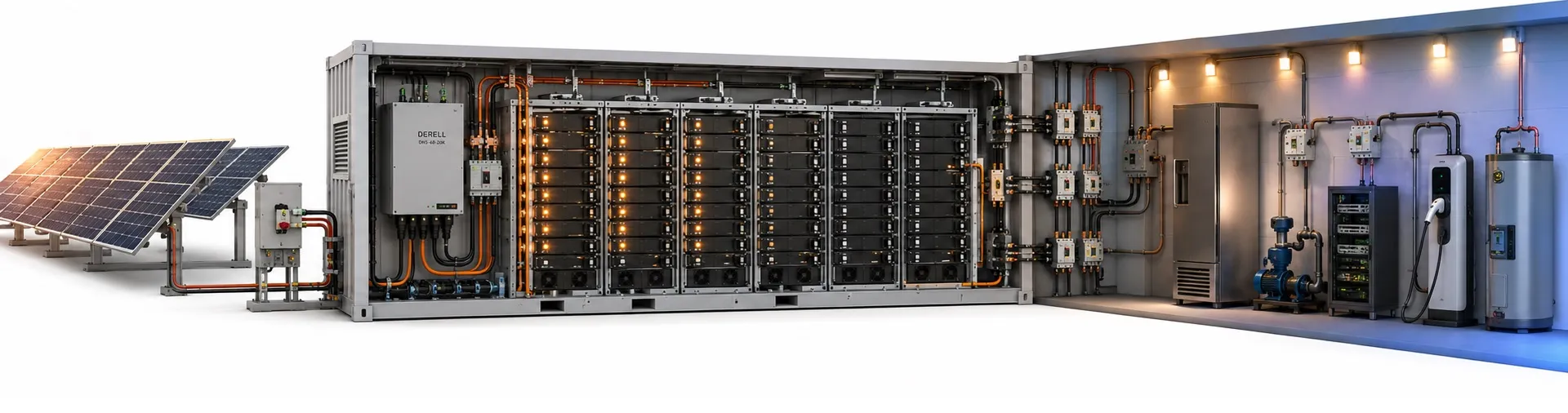
Moving daytime generation into the night
The storage technologies needed to use solar energy at night are already in operation. Photovoltaic panels generate electricity during daylight, and a suitable system can store part of that output for nighttime loads. Energy storage options include batteries, pumped-storage hydropower and thermal storage. The engineering task is to supply the required load at sufficient power for the required duration.
Meeting one night's demand and operating independently throughout the year are different objectives. Storage does not generate energy; it changes when previously generated energy is used, with losses along the way. Consecutive cloudy days, winter generation and daily consumption must be assessed together.
Start by separating kW from kWh
kW describes the power a system can supply; kWh describes stored or delivered energy. A large energy capacity does not establish the ability to start a large motor. Use power metering and monitoring devices to determine the nighttime load profile, simultaneous equipment demand and short power peaks.
Consider a facility drawing an average of 50 kW overnight for 10 hours. The energy delivered to its loads must be 50 × 10 = 500 kWh. Assuming 80% of the battery's nominal energy is usable and 90% efficiency from the battery through the discharge path to the AC loads, a preliminary calculation gives 500 / (0.80 × 0.90) ≈ 694 kWh of nominal capacity.
This is an energy calculation using illustrative assumptions. Ageing allowance, temperature effects, auxiliary consumption and the required backup reserve need separate consideration. If the same facility's simultaneous demand reaches 120 kW, the battery and power conversion system must also support that demand; motor starting requires its own assessment. Energy capacity and output power must be selected together.
Editor's note
If a manufacturer already specifies usable capacity, do not apply the same usable fraction again. If capacity is stated as kWh delivered at the AC output, do not deduct conversion losses already included in that figure. Nominal battery energy, usable DC energy and delivered AC energy describe different measurement boundaries.
What components does a battery system need?
A battery energy storage system (BESS) includes more than cells. Battery management (BMS), bidirectional power conversion, energy management (EMS), protection and temperature control work together. Lithium-ion batteries, including LFP chemistry, are common stationary storage options; alternatives such as flow batteries can also be assessed for the application. Batteries and charging equipment must be selected with their voltage and current limits in mind.
Not every solar inverter type supports battery charging, discharging or backup operation. MPPT helps extract power from panels at an appropriate operating point; it is not a storage system on its own. Establish compatibility between the battery, inverter and controls, along with the AC- or DC-coupled architecture, at the start of the project.
Inverter efficiency differs from the efficiency of the complete storage cycle. Charging and discharging conversions, cables, cooling and standby consumption reduce the net energy delivered. On the following day, the panels must supply daytime loads and replace the energy used overnight, including associated losses.
Nighttime use and outage backup are different capabilities
Using battery energy while the grid is available is different from operating during a power outage. Backup requires a suitable inverter operating mode, an arrangement for safe separation from the grid and a defined set of loads to be supplied. Installing storage does not automatically provide islanded operation.
For UPS applications, transfer time and the interruption a sensitive load can tolerate also matter. A battery discharged for nighttime self-consumption may have little energy left when an unexpected outage occurs. Define backup reserves and load priorities explicitly in the energy management strategy.
Other options at larger scales
Pumped-storage hydropower uses electricity to move water into an upper reservoir, then generates electricity by releasing it through a turbine when needed. It is an established technology for storing substantial amounts of energy, but requires suitable elevation differences, reservoirs and site conditions.
Thermal storage holds energy as heat. In concentrating solar power (CSP) plants, stored heat can subsequently be used to generate electricity. For hot-water or cooling demand, stored thermal energy can also be used directly. This is a different energy conversion route from storing photovoltaic electricity in a battery.
Flywheels can provide rapid power support and short-term balancing; they serve a different role from the sustained energy capacity needed throughout a night. Select storage according to discharge duration, power, losses and frequency of use, rather than treating all storage technologies as interchangeable.
Reducing storage demand is another option
Moving suitable loads into sunny hours can reduce the battery capacity required. For example, operating irrigation pumps during the day to fill a water tank can reduce the need for electrical pumping at night. Storing heat or cooling can also help with some loads. Combined with energy efficiency, these measures reduce the demand that storage has to meet.
Assessing investment and operation
A comparison based only on battery cell price is incomplete. Power electronics, installation, auxiliary consumption, maintenance, capacity degradation and warranty terms all affect the result. Establish the installation and maintenance plan, protective systems and operating responsibilities as well. A system sized for one night does not automatically cover several days of low generation. A reliable design examines generation and consumption on the same timeline.
Related topics and categories
The solar side: What is a solar panel?, What is MPPT?, Solar inverter types, Inverter efficiency, Solar inverters during power outages.
Other related categories: Energy storage methods, Batteries and chargers, UPS systems, Power metering and monitoring, Energy efficiency.
Solar energy questions and concepts
Sources
U.S. Department of Energy: solar energy and storage basics
IEA, Batteries and Secure Energy Transitions (2024): battery applications and chemistries
NREL: Grid-Scale Battery Storage, power and energy definitions (Sandia archive)
IRENA: electrical, mechanical and thermal energy storage
U.S. Department of Energy: inverters and operation without grid support