
Are flying wind energy collectors a possibility instead of traditional wind turbines?
Hello, dear friends,
The concept of flying wind energy collectors, also known as airborne wind energy systems (AWES), is an emerging area of research and development in the field of renewable energy. These systems aim to harness wind energy at higher altitudes, where wind speeds are typically stronger and more consistent than at ground level. Here's an in-depth analysis of the potential and challenges of airborne wind energy systems:
Technology Overview:
Kite and Tethered Systems: Some AWES designs use large kites or wing-like structures tethered to the ground. These systems convert the aerodynamic forces on the kite into electrical energy, either through onboard generators that transmit electricity down the tether or by using the tether to drive ground-based generators.
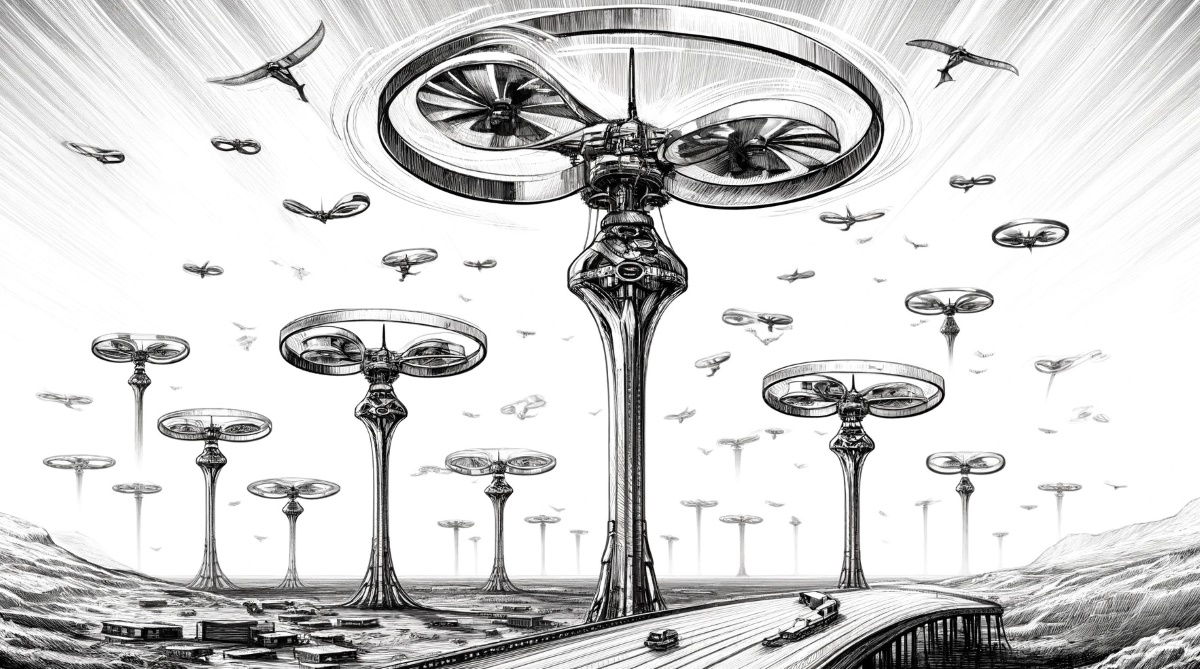
Autonomous Flying Systems: Other designs involve autonomous flying devices, such as drones or gliders, equipped with turbines or propellers. These devices can adjust their altitude and position to optimize energy capture and can transmit electricity to the ground wirelessly or through tethers.
Advantages of AWES:
Access to Higher Altitudes: AWES can potentially tap into stronger and more consistent winds at altitudes beyond the reach of traditional wind turbines, increasing energy production efficiency.
Reduced Material and Infrastructure: Flying systems require less material for construction and minimal land use compared to conventional wind turbines, potentially reducing environmental impact and costs.
Portability and Flexibility: Some AWES designs are portable and can be deployed in remote or offshore locations, providing energy access in areas without existing infrastructure.
Challenges and Limitations:
Technical Complexity: The design and operation of AWES involve complex aerodynamics, control systems, and energy transmission mechanisms, posing significant engineering challenges.
Safety and Reliability: Ensuring the safe operation of flying devices, especially in variable weather conditions and near populated areas, is a critical concern. The reliability and longevity of airborne systems are also yet to be proven.
Regulatory and Airspace Issues: The deployment of AWES requires careful consideration of airspace regulations and coordination with aviation authorities to avoid interference with aircraft and ensure public safety.
Current Status and Future Prospects:
As of now, AWES are still in the experimental and prototype stages, with several companies and research institutions actively developing and testing various designs. The technology has not yet reached commercial viability or large-scale deployment.
The future of AWES depends on advancements in materials, control systems, and energy transmission technologies, as well as the resolution of regulatory and safety challenges.
Potential Impact:
If successfully developed and deployed, AWES could complement traditional wind turbines, providing an additional means of harnessing wind energy, particularly in regions with limited land availability or unsuitable conditions for conventional turbines.
In summary, flying wind energy collectors represent a promising but challenging frontier in renewable energy. While the potential benefits are significant, considerable research, development, and regulatory progress are needed to realize the full potential of airborne wind energy systems.
"Renewable energy is more than just a hobby or curiosity; it is a 'necessity.' Whether we are aware of it or not, we have recklessly consumed/consume the world's resources. The point we have reached is beyond the threshold of return. Below, we have tried to answer questions of varying levels about renewable energy that have come from you."
- Which sources are considered renewable energy?
- How is solar energy generated and utilized?
- How does wind energy work and how is it used for electricity generation?
- How is hydroelectric energy produced, and what are its environmental impacts?
- What is geothermal energy, and how is it extracted?
- How does tidal energy work, and what are tidal power plants?
- What is biomass energy, and how is it obtained?
- What are the advantages of renewable energy sources compared to fossil fuels?
- What recent advancements have been made in the technologies used for renewable energy production?
- How are energy storage methods employed in renewable energy production?
- How is the integration of renewable energy into power grids achieved?
- What are the economic impacts of using renewable energy?
- How are renewable energy policies and incentives implemented globally?
- What are the expected future developments in the field of renewable energy?
- Can we harness solar energy beyond photons?
- Are flying wind energy collectors a possibility instead of traditional wind turbines?
- Can we develop a quantum computer powered by renewable energy?
- How can we generate hydroelectric energy outside of the water cycle?
- Is it feasible to use geothermal energy on Mars?
- Can we match tidal energy with tidal forces in space?
- How can we enhance biomass energy with synthetic organisms?
- Is it possible to utilize black holes for renewable energy production?
- Can antimatter be used for renewable energy generation?
- Can we illuminate a galaxy with energy from renewable sources?
Your shopping cart is empty!