
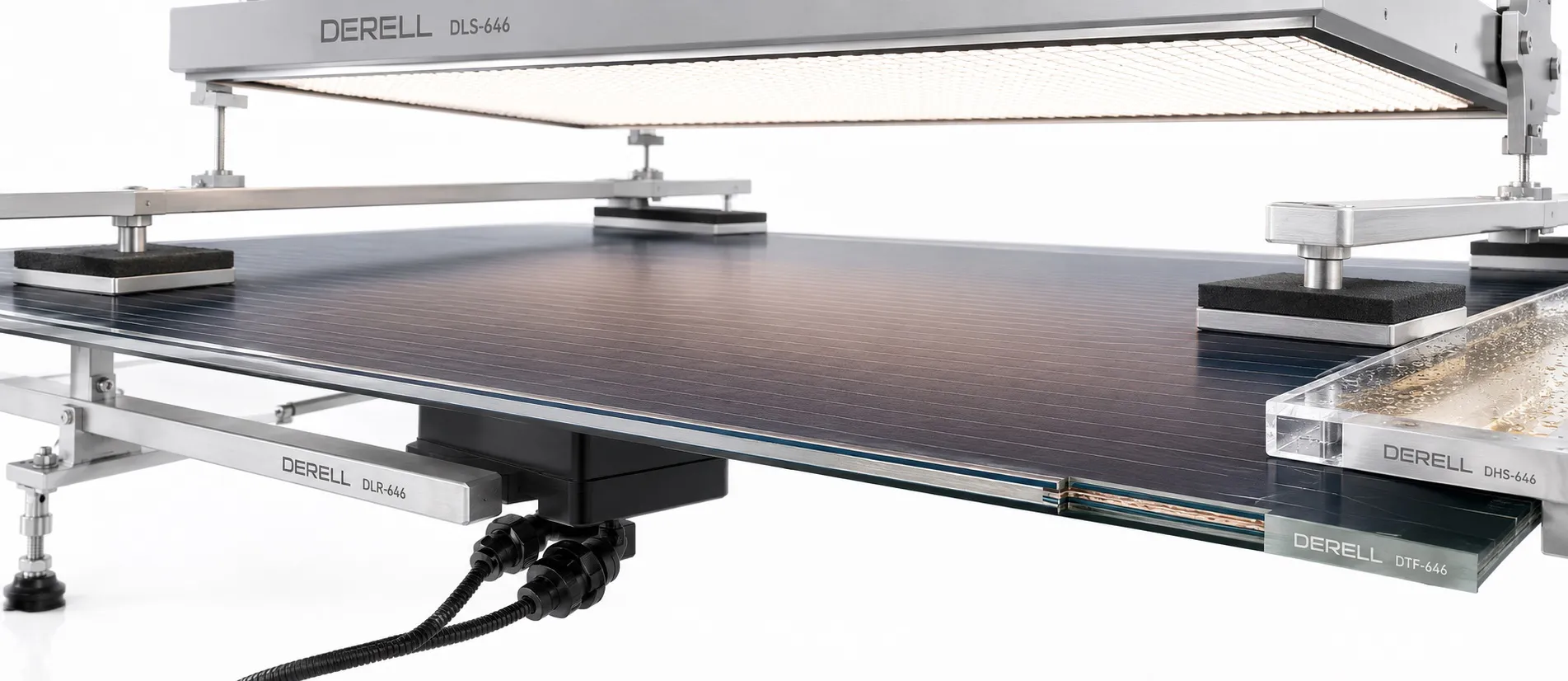
IEC 61646: Understanding the Former Thin-Film Solar Module Standard
IEC 61646 was the design qualification and type approval standard for terrestrial thin-film photovoltaic modules. It still appears in older photovoltaic system records, solar module datasheets and test reports. When reviewing these documents, the reference needs to be placed in the correct historical context within the wider family of solar energy standards.
Thin Film Describes the Cell Technology
A thin-film solar cell uses semiconductor layers deposited on a supporting material such as glass, metal or a suitable polymer. Examples include CdTe, CIGS and amorphous silicon. When comparing solar panel technologies, distinguish the active cell material from the construction of the finished module.
Thin-film modules are not necessarily flexible or lightweight. Rigid glass-based products are also available. The word “thin” primarily describes the semiconductor layer. For a rooftop installation, use the actual module mass, mounting instructions and load ratings rather than assumptions based on the technology’s name.
Which Standards Replaced IEC 61646?
The replacement framework combines common requirements with provisions for the particular cell technology. IEC 61215-1:2021 covers general test requirements, while IEC 61215-2:2021 sets out test procedures. The relevant thin-film part is then applied alongside them:
CdTe: IEC 61215-1-2:2021, including AMD1:2022, addresses the specific testing requirements for cadmium telluride thin-film modules.
Amorphous silicon: IEC 61215-1-3:2021, including AMD1:2022, covers the technology-specific requirements for amorphous silicon-based thin-film modules.
CIGS family: IEC 61215-1-4:2021, including AMD1:2022, addresses modules based on Cu(In,Ga)(S,Se)₂ materials.
The technology-specific part supplements the common parts; it does not replace them. A document review should therefore compare the complete references, including editions and applicable amendments.
What Did the Original Test Programme Cover?
The programme included visual checks, power measurement, insulation, thermal cycling, damp heat, humidity-freeze, UV preconditioning, mechanical loading, hail, hot-spot endurance and light soaking. These assessments examined module performance and durability under defined conditions. They did not recreate every combination of weather encountered in service.
A useful way to understand environmental testing is to ask two questions: what stress was applied, and what changed afterwards? In a field investigation, records from temperature sensors and humidity sensors can provide context. They do not substitute for qualification testing.
Partial shading also deserves attention. Cell interconnection and any bypass diodes influence the module’s response. Describing a product as thin film does not establish that shading is harmless.
Why Stabilisation Matters in Thin-Film Measurements
For some thin-film technologies, measured power depends on previous exposure to light and temperature. Stabilisation helps establish a repeatable condition for meaningful comparison. A measurement made immediately after storage may therefore differ from one taken after the module has reached a stable operating state.
This is separate from an inverter’s maximum power point tracking. MPPT searches for an appropriate electrical operating point during operation; stabilisation concerns the module’s condition before measurement. A change in measured power should not automatically be labelled permanent degradation without considering that history.
Qualification and Safety Answer Different Questions
The inclusion of insulation tests in IEC 61646 did not make it a complete substitute for module safety qualification. IEC 61730 addresses the module safety requirements that must be considered separately. A statement that a product was “tested to IEC 61646” is insufficient evidence for a general fire-safety claim.
Specific environments can call for additional assessment. For example, IEC 61701 addresses salt mist corrosion resistance. No single standard number provides blanket approval for every environment or every component in a PV installation.
How to Review an Older IEC 61646 Report
Start with the manufacturer, model designation, report date, test organisation and product scope. Confirm the edition used and ask whether later qualification documents are available. Withdrawal of a standard does not, by itself, establish that an installed module is defective. Its condition needs to be assessed using inspection, measurements, manufacturer information and the actual service environment.
Keep qualification evidence separate from warranty promises. Solar module service life depends on design, installation, exposure and operation. Passing a design qualification programme is not a quantitative prediction that a module will operate for a particular number of years.
Check the Module–Inverter Combination
A module certificate does not establish compatibility with every solar inverter. During inverter selection, review string open-circuit voltage, operating voltage range, input current and any technology-specific instructions. Converter safety assessment under IEC 62109 remains a separate consideration.
Some products may specify particular system grounding arrangements. Protective earthing and grounding a DC pole are different measures. Establish the required grounding arrangement from the equipment instructions; do not arbitrarily connect a DC pole to earth. Array design should also consider IEC 62548 and practical requirements such as cable current-carrying capacity.
Useful Evidence from an Operating Installation
Commissioning and documentation records provide a baseline for later investigations. Where appropriate, on-site I-V measurements can help assess electrical behaviour. Interpretation should account for irradiance, temperature and the module’s condition before measurement.
Regular module maintenance and, where available, SCADA monitoring make production changes easier to investigate. This gives a more useful basis for evaluating installation and operating costs than relying on an old certificate or nameplate rating alone.