
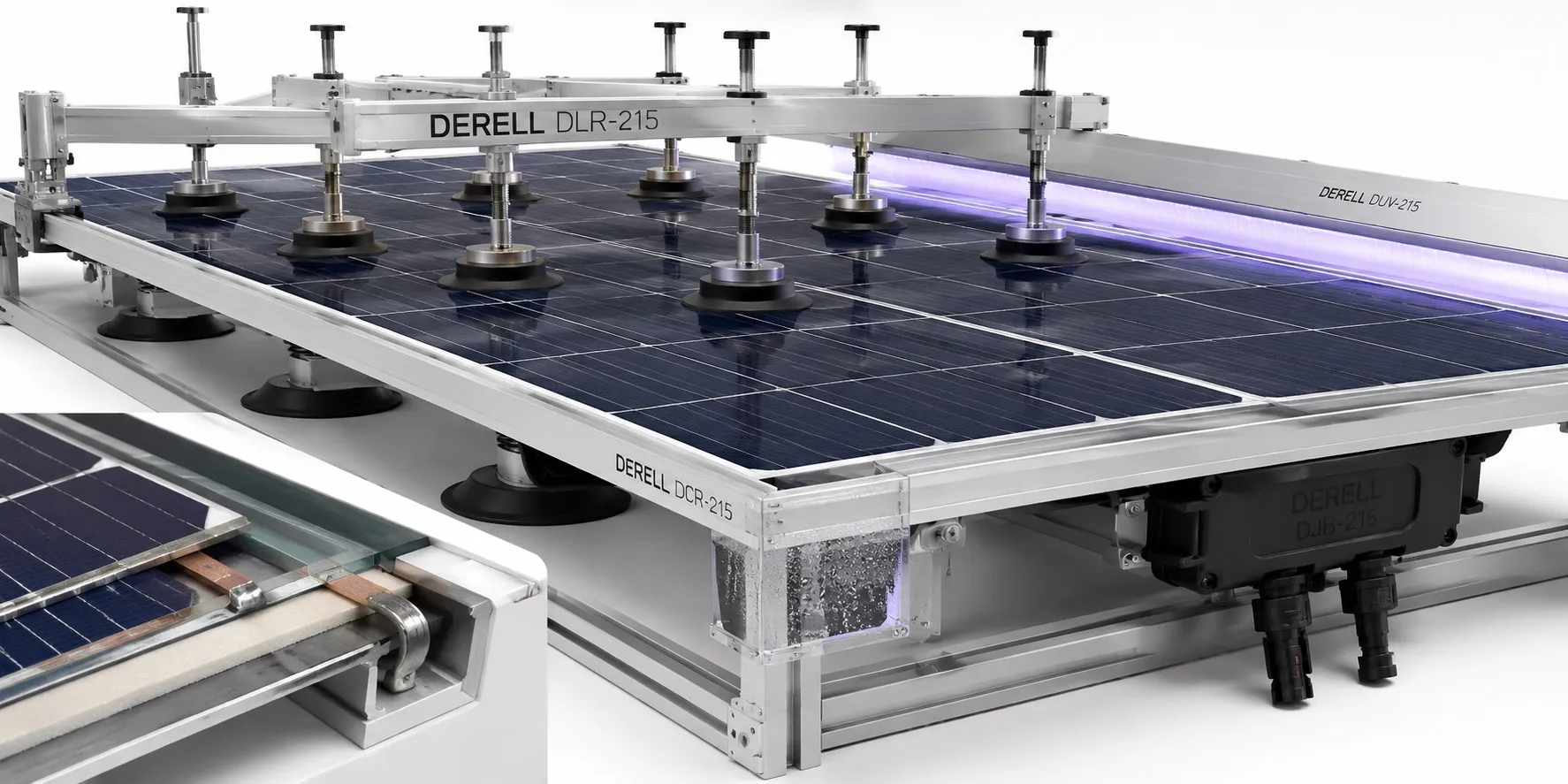
IEC 61215 Explained: What Solar Module Qualification Really Shows
IEC 61215 is the standards series for the design qualification and type approval of terrestrial photovoltaic modules. It provides a framework for assessing the electrical characteristics and resistance to defined environmental stresses of photovoltaic modules intended for long-term outdoor use. That makes it an important reference when reviewing a solar panel’s technical documentation.
Which Module Technologies Does It Cover?
The series covers terrestrial flat-plate modules using crystalline silicon and thin-film materials. Its scope therefore extends beyond the familiar monocrystalline and polycrystalline solar panel types. The relevant parts also replaced the former thin-film qualification standard, IEC 61646.
IEC 61215-1:2021 sets out general test requirements. IEC 61215-2:2021 describes test procedures. These common parts are used with the part appropriate to the module’s cell technology.
Technology-specific parts: IEC 61215-1-1 addresses crystalline silicon; IEC 61215-1-2 covers CdTe; IEC 61215-1-3 covers amorphous silicon; and IEC 61215-1-4 addresses Cu(In,Ga)(S,Se)₂-based thin-film modules. Check the edition and applicable amendments as well as the standard number.
Rated Power Is Not an Annual Yield Forecast
Maximum power, current-voltage behaviour and module efficiency are evaluated under defined measurement conditions. The widely used reference, standard test conditions — STC, specifies 1000 W/m² irradiance, a 25°C cell temperature and the AM1.5 reference solar spectrum. The temperature refers to the cells, not the surrounding air.
Consider a module labelled 450 W. That rating does not mean it produces 450 W throughout the day. Watts and kilowatts describe power; energy accumulated over time is expressed in kilowatt-hours. An IEC 61215 qualification document cannot, on its own, tell you the daily or annual kWh yield.
What Are the Durability Tests Looking For?
Thermal cycling: Repeated heating and cooling can stress interfaces between materials. A single temperature measurement cannot show how a module responds to repeated expansion and contraction.
Damp heat and humidity-freeze: These assessments investigate combined moisture and temperature exposure. Field records from humidity sensors can help describe the operating environment, but they do not replace laboratory qualification. The same distinction is useful when considering broader environmental testing methods.
Mechanical loading and hail: These tests assess response to defined mechanical stresses. Read the results alongside the mounting arrangement, support positions and applied loads. Passing a test does not establish resistance to every hailstone size or an unlimited snow load.
Hot spots and bypass diodes: Partial shading and cell mismatch can create local heating. Module construction and bypass diode behaviour therefore matter. Qualification does not remove the need to manage shading in the installation.
Notable additions in the 2021 edition include cyclic mechanical loading, potential-induced degradation — PID and bending tests for flexible modules. Methods for bifacial modules are also addressed. The applicable assessment depends on the product construction and the relevant parts of the series.
Does Qualification Prove a 25-Year Service Life?
No. Accelerated test duration cannot simply be converted into years of outdoor operation. Solar module lifespan depends on design, manufacturing, mounting, exposure and operation. Product warranties and power warranties are separate commitments with their own terms.
Two qualified module designs may also behave differently in service. Qualification is not a universal ranking that places every passing product at the same level of field performance.
How IEC 61215 Relates to Other Standards
IEC 61730 addresses module safety qualification. Electrical checks within IEC 61215 do not make that assessment unnecessary. In particular, an “IEC 61215 compliant” statement is not sufficient evidence for a general fire-safety claim.
A coastal project may also require a review of salt mist corrosion resistance. Concentrator photovoltaic modules have a different design qualification framework under IEC 62108. Each document should be read in terms of the technical question it addresses.
What Should You Check in the Documentation?
Match the product. The model designation on the certificate and report should match the supplied equipment. Product-family coverage and construction options should be clear. A logo in a brochure does not provide this information.
Check the complete references. Look for the general requirements, test procedures and relevant technology-specific part. Verify document numbers, the issuing organisation and the current certificate status.
Investigate design changes. Changes to cells, encapsulants, backsheets or junction boxes may require reassessment of the qualification coverage. IEC TS 62915 addresses retesting after design modifications. Keeping the same brand name does not establish that a modified construction remains covered by the earlier assessment.
Applying the Evidence to a Real Installation
Start with the local weather conditions and the requirements of the roof or supporting structure. For example, a module verified using particular clamp positions cannot automatically be assigned the same mechanical capability when mounted differently.
Next, check compatibility with the solar inverter. Its MPPT operating range, input current limits and maximum DC voltage all matter during inverter selection. The chosen series and parallel module connections directly affect those values.
The grounding arrangement, cable current-carrying capacity and wider PV array design must also be verified. A module certificate does not certify the completed installation.
Commissioning and Operating Records
Documentation and commissioning checks under IEC 62446 establish a baseline for the installed system. Where appropriate, on-site I-V measurements under IEC 61829 can support an investigation of electrical behaviour.
Review module maintenance records alongside SCADA monitoring data where available. Lost production may originate in a module, connection, shading condition or inverter. Qualification evidence does not replace fault diagnosis.