
How is nuclear energy produced?
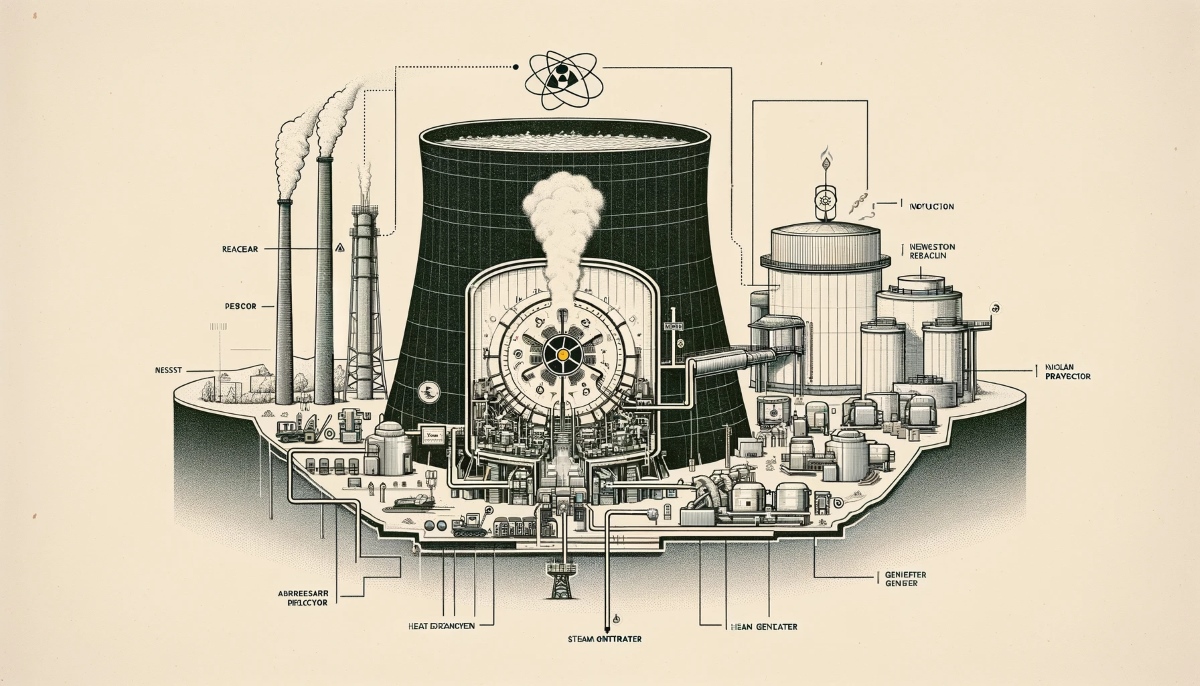
Hello inquisitive and curious friends,
Nuclear energy is primarily produced through two processes: fission and fusion. Here's how they work:
Nuclear Fission
Fuel Preparation: Uranium pellets are prepared and arranged in fuel rods, which are then placed in a reactor core.
Controlled Reaction: In the reactor core, uranium atoms are split (fission) into smaller atoms, releasing a large amount of heat energy. This reaction is controlled by control rods made from materials that absorb neutrons.
Heat Transfer: The heat generated in the reactor core is used to heat water, converting it into steam.
Turbine Rotation: The high-pressure steam is used to rotate a turbine.
Electricity Generation: The rotating turbine spins a generator, converting mechanical energy into electrical energy.
Cooling: The steam is condensed back into water and returned to the reactor core to be heated again. The cooling system often involves a separate water source, like a river or cooling towers.
Waste Management: Fission produces radioactive waste that needs to be securely stored and managed.
Nuclear Fusion
Fuel Preparation: Fusion typically uses isotopes of hydrogen, like deuterium and tritium.
High Temperature and Pressure: These isotopes are subjected to extremely high temperatures and pressures to mimic conditions at the core of stars.
Fusion Reaction: Under these extreme conditions, hydrogen atoms combine to form helium, releasing a large amount of energy in the process.
Heat Transfer and Electricity Generation: Similar to fission, the energy is then used to heat water and produce steam, which drives a turbine connected to an electrical generator.
Today, fusion is still largely experimental and not yet a practical source of energy. Most of the nuclear energy produced today is through fission reactions.
Both processes have their own sets of challenges, benefits, and risks, including issues related to safety, waste management, and environmental impact.
- What is nuclear energy?Nuclear energy is an immensely vast subject. Whether we are aware of it or not, it has actively entered our lives in a direct or indirect manner. This topic is an expertise in its own right. We have tried to address some of the most frequently asked questions from our visitors below.
- How is nuclear energy produced?
- What happened in nuclear disasters like Chernobyl and Fukushima?
- Is nuclear energy safe?
- What are the advantages and disadvantages of nuclear energy?
- What impact does nuclear energy have on the environment?
- What happens to nuclear waste?
- Where are nuclear energy resources located?
- Is nuclear energy more effective than fossil fuels?
- What is the cost of nuclear energy?
- What is the relationship between nuclear energy and nuclear weapons?
- What are alternative energy sources to nuclear energy?
- Where are nuclear power plants usually located and why?
- What are the potential harms of nuclear power plants to the surrounding environment?
- How is nuclear energy viewed politically?
- Who uses nuclear energy and in which countries is it popular?
- What is the future of nuclear energy?
- What is nuclear fusion and is nuclear fusion energy feasible?
- What are the international standards and regulations for using nuclear energy?
- Are there medical and industrial uses for nuclear energy?
- Nuclear media?
These questions also include the kind that many people may think of concerning nuclear power. Each user or student will have their own specific questions depending on a particular situation or application. The answers are not binding or absolutely definitive. "There is no issue with sharing our article above as a reference." 09.2020
Your shopping cart is empty!