
C22.2 No. 142 standard
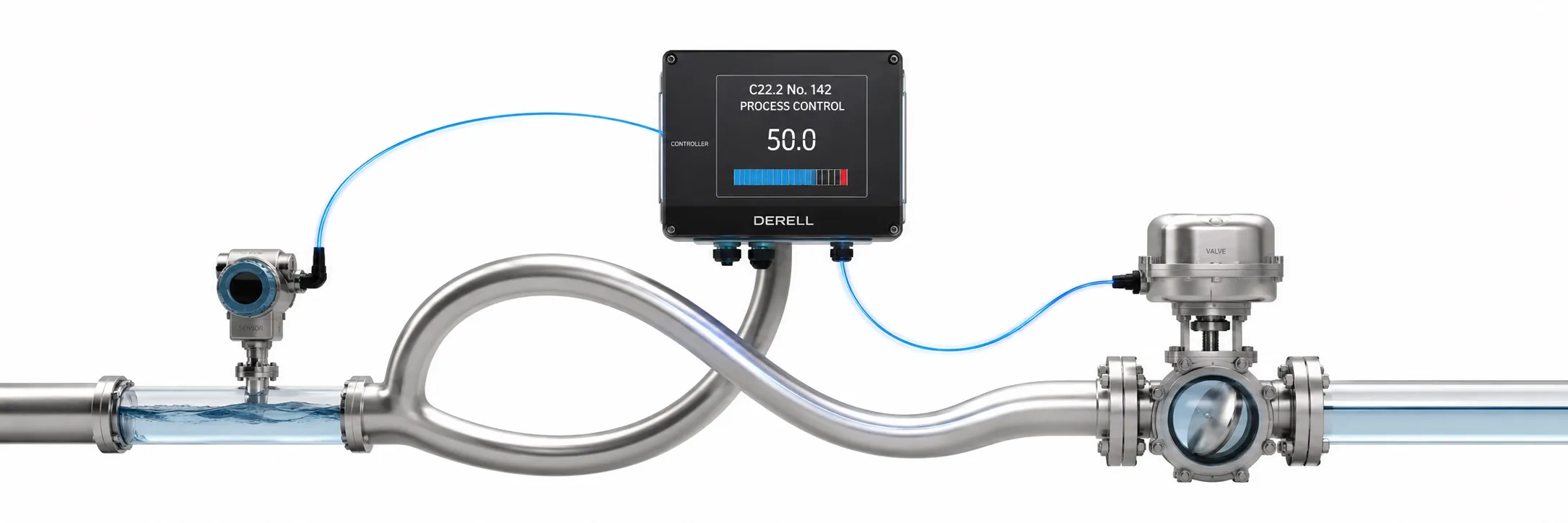
Process control equipment: safety and the right certification reference
Hello, friends. A process controller performing its control task correctly and being electrically safe are different matters. CSA C22.2 No. 142 is a historical safety standard for equipment used to measure and control industrial processes. The reference may appear in older PLC documentation and field instrument certificates. A new project needs the applicable 61010 standards and certification requirements.
Editor's note: C22.2 No. 142 is not a fuseholder standard. Fuses and the CSA C22.2 No. 248 series concern a different product area. Electrical safety certification for a process control device does not, by itself, establish explosion protection, a safe shutdown function or the safety of an entire machine.
What did the earlier standard cover?
The scope recorded for C22.2 No. 142-M1987 (R2014) includes fixed equipment and accessories connected to supply circuits of 750 V or less, using signals to measure or control an industrial process directly or indirectly. It concerns indoor or outdoor use in nonhazardous locations under the Canadian Electrical Code. This scope limit does not mean every covered product can operate at 750 V; the individual product's voltage rating remains decisive.
Examples include indicating and recording instruments, transmitters, transducers, analyzers, telemetry equipment and programmable controllers. Sensors, pressure measurement and I/O modules are associated with these systems. However, a sensor, valve or actuator does not automatically fall under the same standard merely because it forms part of a process. Read the product function and certification scope together.
How should the transition to the 61010 series be understood?
CSA Group's 2017 process control bulletin announces the withdrawal of C22.2 No. 142-M1987 and explains the transition to the relevant Canadian 61010 standards for new evaluations after January 1, 2018. The general safety framework relates to IEC 61010-1, supplemented where applicable by IEC 61010-2-201 for control equipment. Certification uses the relevant Canadian adoptions and editions.
The same CSA bulletin distinguishes existing products with no changes or minor alterations from products with major alterations. An older standard reference therefore does not automatically invalidate every existing certification. Intertek's own transition notice also calls for a review of listing reports. The outcome must be established from the current product record held by the relevant certification body. Publication of the international IEC 61010-2-201:2024 edition also does not mean that every Canadian certification adopted it on the same date.
What does an electrical safety assessment examine?
Insulation and accessible parts: The assessment considers separation between mains circuits and low-voltage signal connections, insulation construction, spacings and electric strength. Depending on the protection arrangement, protective grounding is also examined. The question is whether a fault could expose a person or field connection to a hazardous voltage, as well as whether the device operates normally.
Heating, fire and fault conditions: Component temperatures, accessible surfaces, the enclosure and safety-related fault conditions form part of the assessment. Short-circuit and overcurrent protection, relay output load limits and connection instructions matter. There is no single test voltage or temperature limit for every device: the applicable standard, circuit construction and conditions of use determine the requirements.
EMC, functional safety and environmental protection are separate
EMC: Emissions and behaviour under electromagnetic disturbances require the applicable EMC assessment, such as IEC 61326-1, depending on the product. Functional safety: IEC 61508 and other application-specific standards address a separate subject. An electrical safety certificate does not establish a SIL rating.
Explosive atmospheres: The appropriate Ex protection method and relevant IEC 60079 requirements need separate consideration; ATEX is also a distinct regulatory framework. Dust and water: An IP rating must be read with the specified installation conditions. These subjects cannot be combined into a single blanket claim of “CSA compliance”.
Practical example: heater control and overtemperature protection
A furnace may use a temperature controller with PID control to regulate its heater. Electrical safety assessment of that controller does not, by itself, prove that the whole furnace will shut down safely following a broken sensor or a power switching device stuck on. Where the risk requires it, independent temperature limiting, an appropriate means of removing power and fault behaviour must be designed separately. In this example, normal process regulation and protection against a hazardous condition perform different jobs.
When purchasing or replacing an older device
Compare the complete model code, supply rating, certificate number and covered options. Then check ambient temperature, external protection, wiring and enclosure conditions. Do not assume that two products in similar housings have the same approval. A standard number is not a certificate: the documented product must match the product being installed.
Installing a certified device inside a panel does not automatically certify the completed panel. For industrial control panels evaluated to UL 508A, appropriate component use, wiring, protection and enclosure conditions are addressed at panel level. Component certification and assessment of the completed panel are different matters.
Sources
ANSI / CSA: C22.2 No. 142-M1987 (R2014), scope and historical record
CSA Group: Process Control Equipment No. 3A, transition and existing certifications
Intertek: standard transition notice for C22.2 No. 142
IEC: IEC 61010-2-201:2024, control equipment safety