
Can we light up a city using solar energy?
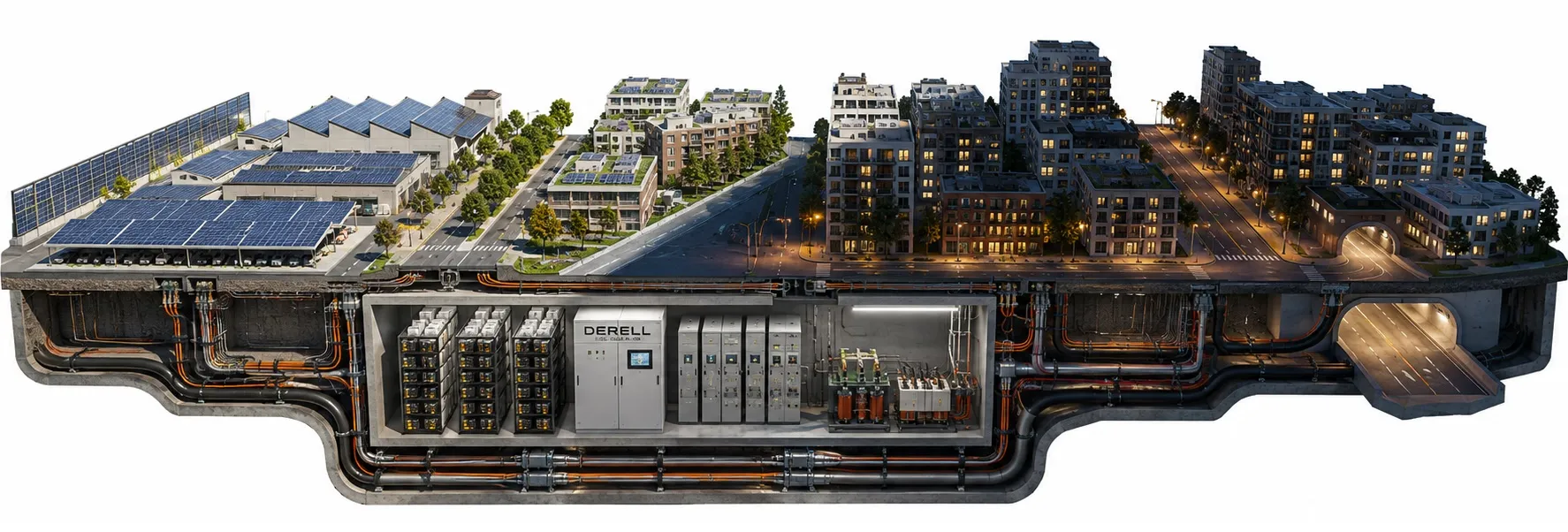
From street lighting to energy independence: define the goal first
Solar energy can supply a city’s lighting. However, operating streetlights, meeting all of a city’s electricity demand and supplying a whole city without outside energy at any time are different objectives. A successful project starts by defining which loads must operate, for how long and with what level of reliability, before deciding how many panels to install.
“Complete energy independence” also involves industry, transport, heating and cooling alongside homes and municipal facilities. Some of these activities may currently use fuels rather than electricity. As electrification progresses, the city’s electrical demand changes. Adding up today’s electricity bills alone may therefore understate its overall energy requirements.
Three objectives require different systems
Grid-connected solar generation can cover part of consumption or generate an amount equivalent to the annual total. Electricity exported in summer or at midday does not remove the need for imports on a winter night. Equal annual generation and consumption do not establish sufficient generation in every hour.
Maintaining critical services during an outage requires selected loads, storage and a suitable microgrid arrangement. Fully independent operation must also maintain supply through extended periods of weak sunlight. The inverter type and control architecture must suit that objective; not every grid-connected installation can operate autonomously.
A simple street-lighting calculation
For illustration only, assume 10,000 luminaires each draw 60 W including the driver and operate for 10 hours per night. Their simultaneous demand is 10,000 × 60 W = 600 kW, and daily energy consumption is 600 kW × 10 hours = 6,000 kWh, or 6 MWh. An actual design must use real input power, seasonal operating hours and permitted control schedules, while separately verifying lighting quality.
If we assume a daily yield of 4 kWh of net AC energy per kWp, the basic energy calculation gives 6,000 / 4 = 1,500 kWp, or 1.5 MWp. This is not a production forecast for a particular city. It is a starting calculation before allowing for storage losses and adverse weather. Inverter and system sizing cannot be completed with this calculation alone.
To deliver 6 MWh to the nighttime load, assume an 80% usable capacity fraction and 90% efficiency along the energy path from battery to luminaires. Nominal storage would then be approximately 6 / (0.80 × 0.90) = 8.33 MWh. These are illustrative assumptions too. The storage output must also support the 600 kW load and any required transient power. MWh describes energy quantity; MW describes power capability.
Winter and prolonged low production are the real test
One night of storage may appear sufficient for using solar energy after sunset. Consecutive cloudy days, longer winter nights and seasonal production differences change the requirement. A battery sized for one night does not resolve a seasonal energy shortfall. Cloudy conditions do not necessarily stop PV generation completely, but output may still be insufficient for the load. Once the battery is full, generation may need to be curtailed if the surplus cannot be consumed or exported.
Local irradiance, shading, panel orientation, temperature effects and the actual demand profile must be modelled together. Tools such as PVGIS help examine hourly generation and storage behavior. A city-scale study must additionally consider demand growth, equipment failures and unmet demand. An inverter’s weather suitability is a separate issue from how much energy the panels produce in that weather.
Plan land, networks and controls together
Rooftops, parking canopies, municipal land and generation sites near the city can be assessed together. Usable installation space differs from total city area. Shading, structural capacity, maintenance access and layout affect the opportunity. For a densely built center, connecting to nearby generation sites may be more suitable than fitting every panel inside the municipal boundary.
Distributed generation requires assessment of transformer and cable capacity, bidirectional power flow, voltage control and protection coordination. An energy-management system coordinates generation, batteries and flexible loads using forecasts, charge levels and load priorities. Deferrable activities such as water pumping, suitable vehicle charging or thermal storage can be shifted toward sunny hours while preserving critical-service requirements.
Operating during a power outage requires safe separation from the grid, appropriate voltage and frequency references, sufficient energy reserves and controlled reconnection. Grid-forming equipment can contribute to these functions, but the label alone does not establish system capability. Separate solar-powered lighting poles are another option; maintaining a panel and battery at each pole must be compared with centralized or district-level arrangements.
How should the investment be assessed?
Reducing unnecessary lighting and building consumption first can lower the required generation and storage capacity. Measurable projects can then start at municipal buildings, parking areas or selected districts. Evaluate performance through consumption served, service duration during outages, losses and operating costs, alongside installed MWp.
The cost assessment includes grid works, storage, maintenance and future battery replacement, as well as panels and inverters. Assess warranty and service arrangements together with equipment environmental impacts and end-of-life management. For cities targeting high renewable shares, comparing solar with combinations of wind, different storage durations and demand flexibility offers more options. The suitability of complete solar-only independence must be demonstrated using local data.
Editor’s note: “We generate as much solar electricity as we consume annually” describes an annual energy balance. “We can operate at any time without the grid” describes a different capability requiring generation, storage, power capacity and control to work together. The same calculation cannot establish both claims.
Related topics
Solar applications and urban planning: Rooftops and solar farms, solar generation in deserts, floating solar systems, solar-powered seawater desalination, and independent living systems.
Storage, measurement and control: Battery banks, Ah and Wh units, energy calculations in kWh, SCADA monitoring, and power quality measurement.
Solar and the future, solar energy questions, and the solar energy overview.
References
IEA: Integrating solar and wind into power systems
European Commission / JRC: PVGIS: hourly production and off-grid system calculations
US Department of Energy: Inverters and grid services
US Department of Energy: Distributed energy resources and microgrids
IEA PVPS: Firm Power Generation 2026: system options for reliable year-round supply