
Battery accessories
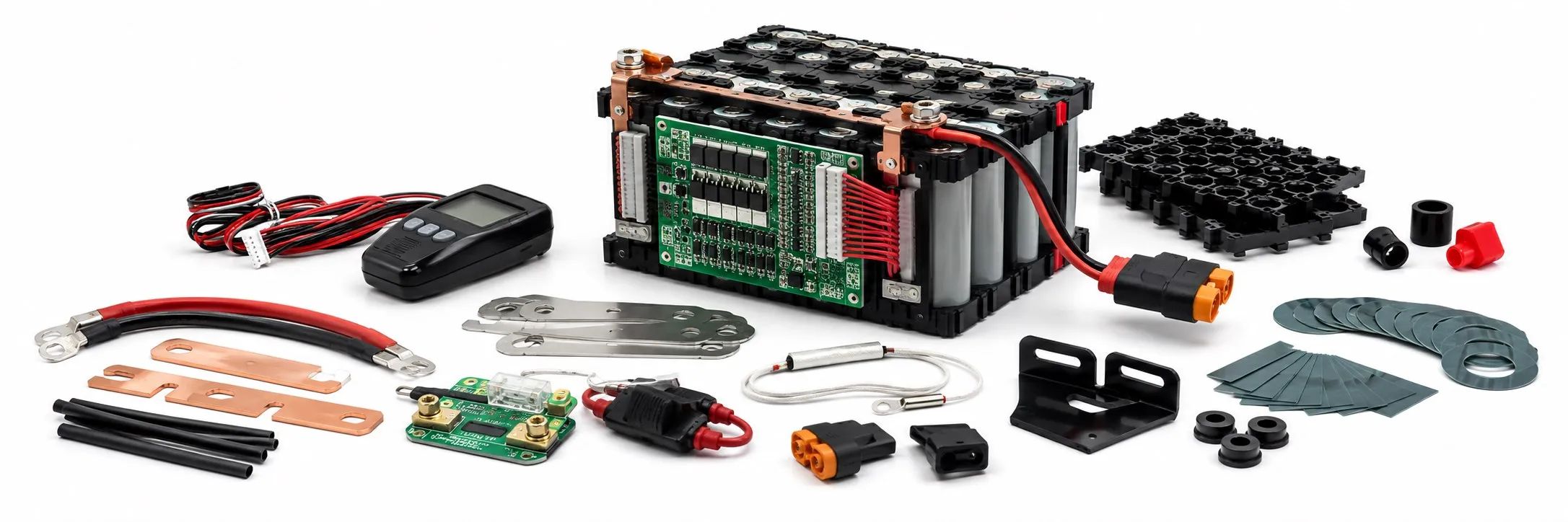
Match each accessory to the battery chemistry, size and application
Battery accessories include chargers, holders, adapters, testers, storage cases and connection hardware. A battery fitting physically into a device does not establish electrical compatibility. Consider the battery type, cell count, voltage, current demand and operating environment together.
Chargers and battery holders
The charger must match the battery chemistry. NiMH, NiCd, lithium-ion and lead-acid systems do not share the same charging requirements. When selecting a charger, check the supported chemistry, cell count, charging current and charge termination method. Independent channel control is useful in multi-slot chargers. Standard alkaline batteries and non-rechargeable lithium batteries must not be placed in a charger.
Battery holders and retainers secure the cell and provide electrical contact. Holders for AA, AAA, C, D, 9 V and coin cells differ in cell count, polarity arrangement, termination and mounting dimensions. Do not select by external size alone; also check the contacts' current rating, material and ability to retain the cell under vibration.
Size adapters and battery testers
A passive battery adapter does not convert voltage or increase capacity. For example, an adapter allowing a smaller cell to fit a larger battery compartment only provides mechanical fit and contact. It cannot compensate for a battery that fails to meet the device's voltage or current requirements.
Basic battery testers indicate condition from voltage or the response to a specified load. A DC voltage measurement with a multimeter does not establish remaining capacity on its own. Actual capacity measurement requires controlled discharge and current/time recording with a suitable analyzer. A constant 1 A discharge lasting 2 hours delivers approximately 2 Ah; the manufacturer's specified minimum cell voltage must be respected. Suitable test probes and leads are also part of the measurement setup.
Editor's note: “It fits the holder” and “it shows a voltage” do not prove that a battery is suitable or healthy. Assess physical fit, electrical compatibility and usable capacity separately. Cells with the same dimensions can have different chemistries and voltages.
Storage, connections and protection accessories
Compartmented, insulating storage cases help prevent terminals from touching metal objects or other batteries. Store batteries in a cool, dry place under the manufacturer's recommended conditions. A sleeve or outer covering does not guarantee protection against excessive temperatures and does not make a damaged cell suitable for reuse.
Select terminals, connectors and connection cables for current rating, polarity, reliable contact and mechanical retention. Multi-cell battery packs may require suitable monitoring, temperature sensing and BMS/protection circuits. Charging, balancing and protection are different functions; not every board provides all three. Any required DC fuse must also suit the cable and prospective fault current.
Before choosing accessories, establish the cell dimensions, chemistry, series cell count, operating current and mounting method. In damp or dusty locations, a battery holder alone may be insufficient; assess the complete enclosure's IP protection rating. Chargers, mechanical adapters and protection boards are not interchangeable.
Related battery types
Alkaline batteries
Lithium batteries
NiMH batteries
NiCd batteries
Lithium-ion batteries
Lead-acid batteries
Other related categories
Fuses
Multimeter selection and safe use
Uninterruptible power supplies
Power supplies
Power supply accessories
Battery types home
Batteries and chargers home
References
Panasonic Energy: charger selection and usage questions
Energizer: battery use, storage and short-circuit prevention
Keystone Electronics: AA battery holder specification example
Keysight: battery capacity measurement by controlled discharge
Texas Instruments: charging, monitoring and battery protection functions