
Find the right starting point for your automation questions
You do not need a robot to encounter automation. A thermostat manages a heating cycle, an order triggers a stock update, and a filling machine stops when a specified condition is met. Each system carries out a defined part of a task without waiting for a person to issue every individual command.
This guide connects familiar examples with practical engineering topics. Start with the task, the information used and the action taken, then choose the question that matches your interest. The basic principles of automation explain that relationship before introducing more elaborate equipment.
Recognize the task being automated
In homes and buildings: building automation can manage lighting, heating, ventilation and access control. Understanding the difference between a temperature sensor and a thermostat separates measurement from a control decision. Smart-home sensors provide information such as occupancy or temperature. Whether functions continue without the internet depends on local control and the services they rely on.
In vehicles: an automatic transmission handles a specific operating task, while adaptive cruise control can adjust speed in response to traffic ahead. Driver assistance and autonomous driving are different capabilities. Assistance features have defined limits and supervision requirements; the presence of an automated feature does not describe the vehicle's entire driving capability.
In services: you may initiate an ATM transaction or a kiosk order, after which software follows a defined sequence. Stock updates, order notifications and call routing can also be automated. A recommendation, a completed record and a physical movement are different outputs, even when all three are part of one business process.
In utilities and laboratories: measurements support control, monitoring and records. A pump controller may regulate operation from pressure feedback, while a flow meter measures the flow. Laboratory equipment can automate sample handling and data transfer. Reliable inputs and a defined response to abnormal conditions matter throughout these applications.
Connect those examples to industrial equipment
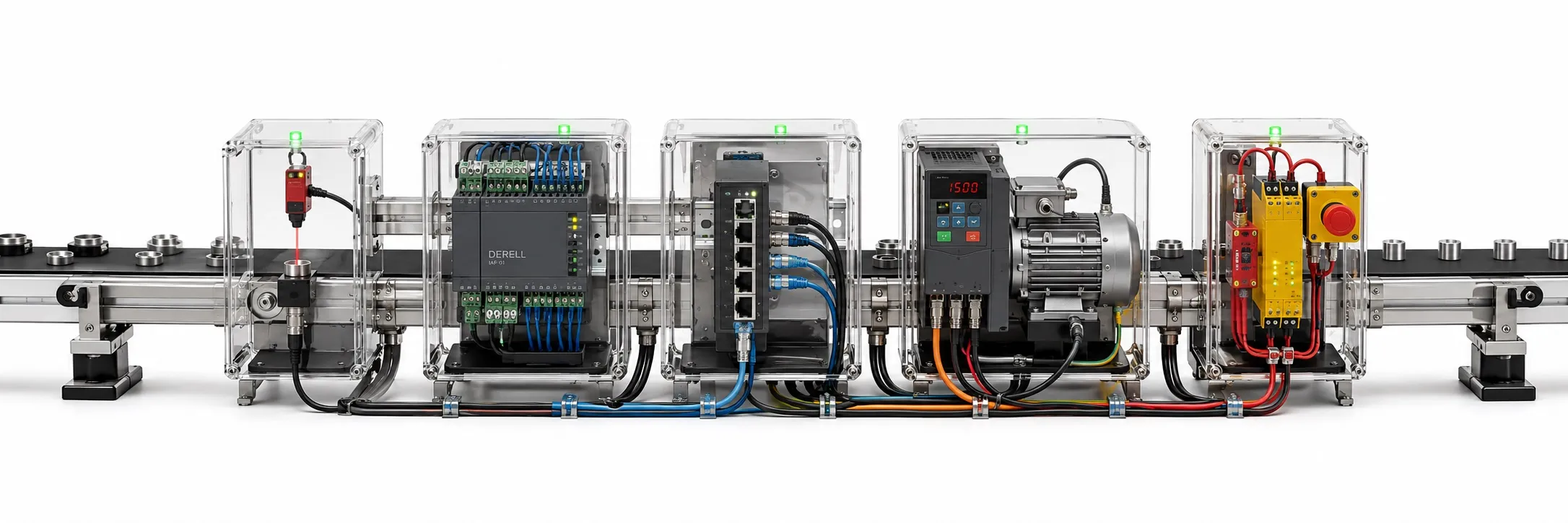
A sensor supplies information, a PLC evaluates operating rules, and an actuator performs a physical action. A variable frequency drive controls motor operation; a servo system supports controlled motion. Operators use an HMI to view status and settings, while SCADA can provide broader supervision and historical records.
Feedback is a design choice, not a feature of every automated task. The distinction between open-loop and closed-loop control explains why a timed operation behaves differently from one corrected using measurements. PID control is one feedback method. OPC UA supports information exchange, and industrial cybersecurity addresses the protection of access, configurations and connections.
Turn a general question into a useful specification
Identify the work to be done, the result to be measured and the response to a fault. Those details help determine whether a simple sequence is enough or a more involved control arrangement is needed. Flexible manufacturing adds product-change requirements, while training and skill planning addresses the people who operate and maintain the installation.
Remote operation also deserves a clear distinction: tapping an app to switch on a light is a user command; switching it on in response to occupancy and lighting conditions is an automatic decision. Choose the level of automation that solves the actual task.