
Could voltage evolve life forms?
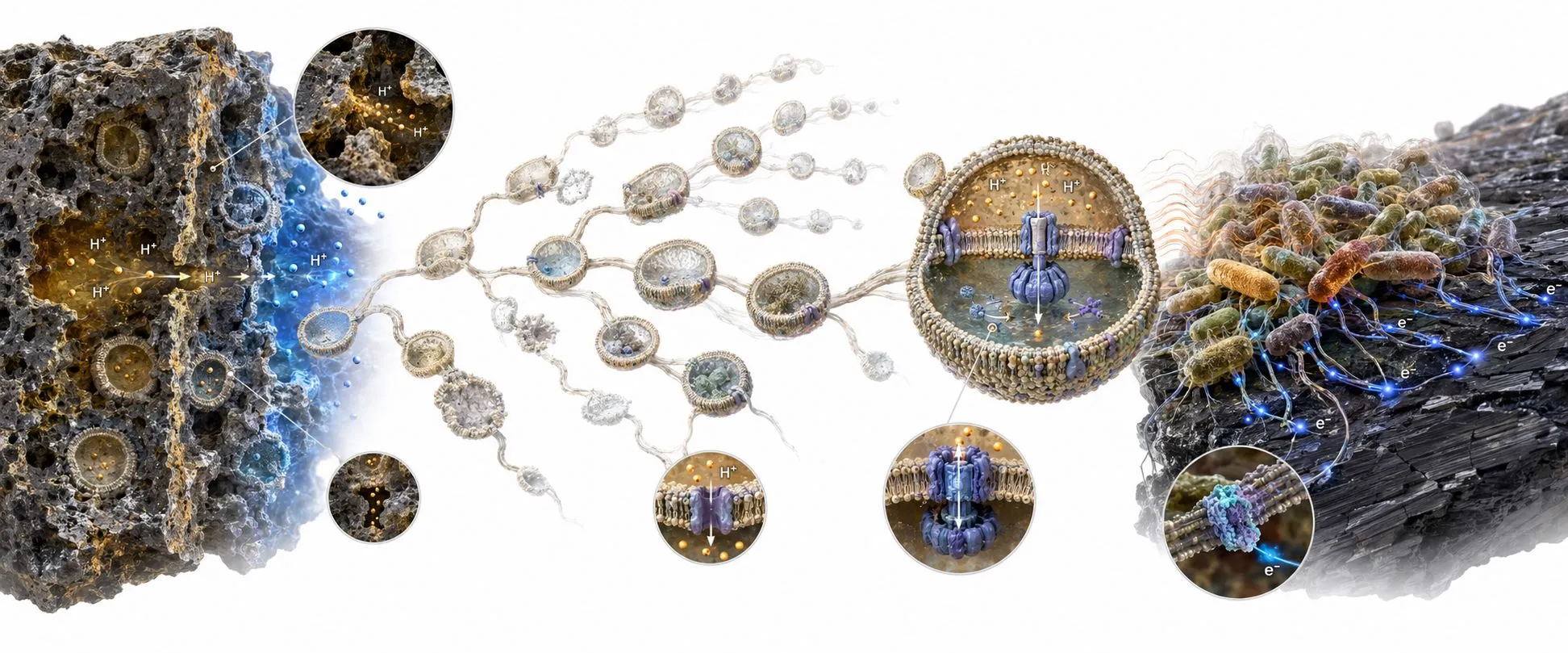
Can voltage influence the evolution of life?
An electric fish offers a useful starting point. Its electrical abilities help it interact with its surroundings, but they were not created by plugging an ordinary fish into a power supply. Evolution changes inherited traits across generations. An electrical response in one organism is a different kind of observation.
The question therefore has two parts: how organisms evolved electrical capabilities, and how electrical signals influence a body as it develops. Both are legitimate research questions. Neither establishes that applying a particular voltage will produce a new species or move life toward a predetermined “higher” form.
Electric organs are evolved biological machinery
Electric organs arose independently in different fish lineages. Some species use weak signals for sensing and communication; others produce powerful discharges for hunting or defense. Comparative genomic research has identified shared regulatory pathways involved in independently evolved organs. This is evidence of convergent evolution.
The relevant explanation involves inherited variation and the survival and reproductive consequences of those traits. The electrical capability is itself an evolutionary outcome. Environmental electricity could matter in particular ecological settings, but a broad claim that voltage drives evolution would require much more evidence.
Inside a cell, electricity means moving ions
Ion channels and pumps help establish a potential difference across the cell membrane. Changes in that potential participate in nerve signaling and muscle activity. The distinction between voltage and current remains useful here: voltage describes a potential difference, while current describes charge flow. In living tissue, ions commonly carry that charge.
Engineers can model aspects of a membrane using capacitance and resistance. These models describe selected electrical properties; they do not capture the whole cell. Biochemistry and electrical behavior operate together. Similarly, electrochemical batteries provide a useful comparison without making a living cell equivalent to a commercial battery.
Changing body pattern is a different result
Research on planarian flatworms shows that disrupting communication within bioelectric networks can alter the anatomy produced during regeneration. Some altered regeneration patterns persist through later rounds of tissue regrowth. These experiments reveal mechanisms of anatomical regulation. They do not, by themselves, demonstrate the origin of a new species.
To assess an evolutionary consequence, researchers need to examine persistence, transmission, reproductive success and environmental context. A temporary physiological response, a stable regenerative pattern and an inherited population change require different evidence. Related questions about electrical activity and thought or consciousness concern additional levels of biological organization.
A voltage reading cannot describe an entire experiment
“Ten volts” is incomplete experimental information. Electrode spacing, field strength, waveform, exposure time, current density and medium conductivity all matter. Direct current and alternating current cannot be assumed to produce identical biological effects at the same stated voltage. Heating and electrode chemistry may also influence an observed response.
Our guides to voltage measurement and multimeters explain the electrical foundations. Measuring a cell membrane potential requires specialized electrophysiological techniques. A recorded analog voltage signal must also be distinguished from the instrument's supply voltage. Supply fluctuations can interfere with recordings and create misleading apparent changes.
Electric fields and magnetic fields also need separate treatment. Evidence that an animal senses magnetism does not establish that voltage changed its evolution. A mechanism must match the phenomenon being measured. Biological effects likewise cannot be inferred from an electrical number alone; the broader discussion of electricity and human health explains why exposure conditions matter.