
What Is the IP50 Protection Rating?
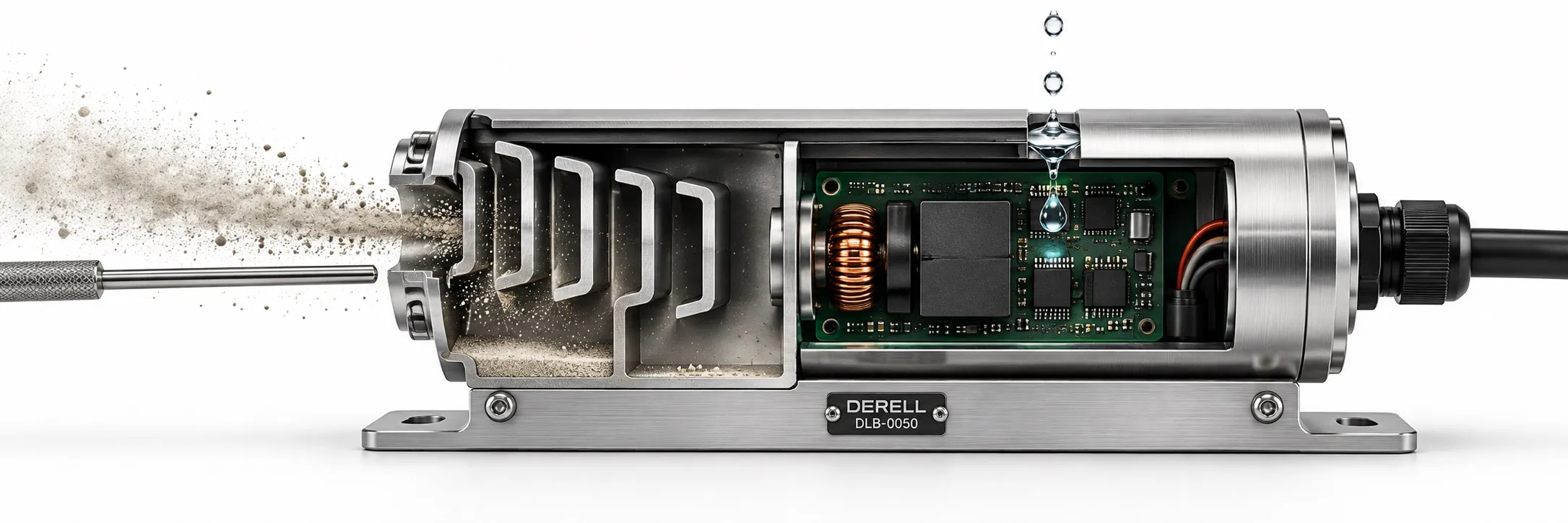
IP50 is an enclosure protection rating used for electrical and electronic equipment. It is not a separate standard by itself; it is one of the protection levels defined within IEC 60529. The first digit describes protection against access, solid foreign objects and dust, while the second digit describes protection against water.
In simple terms… IP50 means that the enclosure is dust-protected but not completely dust-tight, and no protection against water is specified. A limited amount of dust may enter, provided it does not interfere with satisfactory operation or safety. However, an IP50 marking does not establish protection against dripping water, splashing, rain, water jets or immersion.
What does the first 5 in IP50 mean?
The first digit, 5, means that the enclosure is dust-protected. Complete exclusion of dust is not required. A limited amount may enter, provided it does not accumulate in a quantity or location that interferes with satisfactory equipment operation or safety.
For this reason, IP50 should not be described as dust-tight. Full dust-tight protection is represented by a first digit of 6, as used in IP6X ratings such as IP65, IP66 and IP67.
IP50 provides a higher level of solid-particle and dust protection than IP40. IP40 addresses solid foreign objects of 1 mm and larger, while IP50 moves into the dust-protected category.
What does the second 0 in IP50 mean?
The second digit, 0, means that no water protection is specified under the IEC 60529 IP classification. This is one of the most important points to understand about IP50.
An IP50 enclosure may be useful in a dry but dusty location, but the IP50 marking alone cannot be used to claim protection against dripping water, splashing, rain, cleaning water or other liquid exposure.
IP50 = dust protection is provided, but no water protection is specified. A relatively high first digit does not change the meaning of the second digit.
What is the difference between IP40 and IP50?
IP40 and IP50 have the same water rating: both end in 0, so neither rating specifies protection against water.
The difference is the first digit. IP40 protects against solid foreign objects 1 mm and larger. IP50 provides the higher dust-protected level, where limited dust ingress may occur but must not interfere with satisfactory operation or safety.
In a dry industrial environment where airborne dust is a concern, IP50 can therefore provide more relevant protection than IP40. If water is also present, however, neither rating should be selected on the assumption that it provides water ingress protection.
What is the difference between IP50 and IP54?
IP50 and IP54 have the same dust protection level. Both start with the digit 5, so both are dust-protected but not completely dust-tight.
The difference is entirely on the water side. IP50 ends in 0, meaning no water protection is specified. IP54 ends in 4, meaning protection against splashing water from any direction.
IP50 = dust-protected + no specified water protection.
IP54 = dust-protected + protected against splashing water.
What is the difference between IP50 and IP55?
IP50 and IP55 also share the same dust-protection level because both begin with 5.
Their water protection is very different. IP50 provides no specified water protection, while IP55 provides protection against water jets under the applicable test conditions.
A dry dusty room and a machine that is routinely exposed to hose water should therefore not be evaluated using the same enclosure requirements.
What is the difference between IP50 and IP65?
IP50 and IP65 differ in both dust and water protection.
IP50 begins with 5, so it is dust-protected. IP65 begins with 6, so it is dust-tight. On the water side, IP50 ends in 0 and specifies no protection, while IP65 ends in 5 and provides protection against water jets.
IP50 = dust-protected + no specified water protection.
IP65 = dust-tight + protected against water jets.
IP65 should therefore not be viewed simply as a slightly higher version of IP50. The two ratings address significantly different environmental conditions.
Is IP50 waterproof?
No. Because the second digit is 0, IP50 does not specify protection against water. An IP50 enclosure should not be described as waterproof, rain-resistant or splash-resistant based on its IP rating alone.
This does not mean that a single drop of water will automatically cause a failure. The important point is that the IP50 classification provides no standardized water-protection claim. Any water resistance would have to be supported by other product information from the manufacturer.
Is IP50 suitable for outdoor use?
IP50 should not normally be treated as a general outdoor-use rating. Because its water digit is 0, it does not provide a standardized claim for rain or other water exposure.
Outdoor installations also involve more than rain. Ultraviolet radiation, temperature changes, condensation, freezing, salt atmosphere, corrosion and chemicals may all affect equipment reliability. An IP code alone does not cover all of these conditions.
IP50 is generally more meaningful for protected, dry environments where dust is present. The manufacturer's environmental limits should still be checked for the specific product.
Where can IP50 be used in industry?
IP50 can be considered for dry indoor industrial areas where airborne dust is present but water exposure is not expected. Electrical enclosures, control boxes and equipment located in protected process areas are possible examples.
However, not all dust is equally demanding. Fine conductive dust, carbon dust, metallic particles, stone dust or abrasive process contamination may require a more tightly sealed enclosure. Because IP5X allows limited dust ingress, a dust-tight IP6X enclosure may be more appropriate in severe environments.
Equipment such as PLCs and modules, AC drives and VFDs or power supplies is often installed inside a separate cabinet. The protection rating of the device itself and the protection rating of the surrounding cabinet can therefore be different.
Is IP50 enough for an electrical control panel?
That depends entirely on the location. In a dry electrical room where airborne dust is the main environmental concern, IP50 may be considered for some applications. If there is any realistic possibility of floor washing, roof leakage, process liquid, dripping water or splashing, an enclosure with water protection should be evaluated instead.
The final IP protection of a control panel also depends on more than the empty enclosure. Cable glands, door seals, pushbuttons, displays, fans, filters and other panel components can influence the protection of the completed assembly.
For low-voltage switchgear and controlgear assemblies, ingress protection is only one part of the overall design. Temperature rise, insulation, short-circuit withstand and other assembly requirements are addressed within the broader IEC 61439 requirements.
IP50 and control-panel ventilation
Dust protection and cooling requirements can work against each other. Power electronic equipment such as VFDs and power supplies generates heat, while increasing enclosure sealing can reduce natural airflow.
For this reason, installing a VFD or other heat-generating equipment inside an enclosure requires more than choosing an IP rating. Internal cabinet temperature, equipment losses, mounting clearances, manufacturer temperature limits and any required cooling method must also be considered.
Adding ventilation openings, fans or filters later can also change the original ingress-protection performance of the enclosure if the added components are not selected and installed correctly.
Does IP50 protect against condensation?
No. IP50 has a water digit of 0, and internal condensation is also a different issue from direct external water ingress. Moisture can condense inside a cabinet as temperature and relative humidity change even when no liquid water enters through the enclosure.
This can be important in installations that are switched off overnight or exposed to large day-night temperature changes. Enclosure heaters, suitable ventilation or other humidity-control measures may be required, and any such solution should be selected without compromising the required enclosure protection.
Can IP50 protection be reduced after installation?
Yes. A factory enclosure rating does not automatically remain unchanged after modifications are made.
Incorrect cable glands, open holes, missing blanking plugs, damaged seals, poorly fitted covers or added ventilation components can reduce the actual dust protection of the completed enclosure.
For this reason, enclosure maintenance should include inspection of gaskets, covers, cable glands and other sealing components, not just the electrical connections inside the panel.
What does IP50 not guarantee?
IP50 primarily describes enclosure protection against access, solid foreign objects and dust, while specifying no water protection. It does not by itself define ultraviolet resistance, corrosion resistance, chemical resistance, mechanical-impact resistance, operating-temperature range or electromagnetic compatibility.
An IP50 marking also does not mean that equipment is suitable for explosive atmospheres, complies with every electrical safety requirement or carries a particular product certification. Those subjects are addressed separately within the relevant industrial standards and conformity requirements.
What should be checked before choosing IP50?
First, determine whether the environment is genuinely dry. Choosing IP50 based only on dust exposure and later discovering that the enclosure is exposed to cleaning water, roof leakage or process liquids can result in an unsuitable installation.
The type of dust also matters. Ordinary atmospheric dust is not the same as conductive metal dust, carbon dust, fine mineral dust or abrasive process particles. Remember that an IP5X enclosure can permit limited dust ingress.
Finally, check the manufacturer's documentation for the exact product model, mounting position, covers, accessories and installation requirements. An IP50 marking alone is not proof that the equipment is suitable for every industrial environment.
IP50 in one sentence
IP50 means dust-protected with no specified water protection. The enclosure is not completely dust-tight, and limited dust ingress may be permitted provided it is not harmful. Because the second digit is 0, the rating does not establish protection against dripping water, splashing, rain, water jets or immersion. IP50 is therefore most relevant to protected, dry environments where dust is the primary concern.
Related IP protection guides
IP Protection Ratings and IEC 60529 Guide | IP20 | IP40 | IP54 | IP55 | IP65 and IP66
Related standards: Industrial Standards | IEC Standards | IEC 61439
Related automation equipment: Panel Components | PLCs and Modules | AC Drives and VFDs | Power Supplies