
FAQ For PLC
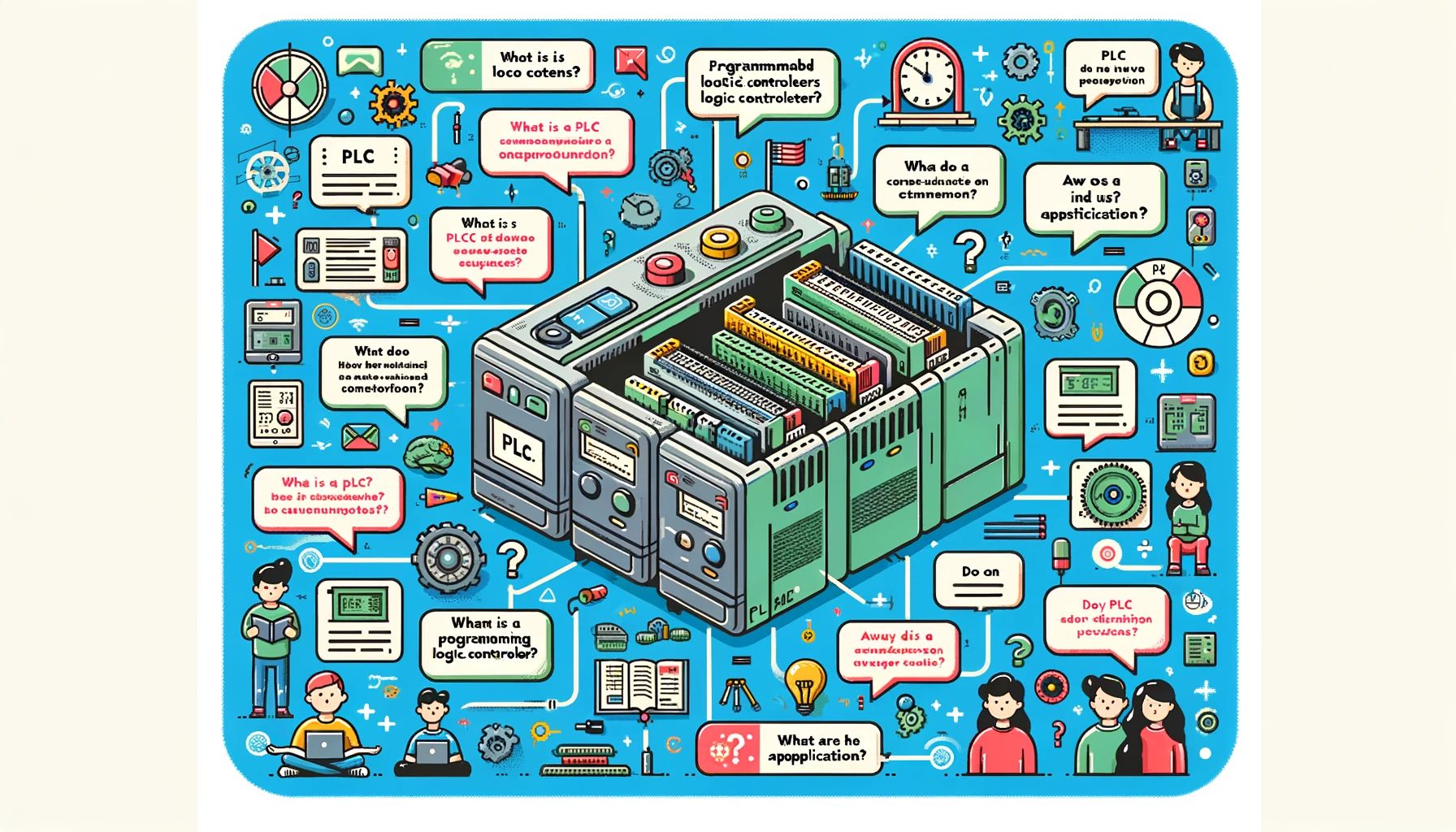
Hello friends,
Frequently Asked Questions about PLCs (FAQ)
This page aims to provide comprehensive and technical answers to the most frequently asked questions about Programmable Logic Controllers (PLCs). As one of the fundamental building blocks of industrial automation, PLCs play a critical role in controlling and managing complex manufacturing processes. Below, you will find information on the most common topics related to PLCs.
What is a PLC and How Does It Work?
A PLC (Programmable Logic Controller) is a digital computer used to automate industrial processes. A PLC processes signals received from sensors and input devices, executing programmed logic to trigger specific outputs. This allows for the control of motors, valves, lights, and other industrial equipment. PLCs are designed to operate in environments that require high reliability, flexibility, and durability.
What are the Programming Languages for PLCs?
The most common programming languages for PLCs include:
Ladder Diagram (LD): A graphical programming language resembling electrical circuit diagrams.
Structured Text (ST): A high-level, text-based programming language.
Function Block Diagram (FBD): A graphical language that allows programming through the use of function blocks.
Instruction List (IL): A low-level language similar to assembly language.
Sequential Function Chart (SFC): A graphical language for defining the sequential steps of a process.
How is PID Control Implemented in PLCs?
PID (Proportional-Integral-Derivative) control is a control algorithm used to maintain a process variable (such as temperature, pressure, or speed) at a desired setpoint. PLCs can execute PID control algorithms, which are crucial for precise control in industrial processes. To implement PID control, the necessary PID parameters must be configured in the PLC and tuned according to the characteristics of the system being controlled.
What is HMI in PLCs and How is it Used?
HMI (Human-Machine Interface) is an interface that allows operators to interact with PLCs and connected systems. HMI devices enable users to monitor process data, change settings, and receive system status information. HMIs can come in various forms, such as touch screens, keypads, and indicators, and are often integrated with SCADA systems.
What are the Communication Protocols Used in PLCs?
PLCs use various communication protocols to interface with other devices. The most common protocols include:
Modbus: A simple and widely used communication protocol.
Profibus: A popular fieldbus protocol used in industrial automation.
EtherNet/IP: A commonly used protocol for industrial networks over Ethernet.
CANopen: A robust protocol used in automotive and industrial automation.
Maintenance and Troubleshooting of PLCs
Regular maintenance and troubleshooting of PLC systems are essential for ensuring smooth operation. Maintenance tasks include backup, software updates, inspection of I/O modules, and monitoring communication networks. In case of a fault, diagnostic tools and error codes are used to identify the root cause and take appropriate corrective actions.
Our visitors often ask the following types of questions about PLCs (Programmable Logic Controllers):
- What is a PLC and what are its primary functions?
- How are PLCs used in industrial automation?
- What are the differences between PLC programming languages like Ladder Logic, Structured Text, and Function Block Diagram?
- What software should I use to program a PLC? For instance, CoDeSys, TIA Portal, RSLogix, etc.
- What are the differences between various PLC brands and models? (e.g., Siemens, Allen-Bradley, Mitsubishi, Omron)
- How do input and output modules in a PLC work?
- What is the relationship between a PLC and SCADA? How do these two systems work together?
- How is debugging performed in PLCs? What are the troubleshooting techniques?
- How is security ensured in PLC systems?
- What are the future trends and developments in PLC technology? How do technologies like IoT, artificial intelligence, machine learning impact PLCs?
+ Back to PLC Main page -
These questions also cover what many people generally might wonder about when it comes to PLCs. Each user or student will have their own specific questions depending on their particular situation or application. The answers are not binding or completely definitive.