
What Is the IP40 Protection Rating?
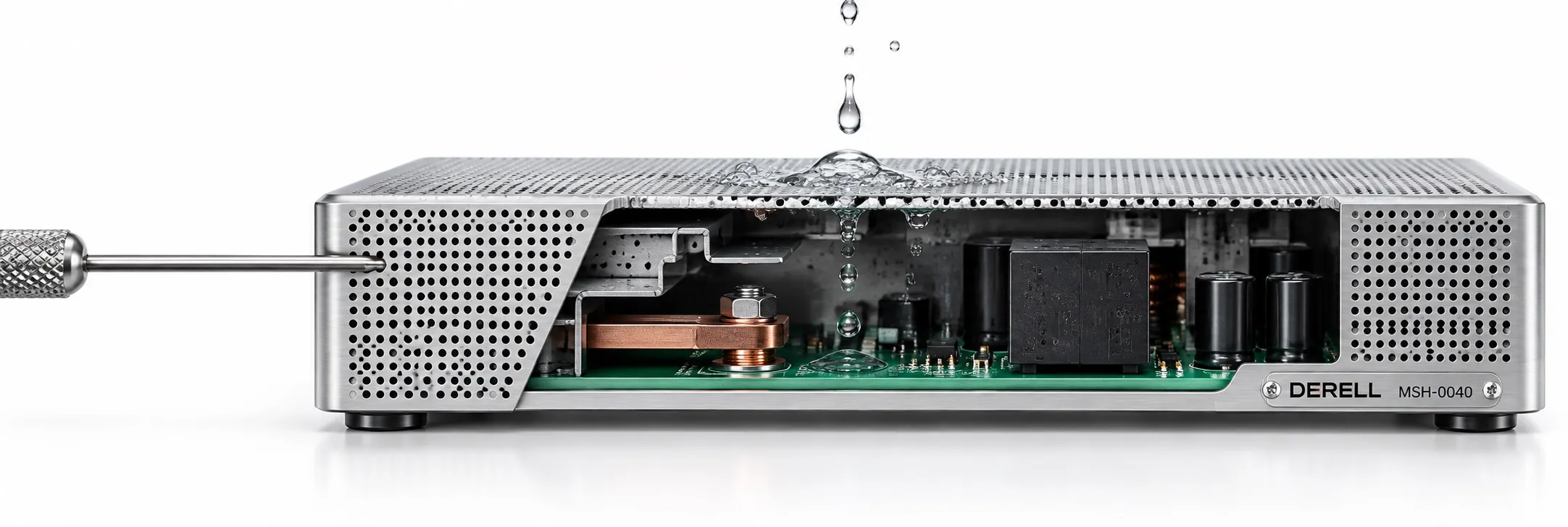
IP40 is an enclosure protection rating used for electrical and electronic equipment. It is not a separate standard by itself; it is one of the protection levels defined within IEC 60529. The first digit describes protection against access to hazardous parts and solid foreign objects, while the second digit describes protection against water.
In simple terms… IP40 means that the enclosure protects against solid foreign objects 1 mm in diameter and larger, while no water protection is specified. It is not a dust-protected or dust-tight rating, and it does not establish protection against dripping water, splashing, rain, water jets or immersion.
What does the first 4 in IP40 mean?
The first digit, 4, means that the enclosure provides protection against solid foreign objects 1 mm and larger. This includes small wires, metal pieces and similar objects that could otherwise enter the enclosure.
The first characteristic numeral also addresses access to hazardous parts. At level 4, the enclosure is intended to prevent access with a wire-type access probe under the applicable test conditions. This is important where exposed electrical or moving parts must remain inaccessible.
However, IP40 should not be described as dust-protected. Protection specifically addressing dust begins with a first digit of 5. A first digit of 6 represents the dust-tight level.
What does the second 0 in IP40 mean?
The second digit, 0, means that no water protection is specified under the IP classification.
An IP40 enclosure therefore should not be described as rain-resistant, splash-resistant or waterproof on the basis of its IP rating. The fact that the enclosure has relatively good protection against solid objects does not provide any corresponding water protection.
IP40 = protection against solid foreign objects 1 mm and larger + no specified water protection.
Is IP40 dustproof?
No. IP40 does not provide a specific dust-protection classification. Although objects 1 mm and larger are restricted from entering, fine dust particles are much smaller than 1 mm and can still penetrate an enclosure depending on its construction.
Where fine dust is an important environmental factor, a rating such as IP50 provides a defined dust-protected level. In more severe dusty environments, an IP6X dust-tight enclosure may be required.
Is IP40 waterproof?
No. The second digit is 0, so IP40 does not include a standardized claim for protection against water.
This does not mean that every IP40 product will fail immediately if a single drop of water touches it. It means that the IP40 classification itself provides no water-protection claim. Any additional resistance to water would have to be supported separately by the manufacturer.
What is the difference between IP30 and IP40?
IP30 and IP40 have the same water digit: both end in 0, so neither specifies water protection.
The difference is the first digit. IP30 protects against solid foreign objects 2.5 mm and larger, whereas IP40 protects against objects 1 mm and larger.
IP40 therefore offers a higher level of protection against smaller wires and foreign objects. Neither rating, however, should be described as dust-protected or water-resistant.
What is the difference between IP40 and IP50?
The main difference between IP40 and IP50 is dust protection. Both ratings end in 0, so neither specifies protection against water.
IP40 protects against solid foreign objects 1 mm and larger. IP50 moves into the dust-protected category, where limited dust ingress may occur but must not interfere with satisfactory operation or safety.
IP40 = protection against objects 1 mm and larger + no water protection.
IP50 = dust-protected + no water protection.
What is the difference between IP40 and IP54?
IP40 and IP54 differ in both solid-particle and water protection.
IP40 has a first digit of 4, meaning protection against solid foreign objects 1 mm and larger. IP54 has a first digit of 5 and is therefore dust-protected.
On the water side, IP40 ends in 0 and provides no specified water protection. IP54 ends in 4 and provides protection against splashing water from any direction.
IP54 is therefore intended for substantially different environmental conditions from IP40.
Is IP40 suitable for outdoor use?
An IP40 marking alone should not be used to claim general outdoor suitability. Because the second digit is 0, the rating provides no standardized protection against rain or other water exposure.
Outdoor equipment may also be exposed to ultraviolet radiation, temperature changes, condensation, freezing, corrosion, salt atmosphere and chemicals. An IP rating does not address all of these environmental conditions.
IP40 is therefore more commonly relevant to dry, protected indoor locations where access by small solid objects must be restricted.
Where can IP40 be used?
IP40 can be appropriate in indoor areas where water and severe dust contamination are not expected, but access by small foreign objects or wires must be restricted.
Possible examples include electrical rooms, protected machine compartments, internal control-enclosure areas and dry industrial locations where electrical or mechanical hazardous parts must remain inaccessible.
The actual suitability of a product still depends on other requirements such as operating temperature, ventilation, contamination level, mounting method and electrical safety.
Is IP40 enough for an electrical control panel?
Whether IP40 is sufficient depends on the environment around the panel. In a clean, dry electrical room, protection against objects 1 mm and larger may be adequate for some applications.
If fine dust, dripping water, cleaning water, splashing or high humidity is present, IP40 may not provide suitable environmental protection.
The protection of a completed panel also depends on more than the empty enclosure. Cable entries, seals, pushbuttons, ventilation openings and other panel components can change the protection provided by the completed assembly.
IP40 and PLC installations
Many PLCs and modules are intended to operate inside an electrical enclosure rather than directly in an exposed machine environment. The IP rating of the PLC itself and the rating of the surrounding cabinet can therefore be different.
A cabinet arrangement that is acceptable in a clean control room may be unsuitable in a stone-processing plant, woodworking machine or another location containing large amounts of fine process dust. The enclosure should always be selected for the actual installation environment.
IP40 and variable frequency drives
AC drives and VFDs can generate significant heat during operation. For this reason, enclosure selection should not focus on IP protection alone.
Internal cabinet temperature, drive losses, mounting clearances, natural airflow and the manufacturer's temperature limits all have to be considered. A more tightly sealed enclosure may improve environmental protection but can also make heat dissipation more difficult.
IP40 and industrial power supplies
Many DIN-rail and open-frame industrial power supplies are intended to operate inside a protective electrical enclosure. In such installations, much of the final environmental protection is provided by the cabinet rather than the power supply itself.
If fine dust, liquids or foreign objects smaller than 1 mm can enter the panel, the limitations of an IP40 enclosure have to be considered.
How should IP40 be interpreted on an HMI?
An industrial HMI panel may have different ingress-protection ratings for its front and rear sections. The front bezel exposed to the operator and machine environment may have a higher rating, while the electronics inside the cabinet may have a lower one.
Always check whether the stated IP rating applies to the entire HMI, the front face only or a specific installed configuration. Panel cut-out dimensions, gasket condition and mounting method can also affect the protection achieved after installation.
Does IP40 protect against condensation?
No. IP40 has a water digit of 0, and condensation is also a different problem from direct external water ingress. Moisture can form inside a cabinet when temperature and relative humidity change.
Even an apparently dry industrial location can experience condensation when equipment cools down overnight or when large temperature changes occur. Enclosure heaters, thermal management or other humidity-control measures may therefore be required.
Can IP40 protection change after installation?
Yes. A factory enclosure rating does not automatically remain valid after uncontrolled modifications.
Large open cable entries, missing covers, inappropriate ventilation openings or incorrectly fitted accessories can reduce protection against solid foreign objects.
The complete machine or electrical panel should therefore be evaluated with all openings and installed components in their final condition.
What does IP40 not guarantee?
IP40 describes enclosure protection against access to hazardous parts and solid foreign objects 1 mm and larger, while providing no specified water protection. It does not establish protection against fine dust, ultraviolet radiation, corrosion, chemicals, mechanical impact or extreme temperatures.
An IP40 marking also does not mean that equipment satisfies every electrical safety requirement, is suitable for explosive atmospheres or carries a particular certification. These subjects are addressed separately within the relevant industrial standards and conformity requirements.
What should be checked before choosing IP40?
First determine whether water or fine dust is present. The main function of IP40 is protection against access and solid foreign objects 1 mm and larger.
If fine process dust is present, IP50 or a higher dust-protection level may be required. If splashing water is also present, IP54 or another rating appropriate to the actual water exposure should be considered.
Finally, check the manufacturer's documentation for the exact product model, mounting method and environmental limits. IP40 is an enclosure classification, not a general quality or durability score.
IP40 in one sentence
IP40 means protection against solid foreign objects 1 mm and larger, with no specified protection against water. It is not a dust-protected or dust-tight rating. Because the second digit is 0, the classification does not establish protection against dripping water, splashing, rain, water jets or immersion. IP40 is mainly relevant to dry, protected indoor environments.
Related IP protection guides
IP Protection Ratings and IEC 60529 Guide | IP30 | IP50 | IP54 | IP55
Related automation equipment: Panel Components | PLCs and Modules | HMI Panels | AC Drives and VFDs | Power Supplies