
How does a DC motor work?
Hello DC Drive and motor friends,
A Direct Current (DC) motor converts electrical energy into mechanical energy through the interaction of magnetic fields. Here's a step-by-step explanation of how a typical DC motor works:
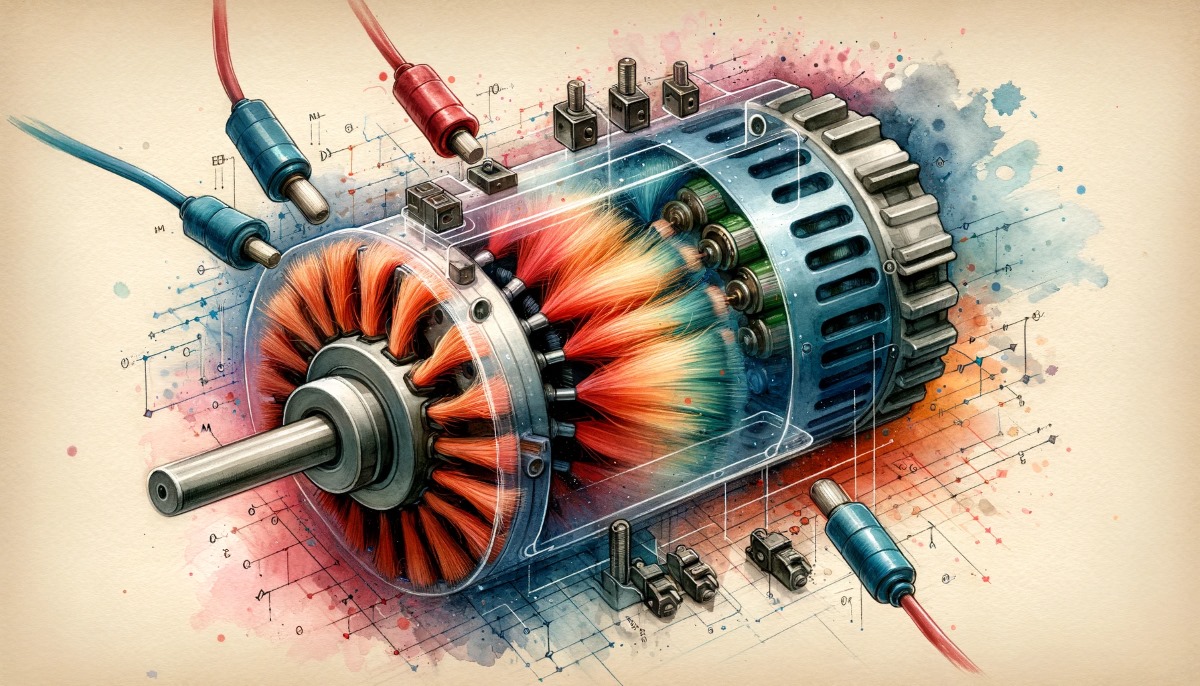
Basic Components
Stator: The stationary part of the motor that houses the magnetic field. This can be a permanent magnet or an electromagnet.
Rotor (or Armature): The rotating part of the motor that includes coils of wire.
Commutator: A split ring attached to the armature that reverses the current direction in the rotor windings.
Brushes: These are usually made of carbon and maintain electrical contact with the commutator.
Operating Principle
Application of Voltage: When voltage is applied to the motor, it flows through the brushes to the commutator.
Current Through Rotor: The commutator routes the current through the coils on the rotor, creating a magnetic field around the rotor.
Interaction of Magnetic Fields: The magnetic field of the rotor interacts with the magnetic field of the stator. According to the law of electromagnetic induction, opposite poles attract while like poles repel.
Rotation: This interaction causes the rotor to rotate, which in turn drives the shaft connected to it, converting electrical energy into mechanical work.
Commutation: As the rotor turns, the commutator also rotates, reversing the direction of the electric current through the rotor coil at the right time to maintain the direction of rotation.
Continuous Rotation: Steps 3 to 5 are continuously repeated to keep the motor running.
Types of DC Motors
Different types of DC motors—such as shunt-wound, series-wound, compound-wound, and brushless DC motors—have variations in how they operate, but the basic principles are similar.
Shunt-Wound
Multiple paths for current to flow: some through the stator windings and some through the rotor windings.
Series-Wound
Current flows in a single path through both the stator and rotor windings.
Compound-Wound
A combination of shunt and series windings, aiming for the benefits of both.
Brushless DC
Instead of a commutator and brushes, it uses a controller to change the polarity of the stator field.
Speed Control
The speed of a DC motor can be controlled by varying the voltage applied to it, by altering the field strength, or by other means like pulse-width modulation.
That's a basic overview of how a DC motor works. The design and operation can get quite complex depending on the specific type of DC motor and its intended application.
"Despite a decline in their industrial use (at least for high-power applications), DC motors are still commonly found. However, they continue to be efficiently used in lower power applications. Below, we have attempted to answer the most frequently asked questions about DC drives by our visitors.
- What are the types of DC motors?
- What is a brushless DC (BDCL) motor?
- What are the advantages of DC motors?
- DC Motors and Efficiency Ratio?
- Can DC motors reach high speeds?
- What is its lifespan of a DC Motor?
- How does it differ from AC motors?
- What is the maintenance for DC motors?
- What is DC Drive?
+ Back to DC Motor Homepage -
These questions often encompass the types of queries that many people might have about DC motors. Every user or student will have their own unique questions or interpretations depending on the specific situation or application. The answers provided are not binding and are not definitive. 'Feel free to share the above article, citing it as a source.' 05.2019 -
Your shopping cart is empty!