
What is Impedance Transformer?
Hi everybody,
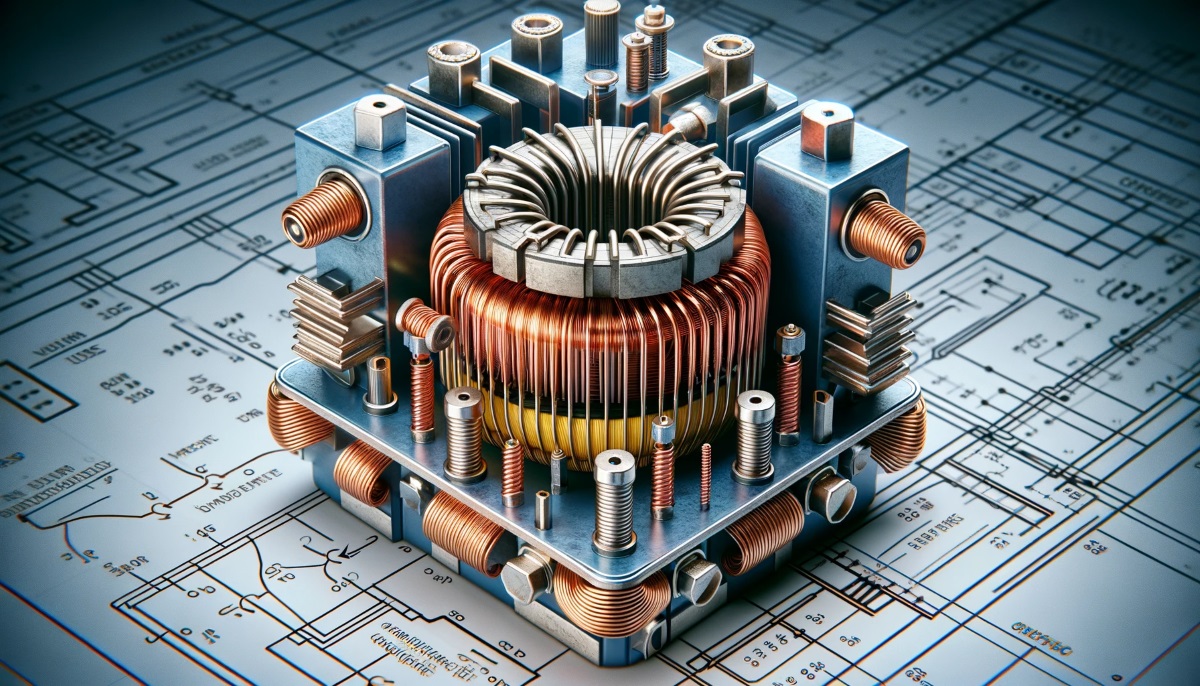
An impedance transformer is a device designed to match the impedance between two different circuits, typically to maximize power transfer or minimize signal reflection. In electronics and telecommunications, impedance matching is crucial for the efficient transfer of energy and signals from one circuit to another. An impedance transformer does this by converting the impedance of a load to match the source impedance, or vice versa.
How It Works:
Matching Circuit: It functions as a matching circuit that allows a source and load to interact without reflections and minimal loss.
Transmission Lines: In radio frequency (RF) applications, it is often a section of transmission line configured to provide the desired impedance transformation.
Transformer Cores: In other applications, especially at lower frequencies, it may be a traditional transformer with turns ratio selected to provide the desired impedance match.
Balanced and Unbalanced: Some impedance transformers can also convert balanced signals to unbalanced signals and vice versa.
Applications:
Antenna Systems: Used to match the impedance of an antenna to the characteristic impedance of the transmission line leading to the receiver.
Audio Systems: Employed to match the impedance of speakers to amplifiers.
Power Grids: Used in electrical power systems to match the impedance between different parts of the grid.
Instruments and Sensors: Used in measurement systems to ensure accurate data collection.
Telecommunications: Critical for maximizing signal power in cable systems.
By properly matching impedance, these transformers can reduce signal loss and improve system efficiency and performance. However, they do not typically provide electrical isolation like isolation transformers.
"The topic of electronic components and Transformers is broad in scope, encompassing a diverse range of products. Here are the answers to the most common questions posed by our valued visitors."
- Step-Up and Step-Down Transformers
-------------
- What is an integrated circuit?
- What is a crystal oscillator?
- What is an LED (Light Emitting Diode)?
- What is a radio frequency (RF) module?
- What is a ceramic resonator?
"These questions often include those that many people might have about the component parts of electronic devices. Each user or student will have their own specific questions depending on a particular situation or application. The answers provided are not binding and do not express absolute certainty. You are free to share the article above, citing it as a source. 01/2020."
Your shopping cart is empty!