
UL 60947-2
Hello dear colleagues,
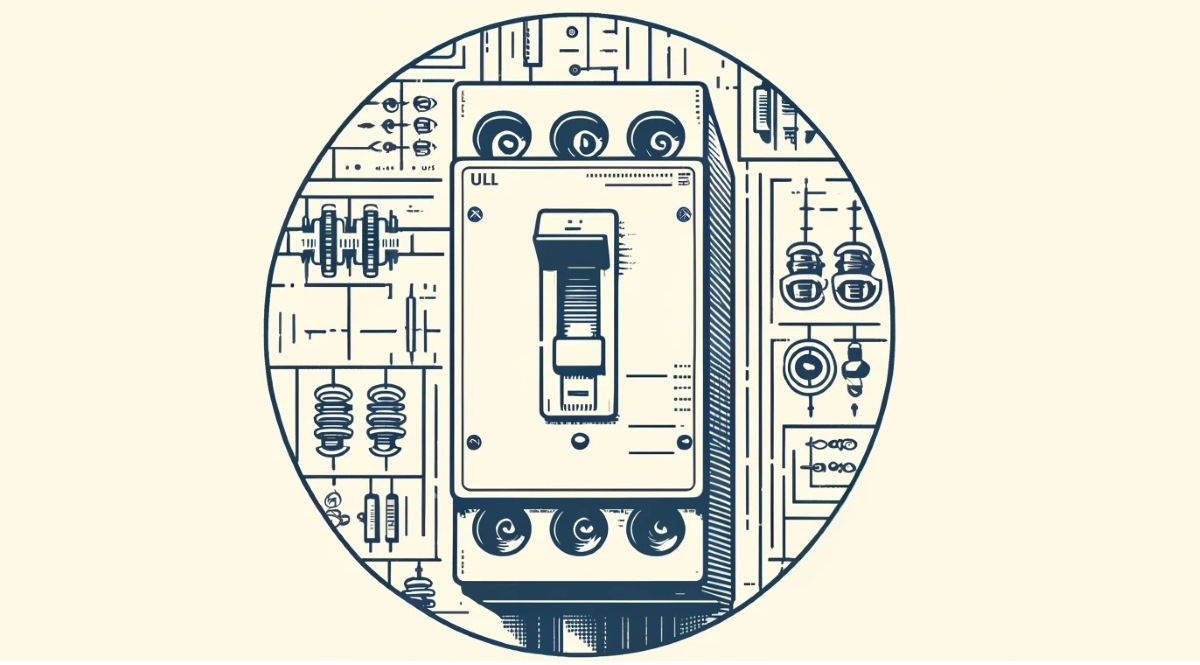
UL 60947-2 is a specific part of the IEC 60947 standard series, which deals with the safety and reliability of circuit breakers used in low-voltage switchgear and controlgear. This standard provides detailed requirements and testing methods to ensure that circuit breakers can perform their functions safely under both normal and fault conditions.
UL 60947-2 sets out the conditions for the design, manufacture, and testing of circuit breakers used in industrial applications. These devices are crucial for protecting electrical circuits from damage caused by overload or short circuit conditions. By complying with this standard, manufacturers ensure that their circuit breakers meet essential health and safety requirements and can be used safely in various industrial settings.
Scope of UL 60947-2
This standard applies to circuit breakers designed to operate with a voltage of up to 1000 volts AC and 1500 volts DC. It covers various types of circuit breakers, including:
- Molded case circuit breakers (MCCBs)
- Miniature circuit breakers (MCBs)
- Air circuit breakers (ACBs)
Each type has specific applications and settings where they are most effective, from residential and commercial buildings to large industrial installations.
Key Requirements and Provisions
Construction and Design
Materials: Circuit breakers must be made from materials that can withstand mechanical stress, electrical loads, and environmental factors.
Mechanical Operation: Devices should operate smoothly without any risk of jamming or undue wear.
Electrical Endurance: Circuit breakers must maintain functionality after numerous operation cycles under load and no-load conditions.
Performance Criteria
Breaking Capacity: The ability to interrupt current without damage or risk, often at values far exceeding normal operating conditions.
Tripping Characteristics: Accurate and reliable tripping in response to overload and short circuit conditions, tailored to protect wiring and prevent fire hazards.
Endurance: The breaker must demonstrate durability over its intended lifespan, withstanding routine switching and occasional fault handling.
Testing Procedures
Dielectric Tests: To verify insulation and the ability to withstand high voltages.
Mechanical Operation Tests: To ensure the mechanical components function reliably through the expected life of the breaker.
Temperature Rise Tests: To confirm that the device operates within safe temperature limits under different operational conditions.
Safety Features
Protection Against Electric Shock: Measures to prevent accidental contact with live parts.
Arcing Protection: Design features to contain and extinguish electrical arcs that occur during operation.
Marking and Documentation
Identification: Each breaker must be clearly marked with the manufacturer’s name, model, and electrical ratings.
Instructions: Comprehensive user manuals and installation guides to ensure correct usage and maintenance.
Importance of UL 60947-2
Compliance with UL 60947-2 is crucial for manufacturers to demonstrate that their circuit breakers are safe and reliable. It reassures users that the electrical infrastructure is protected against faults, reducing the risk of damage and downtime in industrial and commercial environments.
UL 60947-2 provides a rigorous framework for testing and certifying low-voltage circuit breakers, ensuring they are capable of handling real-world electrical loads and fault conditions safely and effectively. The standard plays a vital role in the electrical industry, promoting safety, reliability, and efficiency in electrical systems worldwide. Compliance with this standard is essential for maintaining the integrity and safety of electrical installations across a broad range of applications.
The UL 60947 series provides comprehensive and detailed standards for the design and use of a wide range of low-voltage switchgear and controlgear. Each section offers specific requirements and safety recommendations for a particular type of device or application area, ensuring safe and effective use in the American market.
UL 60947-1: General Rules
UL 60947-2: Circuit Breakers
UL 60947-3: Switches and Disconnectors
UL 60947-4-1: Contactors and Motor Starters
UL 60947-4-2: Protective Motor Starters
UL 60947-4-3: AC
Semiconductor Motor Controllers and Starters
UL 60947-5-1: Control
Circuit Devices and Switching Elements
UL 60947-5-2: Proximity Switches
UL 60947-5-3: Illuminated Actuators
UL 60947-5-4: Position
Switches
UL 60947-5-5: Sensors Used in Control Circuits
UL 60947-5-6: DC Control Systems
UL 60947-5-7:
Emergency Stop Devices
UL 60947-6-1: Transfer
Switching Equipment
UL 60947-6-2:
Power Distribution and Motor Control Centres
UL 60947-7-1: Terminal Blocks
UL 60947-7-2: PCB Connection Devices
UL 60947-7-3: Connection Devices
UL 60947-8: Semiconductor Devices for Load Control
* These questions generally include the ones that may come to mind for many people regarding the "UL Industry Standards" topic. Each user or student will have their specific questions depending on a particular situation or application. The answers are not binding and do not express absolute certainty. "There is no objection to sharing our article above, citing it as a source". Automation Mall Community 03.2022
++ Homepage
 -
-Your shopping cart is empty!