
Cables, sockets and connectors
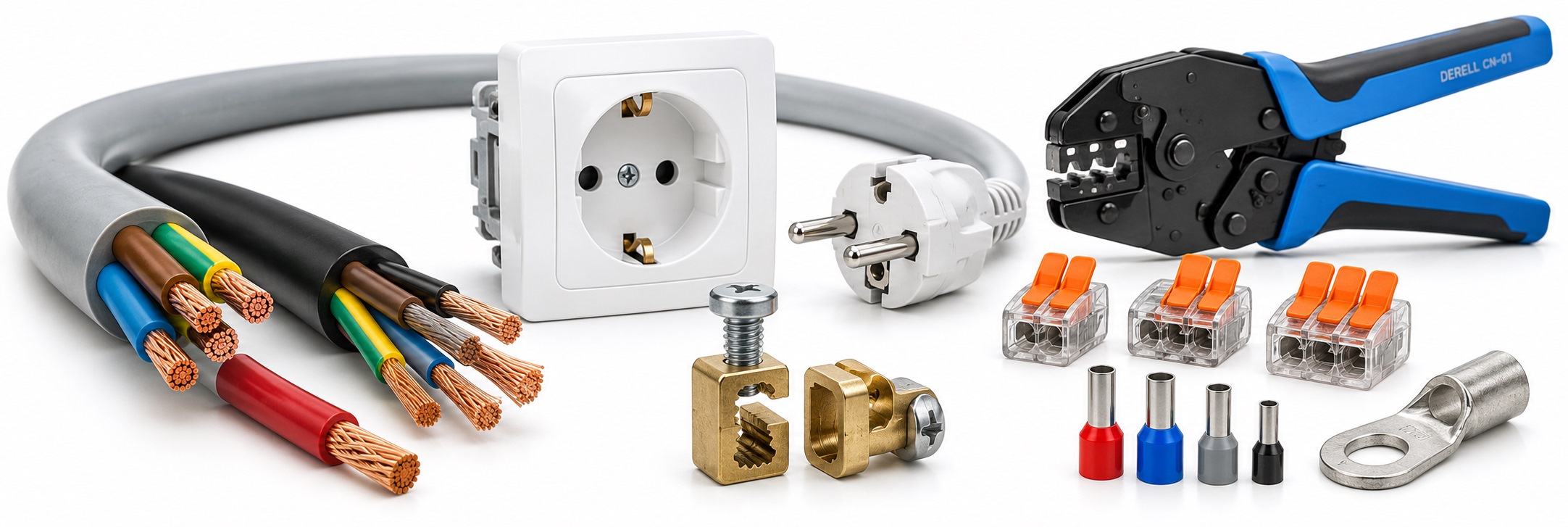
Cables, sockets and connectors
An electrical circuit needs to be assessed as a complete system: cable, sockets, plugs and terminations. A correctly sized cable can still be let down by a loose terminal or a worn socket. This section brings together practical guides on cable selection, extension leads and the connections that make an installation reliable.
Choose your starting point: For a new circuit or appliance supply, begin with cable sizing and construction. For overheating or poor performance, go to the relevant fault guide. If you need to understand conductor colours or terminal markings, use the identification guides below.
Cable sizing and current-carrying capacity
Choosing a conductor size involves more than appliance wattage. Cable length, installation method, ambient temperature and circuit protection all matter. Start with how to select a cable size, then explore typical uses for 1.5, 2.5, 4 and 6 mm² cable. The guide to current-carrying capacity explains how to read rating tables in the context of the installation.
Cable construction and conductor material
Two cables with the same conductor size may suit very different applications. The guide to NYA, NYM, TTR and Antigron cables introduces designations commonly encountered in Turkish installations. Compare solid and stranded conductors for conductor construction, and copper and aluminium cables for material choice. Routes exposed to weather or buried in the ground need a separate check of outdoor and underground cable requirements.
Long cable runs and AWG conversion
Why might equipment perform well on a short cable but struggle on a longer run? The guide to voltage drop in long cables explains the electrical effect of distance. If a specification gives conductor size in AWG, use the AWG to mm² conversion guide to understand the equivalent area. Converting the size does not establish the cable’s allowable current.
Conductor colours and L, N, PE markings
Read the guides to live, neutral and earth conductor colours and old and new wiring colours to understand the differences you may encounter. The guide to L, N and PE markings explains the letters used on equipment and terminals. Colour alone does not confirm a conductor’s function or prove that it is de-energised. Older wiring and later alterations require particular care.
Sockets, extension leads and overheating
For several appliances sharing an extension lead, start with how much power an extension lead can handle. Cable reels also need attention to their wound and unwound operating conditions. If something is getting hot, the guides to cable overheating, hot extension leads and overheating sockets help distinguish the possible causes.
Terminals, ferrules, lugs and cable joints
A connector must suit both the conductor size and its construction. The comparison of WAGO connectors, screw terminals and taped joints explains the differences between connection methods. The guide to wire ferrules, cable lugs and crimping tools covers the purpose of common termination components. A conductor fitting physically into a connector does not establish electrical compatibility.
Safe use: Stop using a circuit if you notice a burning smell, melting or excessive overheating. Isolate the supply if you can do so safely and have a qualified electrician inspect it. These guides are not instructions for working on energised wiring.