
IEC 62660
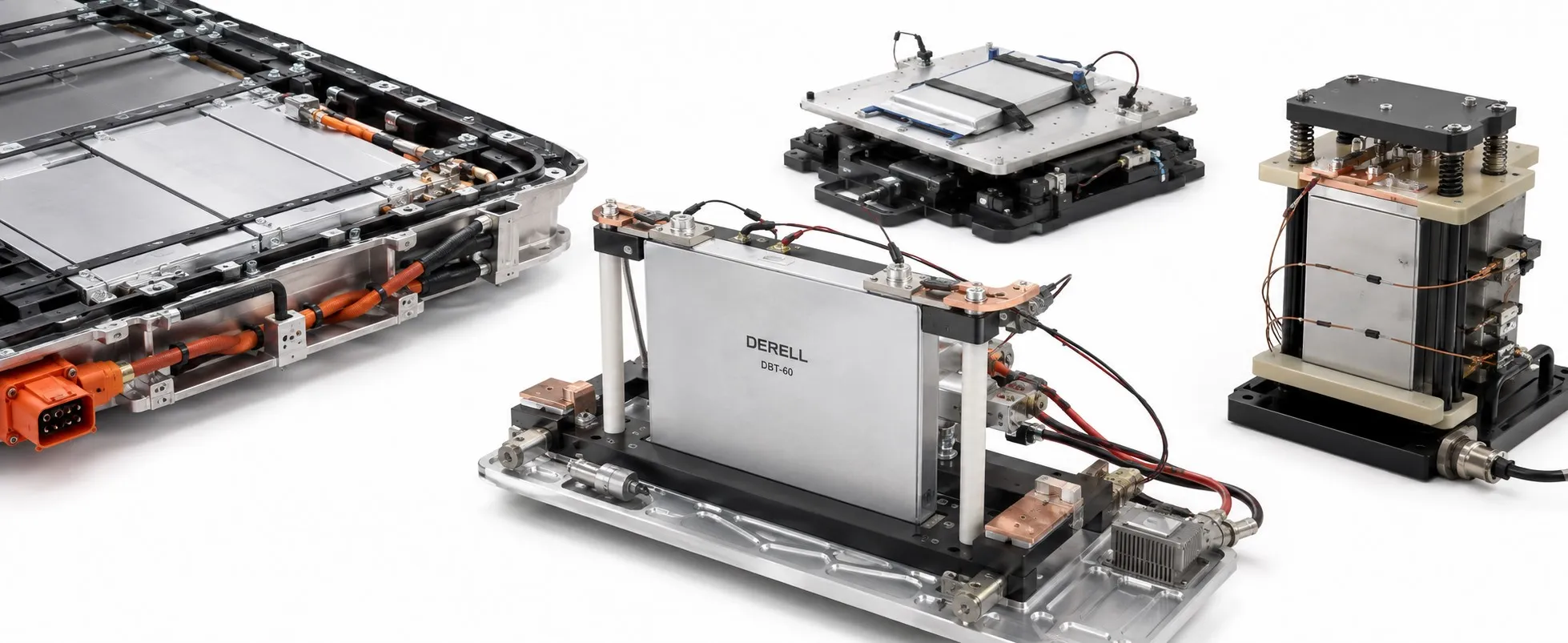
What traction-cell tests tell you about an EV battery
IEC 62660 is a standards series for rechargeable lithium-ion cells used to propel electric road vehicles, including battery electric vehicles (BEVs) and hybrid electric vehicles (HEVs). Start with the lithium-ion cell and the battery technologies used in electric vehicles: the tested unit matters when interpreting a report.
Separate performance, abuse behaviour and safety acceptance
IEC 62660-1:2018 — Performance testing: This part defines procedures for characteristics including capacity, power density, energy density, storage life and cycle life. It provides useful data when comparing battery technologies. Storing more energy and delivering high power are different capabilities; neither rating describes the whole application.
IEC 62660-2:2018 — Reliability and abuse testing: This part examines the behaviour of cells and cell blocks under specified stresses and classifies the observed results. Subjects include overcharge, forced discharge and temperature cycling. The resulting data informs battery pack design; a description of abuse behaviour should not be confused with the safety acceptance criteria in Part 3.
IEC 62660-3:2022 — Safety requirements: This part specifies safety test procedures and acceptance criteria for cells and cell blocks. Its premise is that the cells are used within the manufacturer’s voltage, current and temperature limits. A successful assessment does not establish safe operation under every possible condition.
A result is meaningful only with its test conditions
For example: With a 50 Ah cell, 1C corresponds to 50 A and 2C to 100 A. That calculation does not authorise operation at 100 A; the permitted current must come from the cell specification. Compare results alongside temperature, state of charge (SOC), current profile and voltage limits, rather than treating capacity or cycle life as standalone numbers.
Energy describes how much work can be supplied under stated conditions; power describes the rate of energy delivery. Cell measurements alone cannot determine vehicle range or traction-motor performance. Our electric vehicle guide connects these battery characteristics to the wider vehicle.
Keep cell evidence separate from pack validation
A cell, a complete battery pack and the vehicle energy system are different assessment levels. The pack adds a battery management system (BMS), cooling, interconnections and protective components. Functions such as temperature sensing and fuse protection need their own system assessment. ISO 12405-4:2018 is a related reference for traction-battery pack and system performance testing.
Vehicle charging systems and EV charging standards address another part of the application. The difference between AC and DC charging concerns the charging infrastructure; IEC 62660 does not specify a charging connector or charging station.
Match the standard to the application
IEC 62133-2 addresses safety for portable rechargeable lithium cells and batteries. IEC 62619:2022 covers industrial lithium cells and batteries, including stationary applications such as UPS systems. IEC 62660 is the application-specific series for road-vehicle propulsion cells. Use the battery standards guide to compare these scopes.
A note on IEC TR 62660-4:2017: This publication is a technical report examining candidate alternative methods for internal short-circuit testing. IEC lists it as withdrawn on 31 July 2026. It should not be presented as a current fourth safety standard.
Official sources: IEC 62660-1:2018 | IEC 62660-2:2018 | IEC 62660-3:2022 | IEC TR 62660-4:2017 | ISO 12405-4:2018 | IEC 62619:2022